
About This Book
Are you looking for cost-effective ways to reduce your home's energy consumption and lower those ever-increasing electric bills? "Energy-Saving Wood" explores the often-overlooked potential of wood in achieving energy efficiency, offering a pathway to sustainable living and reduced utility expenses. This book tackles two central questions: How can wood, a readily available and renewable resource, be strategically utilized in building and renovation to minimize energy loss? And, what are the most effective wood-based techniques and technologies for creating energy-efficient homes and structures? These questions are crucial in an era of increasing energy costs and growing environmental concerns. To understand the principles explored in "Energy-Saving Wood," a basic understanding of building construction and insulation principles is helpful. We will delve into the thermal properties of different wood types and how they interact with various climates and building designs. The central argument of "Energy-Saving Wood" is that thoughtful and informed use of wood in construction and renovation can significantly reduce electric bills and overall energy consumption without sacrificing comfort or structural integrity. This argument challenges conventional wisdom and offers a practical, sustainable alternative to energy-intensive building materials and practices. The book unfolds in a logical progression. Initially, it introduces the fundamental concepts of thermal resistance, heat transfer, and the unique properties of wood as a building material. The subsequent chapters delve into specific applications of wood in energy-efficient construction. We will examine framing techniques that minimize thermal bridging, siding options that provide superior insulation, and the use of wood in window and door construction to reduce air leakage. Further, the implementation of wood in insulation systems, like cellulose insulation manufactured from recycled paper, will be thoroughly investigated. The book culminates by presenting real-world examples of energy-efficient homes utilizing these wood-based strategies, along with detailed cost-benefit analyses and projections for long-term energy savings. The evidence presented in "Energy-Saving Wood" is derived from a collection of construction reports, scientific studies, and field experiments. Data on thermal performance, energy consumption, and cost-effectiveness are drawn from these sources to provide a comprehensive and evidence-based analysis. "Energy-Saving Wood" bridges several disciplines. It connects environmental science by promoting sustainable building practices and reducing carbon footprints. Furthermore, it connects with civil engineering through explorations of building techniques and structural integrity. Lastly, it connects with economics by examining the long-term financial benefits of energy-efficient wood construction. This book offers a unique perspective by focusing specifically on the energy-saving potential of wood. While other books may discuss green building or sustainable architecture, "Energy-Saving Wood" provides a detailed and practical guide to maximizing the energy efficiency of wood in various construction applications. The book adopts a practical and accessible writing style for a broad audience. The intended audience includes homeowners, contractors, architects, and anyone interested in reducing their energy consumption and environmental impact. Homeowners can learn practical tips for improving the energy efficiency of their homes. Contractors and architects can gain valuable insights into incorporating wood-based strategies into their projects. As a non-fiction book in the environment and technology genres, "Energy-Saving Wood" adheres to the standards of presenting factual information, citing credible sources, and providing clear and concise explanations. The scope of "Energy-Saving Wood" is limited to the application of wood in residential construction and renovation for energy efficiency. While it touches upon broader environmental concerns, the primary focus remains on the practical aspects of utilizing wood to reduce energy consumption. Readers will gain actionable insights into strategies for reducing their electric bills by using wood effectively in their homes and buildings. These applications range from selecting the right type of wood for siding to implementing advanced framing techniques that minimize thermal bridging. While the use of wood in construction is generally considered environmentally friendly, "Energy-Saving Wood" acknowledges there are debates regarding sustainable forestry practices and the potential impact of deforestation. The book addresses these concerns by promoting responsible sourcing and the use of reclaimed or recycled wood whenever possible.
Are you looking for cost-effective ways to reduce your home's energy consumption and lower those ever-increasing electric bills? "Energy-Saving Wood" explores the often-overlooked potential of wood in achieving energy efficiency, offering a pathway to sustainable living and reduced utility expenses. This book tackles two central questions: How can wood, a readily available and renewable resource, be strategically utilized in building and renovation to minimize energy loss? And, what are the most effective wood-based techniques and technologies for creating energy-efficient homes and structures? These questions are crucial in an era of increasing energy costs and growing environmental concerns. To understand the principles explored in "Energy-Saving Wood," a basic understanding of building construction and insulation principles is helpful. We will delve into the thermal properties of different wood types and how they interact with various climates and building designs. The central argument of "Energy-Saving Wood" is that thoughtful and informed use of wood in construction and renovation can significantly reduce electric bills and overall energy consumption without sacrificing comfort or structural integrity. This argument challenges conventional wisdom and offers a practical, sustainable alternative to energy-intensive building materials and practices. The book unfolds in a logical progression. Initially, it introduces the fundamental concepts of thermal resistance, heat transfer, and the unique properties of wood as a building material. The subsequent chapters delve into specific applications of wood in energy-efficient construction. We will examine framing techniques that minimize thermal bridging, siding options that provide superior insulation, and the use of wood in window and door construction to reduce air leakage. Further, the implementation of wood in insulation systems, like cellulose insulation manufactured from recycled paper, will be thoroughly investigated. The book culminates by presenting real-world examples of energy-efficient homes utilizing these wood-based strategies, along with detailed cost-benefit analyses and projections for long-term energy savings. The evidence presented in "Energy-Saving Wood" is derived from a collection of construction reports, scientific studies, and field experiments. Data on thermal performance, energy consumption, and cost-effectiveness are drawn from these sources to provide a comprehensive and evidence-based analysis. "Energy-Saving Wood" bridges several disciplines. It connects environmental science by promoting sustainable building practices and reducing carbon footprints. Furthermore, it connects with civil engineering through explorations of building techniques and structural integrity. Lastly, it connects with economics by examining the long-term financial benefits of energy-efficient wood construction. This book offers a unique perspective by focusing specifically on the energy-saving potential of wood. While other books may discuss green building or sustainable architecture, "Energy-Saving Wood" provides a detailed and practical guide to maximizing the energy efficiency of wood in various construction applications. The book adopts a practical and accessible writing style for a broad audience. The intended audience includes homeowners, contractors, architects, and anyone interested in reducing their energy consumption and environmental impact. Homeowners can learn practical tips for improving the energy efficiency of their homes. Contractors and architects can gain valuable insights into incorporating wood-based strategies into their projects. As a non-fiction book in the environment and technology genres, "Energy-Saving Wood" adheres to the standards of presenting factual information, citing credible sources, and providing clear and concise explanations. The scope of "Energy-Saving Wood" is limited to the application of wood in residential construction and renovation for energy efficiency. While it touches upon broader environmental concerns, the primary focus remains on the practical aspects of utilizing wood to reduce energy consumption. Readers will gain actionable insights into strategies for reducing their electric bills by using wood effectively in their homes and buildings. These applications range from selecting the right type of wood for siding to implementing advanced framing techniques that minimize thermal bridging. While the use of wood in construction is generally considered environmentally friendly, "Energy-Saving Wood" acknowledges there are debates regarding sustainable forestry practices and the potential impact of deforestation. The book addresses these concerns by promoting responsible sourcing and the use of reclaimed or recycled wood whenever possible.
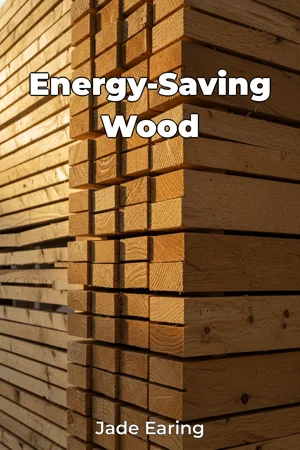
"Energy-Saving Wood" explores how wood, a renewable resource, can significantly boost energy efficiency in homes. The book highlights wood's unique thermal properties and its potential to lower electric bills through sustainable building practices. Did you know that strategically using wood minimizes energy loss and offers a practical alternative to energy-intensive materials? This book challenges conventional wisdom by demonstrating how wood can improve comfort and structural integrity while saving energy. The book progresses logically, starting with thermal resistance and heat transfer principles. It then delves into specific applications, such as framing techniques to minimize thermal bridging and siding options for superior insulation. "Energy-Saving Wood" provides real-world examples of energy-efficient homes using wood-based strategies. By focusing specifically on wood's energy-saving potential, it offers a detailed guide for homeowners, contractors, and architects seeking to reduce energy consumption and promote green building.
Book Details
ISBN
9788235213396
Publisher
Publifye AS
Your Licenses
You don't own any licenses for this book
Purchase a license below to unlock this book and download the EPUB.
Purchase License
Select a tier to unlock this book
Need bulk licensing?
Contact us for enterprise agreements.