
About This Book
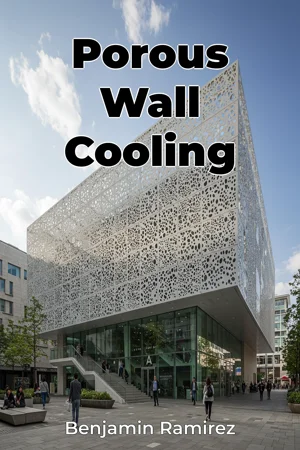
As urban heat islands intensify and global temperatures rise, how can we design buildings that offer respite from extreme heat while minimizing energy consumption? "Porous Wall Cooling" explores the potential of perforated building facades to naturally regulate indoor temperatures, drawing upon principles of urban design and architectural engineering to present a comprehensive approach to sustainable cooling. This book argues that strategically designed porous walls offer a viable, energy-efficient alternative to conventional air conditioning, particularly in densely populated urban environments. The book delves into three core areas: the physics of passive cooling through porous materials, the application of these principles in architectural design, and the integration of porous wall systems within broader urban planning strategies. Understanding the relationship between material properties, airflow, and heat transfer is paramount. We examine how the size, shape, and arrangement of perforations influence ventilation rates, shading, and evaporative cooling potential. This analysis will draw upon principles of thermodynamics and fluid dynamics, presented in an accessible manner for readers with a basic understanding of physics. The historical context will be considered, examining traditional uses of perforated screens and latticework in hot climates. Modern architectural applications will then be explored, showcasing case studies of buildings that have successfully implemented porous wall cooling systems. These examples will highlight both the aesthetic possibilities and the technical challenges associated with this design approach. The book underscores the importance of considering porous wall systems within the broader context of urban heat island mitigation. It is argued that these systems can contribute to reducing overall urban temperatures when implemented strategically across multiple buildings and public spaces. The impact on pedestrian comfort, air quality, and energy consumption at the city scale will be examined. The book is structured in three parts. Part 1 introduces the fundamental principles of passive cooling and the properties of porous materials. Part 2 explores the design and engineering of porous wall systems, covering material selection, structural considerations, and performance optimization. Part 3 examines the integration of porous wall systems within urban design strategies, focusing on microclimate modification and energy efficiency at the neighborhood and city scales. The arguments presented throughout the book are supported by a combination of computational fluid dynamics (CFD) simulations, experimental data from scaled-down models, and real-world case studies. Unique datasets, generated through original simulations, will be presented alongside existing research to provide a robust evidence base. The book also explores connections with related fields such as materials science, sustainable engineering, and environmental psychology. By considering the material properties of construction materials, the efficiency of different engineering solutions, and the psychological impact of the built environment, it offers a holistic perspective on porous wall cooling. A unique aspect of this book is its focus on the intersection of architectural aesthetics and engineering performance. It moves beyond purely functional considerations to explore how porous wall systems can enhance the visual appeal of buildings while simultaneously improving their energy efficiency. The tone is academic yet accessible, aiming to bridge the gap between research and practice. It is targeted at architects, engineers, urban planners, and building scientists who are seeking innovative solutions for sustainable building design. This book offers valuable insights into the design, performance, and implementation of porous wall cooling systems. The scope of the book is limited to passive cooling strategies using porous walls, excluding active cooling technologies or other forms of passive cooling. This focus allows for an in-depth exploration of the specific design challenges and opportunities associated with this technology. The practical applications of the information presented are numerous. Architects can use the design guidelines to create more energy-efficient and comfortable buildings. Urban planners can use the urban design strategies to mitigate urban heat islands. Building owners can use the performance data to make informed decisions about building upgrades. The book acknowledges ongoing debates within the field regarding the cost-effectiveness and long-term performance of porous wall systems. It addresses these concerns directly by providing evidence-based analysis and practical recommendations for ensuring the successful implementation of this technology.
As urban heat islands intensify and global temperatures rise, how can we design buildings that offer respite from extreme heat while minimizing energy consumption? "Porous Wall Cooling" explores the potential of perforated building facades to naturally regulate indoor temperatures, drawing upon principles of urban design and architectural engineering to present a comprehensive approach to sustainable cooling. This book argues that strategically designed porous walls offer a viable, energy-efficient alternative to conventional air conditioning, particularly in densely populated urban environments. The book delves into three core areas: the physics of passive cooling through porous materials, the application of these principles in architectural design, and the integration of porous wall systems within broader urban planning strategies. Understanding the relationship between material properties, airflow, and heat transfer is paramount. We examine how the size, shape, and arrangement of perforations influence ventilation rates, shading, and evaporative cooling potential. This analysis will draw upon principles of thermodynamics and fluid dynamics, presented in an accessible manner for readers with a basic understanding of physics. The historical context will be considered, examining traditional uses of perforated screens and latticework in hot climates. Modern architectural applications will then be explored, showcasing case studies of buildings that have successfully implemented porous wall cooling systems. These examples will highlight both the aesthetic possibilities and the technical challenges associated with this design approach. The book underscores the importance of considering porous wall systems within the broader context of urban heat island mitigation. It is argued that these systems can contribute to reducing overall urban temperatures when implemented strategically across multiple buildings and public spaces. The impact on pedestrian comfort, air quality, and energy consumption at the city scale will be examined. The book is structured in three parts. Part 1 introduces the fundamental principles of passive cooling and the properties of porous materials. Part 2 explores the design and engineering of porous wall systems, covering material selection, structural considerations, and performance optimization. Part 3 examines the integration of porous wall systems within urban design strategies, focusing on microclimate modification and energy efficiency at the neighborhood and city scales. The arguments presented throughout the book are supported by a combination of computational fluid dynamics (CFD) simulations, experimental data from scaled-down models, and real-world case studies. Unique datasets, generated through original simulations, will be presented alongside existing research to provide a robust evidence base. The book also explores connections with related fields such as materials science, sustainable engineering, and environmental psychology. By considering the material properties of construction materials, the efficiency of different engineering solutions, and the psychological impact of the built environment, it offers a holistic perspective on porous wall cooling. A unique aspect of this book is its focus on the intersection of architectural aesthetics and engineering performance. It moves beyond purely functional considerations to explore how porous wall systems can enhance the visual appeal of buildings while simultaneously improving their energy efficiency. The tone is academic yet accessible, aiming to bridge the gap between research and practice. It is targeted at architects, engineers, urban planners, and building scientists who are seeking innovative solutions for sustainable building design. This book offers valuable insights into the design, performance, and implementation of porous wall cooling systems. The scope of the book is limited to passive cooling strategies using porous walls, excluding active cooling technologies or other forms of passive cooling. This focus allows for an in-depth exploration of the specific design challenges and opportunities associated with this technology. The practical applications of the information presented are numerous. Architects can use the design guidelines to create more energy-efficient and comfortable buildings. Urban planners can use the urban design strategies to mitigate urban heat islands. Building owners can use the performance data to make informed decisions about building upgrades. The book acknowledges ongoing debates within the field regarding the cost-effectiveness and long-term performance of porous wall systems. It addresses these concerns directly by providing evidence-based analysis and practical recommendations for ensuring the successful implementation of this technology.
"Porous Wall Cooling" addresses the critical need for sustainable building design in the face of rising global temperatures and intensifying urban heat islands. It explores how perforated facades can naturally regulate indoor temperatures, offering an energy-efficient alternative to conventional air conditioning. The book examines the physics behind passive cooling with porous materials, showing how strategically designed perforations in buildings can significantly reduce heat, improve ventilation, and promote energy efficiency. Did you know that the size, shape, and arrangement of perforations influence ventilation rates, shading, and evaporative cooling potential? This book uniquely combines architectural aesthetics with engineering performance, presenting case studies and data from computational fluid dynamics (CFD) simulations to demonstrate the effectiveness of porous wall systems. It emphasizes integrating these systems into broader urban planning strategies to mitigate urban heat islands and improve overall urban microclimates. Progressing from fundamental principles to practical applications and urban design strategies, it provides architects, engineers, and urban planners with valuable insights into the design, performance, and implementation of porous wall cooling systems, offering a holistic perspective on sustainable building practices.
Book Details
ISBN
9788235213303
Publisher
Publifye AS
Your Licenses
You don't own any licenses for this book
Purchase a license below to unlock this book and download the EPUB.
Purchase License
Select a tier to unlock this book
Need bulk licensing?
Contact us for enterprise agreements.