
About This Book
Can the wisdom of ancient building techniques, combined with modern architectural innovation, offer a pathway to sustainable and comfortable homes in a warming world? "Natural Material Homes" delves into the potential of locally sourced, natural materials to provide effective and environmentally conscious cooling solutions for residential buildings. This book examines the intersection of traditional practices, contemporary building trends, and the urgent need for sustainable alternatives in the face of climate change. Two core concepts drive this exploration: the inherent thermal properties of natural materials and the adaptation of vernacular architecture to modern needs. Understanding how materials like earth, timber, and plant-based fibers regulate temperature and humidity is crucial for designing buildings that minimize reliance on energy-intensive cooling systems. Simultaneously, we must learn from historical building designs that have, for centuries, provided comfortable living environments in diverse climates, adapting these principles to contemporary construction methods and lifestyle expectations. These topics are paramount because conventional building practices, heavily reliant on concrete and steel, contribute significantly to carbon emissions and often create indoor environments that require constant mechanical climate control. The book acknowledges the historical context of building materials, tracing the shift from locally sourced, natural resources to standardized, energy-intensive industrial products. It also considers the social implications of this transition, including the loss of traditional building skills and the potential for increased energy poverty in vulnerable communities. A basic understanding of building science principles, such as thermal mass and insulation, will enhance the reader’s comprehension of the material presented. The central argument of "Natural Material Homes" is that a renewed focus on natural materials and vernacular design principles offers a viable and ecologically sound strategy for creating homes that are both comfortable and environmentally responsible. This argument is critical because it challenges the prevailing paradigm of energy-dependent buildings and promotes a more sustainable and resilient approach to housing. The book begins by introducing the fundamental concepts of thermal comfort and the environmental impact of conventional building materials. It then develops this foundation through several major sections. First, it examines specific natural materials—earth-based construction (adobe, rammed earth), timber framing, and plant-derived insulation (straw bale, hempcrete)—analyzing their thermal performance, embodied energy, and environmental impact. Second, it investigates case studies of vernacular architecture from different climate zones, highlighting the ingenious ways in which traditional builders utilized local materials to create naturally cooled homes. Third, the book explores the integration of these traditional techniques with modern architectural design and engineering, showcasing innovative examples of contemporary natural material homes. The argument culminates in a discussion of the practical applications and policy implications of widespread adoption of natural building practices, including cost-effectiveness, availability of materials, and regulatory barriers. Evidence presented throughout the book will draw from scientific studies on material properties, life-cycle assessments of building materials, and performance data from existing natural material buildings. This will include data from academic research, government reports, and industry publications, providing a comprehensive and empirical basis for the arguments made. "Natural Material Homes" connects to several interdisciplinary fields, including environmental science, sustainable development, and cultural anthropology. Environmental science provides the scientific basis for understanding the environmental impacts of different building materials. Sustainable development offers a broader framework for evaluating the social and economic implications of building practices. Cultural anthropology helps to understand the cultural significance of vernacular architecture and the importance of preserving traditional building knowledge. A unique aspect of this book is its practical focus on bridging the gap between traditional knowledge and modern building practices. It moves beyond theoretical discussions to provide concrete examples and actionable strategies for architects, builders, and homeowners interested in adopting natural building methods. The tone is informative and accessible, aiming to engage a broad audience while maintaining scientific rigor. The writing style balances technical detail with clear explanations, avoiding jargon and emphasizing practical applications. The target audience includes architects, builders, homeowners, and anyone interested in sustainable living and environmentally responsible design. The book will be valuable to them because it provides a comprehensive and practical guide to using natural materials for sustainable cooling, empowering them to make informed decisions about their homes and contribute to a more sustainable built environment. As a work of non-fiction architecture and environmental studies, the book prioritizes factual accuracy, evidence-based arguments, and clear communication of complex concepts. It adheres to the conventions of academic writing while remaining accessible to a general audience. The scope of the book is limited to residential buildings and focuses primarily on passive cooling strategies using natural materials. It does not delve into active cooling systems or the broader aspects of sustainable urban planning. The information presented in "Natural Material Homes" can be directly applied by architects and builders in the design and construction of sustainable homes. Homeowners can use the knowledge to make informed decisions about materials and design features that can reduce their energy consumption and improve their indoor environment. The book addresses the ongoing debate about the viability of natural building materials in mainstream construction, acknowledging the challenges related to cost, availability, and regulatory approval, while also highlighting the significant benefits they offer in terms of sustainability, comfort, and cultural preservation.
Can the wisdom of ancient building techniques, combined with modern architectural innovation, offer a pathway to sustainable and comfortable homes in a warming world? "Natural Material Homes" delves into the potential of locally sourced, natural materials to provide effective and environmentally conscious cooling solutions for residential buildings. This book examines the intersection of traditional practices, contemporary building trends, and the urgent need for sustainable alternatives in the face of climate change. Two core concepts drive this exploration: the inherent thermal properties of natural materials and the adaptation of vernacular architecture to modern needs. Understanding how materials like earth, timber, and plant-based fibers regulate temperature and humidity is crucial for designing buildings that minimize reliance on energy-intensive cooling systems. Simultaneously, we must learn from historical building designs that have, for centuries, provided comfortable living environments in diverse climates, adapting these principles to contemporary construction methods and lifestyle expectations. These topics are paramount because conventional building practices, heavily reliant on concrete and steel, contribute significantly to carbon emissions and often create indoor environments that require constant mechanical climate control. The book acknowledges the historical context of building materials, tracing the shift from locally sourced, natural resources to standardized, energy-intensive industrial products. It also considers the social implications of this transition, including the loss of traditional building skills and the potential for increased energy poverty in vulnerable communities. A basic understanding of building science principles, such as thermal mass and insulation, will enhance the reader’s comprehension of the material presented. The central argument of "Natural Material Homes" is that a renewed focus on natural materials and vernacular design principles offers a viable and ecologically sound strategy for creating homes that are both comfortable and environmentally responsible. This argument is critical because it challenges the prevailing paradigm of energy-dependent buildings and promotes a more sustainable and resilient approach to housing. The book begins by introducing the fundamental concepts of thermal comfort and the environmental impact of conventional building materials. It then develops this foundation through several major sections. First, it examines specific natural materials—earth-based construction (adobe, rammed earth), timber framing, and plant-derived insulation (straw bale, hempcrete)—analyzing their thermal performance, embodied energy, and environmental impact. Second, it investigates case studies of vernacular architecture from different climate zones, highlighting the ingenious ways in which traditional builders utilized local materials to create naturally cooled homes. Third, the book explores the integration of these traditional techniques with modern architectural design and engineering, showcasing innovative examples of contemporary natural material homes. The argument culminates in a discussion of the practical applications and policy implications of widespread adoption of natural building practices, including cost-effectiveness, availability of materials, and regulatory barriers. Evidence presented throughout the book will draw from scientific studies on material properties, life-cycle assessments of building materials, and performance data from existing natural material buildings. This will include data from academic research, government reports, and industry publications, providing a comprehensive and empirical basis for the arguments made. "Natural Material Homes" connects to several interdisciplinary fields, including environmental science, sustainable development, and cultural anthropology. Environmental science provides the scientific basis for understanding the environmental impacts of different building materials. Sustainable development offers a broader framework for evaluating the social and economic implications of building practices. Cultural anthropology helps to understand the cultural significance of vernacular architecture and the importance of preserving traditional building knowledge. A unique aspect of this book is its practical focus on bridging the gap between traditional knowledge and modern building practices. It moves beyond theoretical discussions to provide concrete examples and actionable strategies for architects, builders, and homeowners interested in adopting natural building methods. The tone is informative and accessible, aiming to engage a broad audience while maintaining scientific rigor. The writing style balances technical detail with clear explanations, avoiding jargon and emphasizing practical applications. The target audience includes architects, builders, homeowners, and anyone interested in sustainable living and environmentally responsible design. The book will be valuable to them because it provides a comprehensive and practical guide to using natural materials for sustainable cooling, empowering them to make informed decisions about their homes and contribute to a more sustainable built environment. As a work of non-fiction architecture and environmental studies, the book prioritizes factual accuracy, evidence-based arguments, and clear communication of complex concepts. It adheres to the conventions of academic writing while remaining accessible to a general audience. The scope of the book is limited to residential buildings and focuses primarily on passive cooling strategies using natural materials. It does not delve into active cooling systems or the broader aspects of sustainable urban planning. The information presented in "Natural Material Homes" can be directly applied by architects and builders in the design and construction of sustainable homes. Homeowners can use the knowledge to make informed decisions about materials and design features that can reduce their energy consumption and improve their indoor environment. The book addresses the ongoing debate about the viability of natural building materials in mainstream construction, acknowledging the challenges related to cost, availability, and regulatory approval, while also highlighting the significant benefits they offer in terms of sustainability, comfort, and cultural preservation.
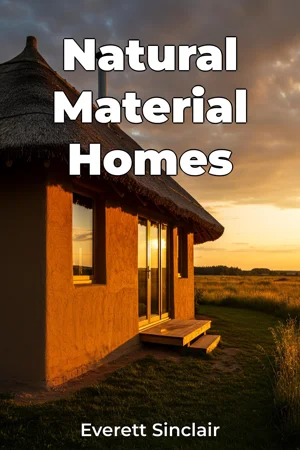
"Natural Material Homes" explores the resurgence of natural materials in creating sustainable and comfortable residences, particularly focusing on environmentally conscious cooling solutions. It examines how ancient building techniques, combined with modern architectural innovation, can offer a path to more sustainable homes. The book highlights intriguing facts, such as the inherent thermal properties of materials like earth and timber, which naturally regulate temperature and humidity, reducing the need for energy-intensive cooling systems. Additionally, it delves into vernacular architecture, revealing how traditional designs have effectively provided comfortable living environments for centuries across diverse climates. The book bridges the gap between traditional knowledge and modern building practices, presenting information in an accessible manner for architects, builders, and homeowners alike. It progresses by first introducing the fundamentals of thermal comfort and the environmental impact of conventional materials. Following this foundation, the book examines specific natural materials like adobe, rammed earth, timber framing, hempcrete and straw bale, analyzing their thermal performance and environmental impact. The later chapters investigate case studies of vernacular architecture and explore the integration of these techniques with modern design.
Book Details
ISBN
9788235213297
Publisher
Publifye AS
Your Licenses
You don't own any licenses for this book
Purchase a license below to unlock this book and download the EPUB.
Purchase License
Select a tier to unlock this book
Need bulk licensing?
Contact us for enterprise agreements.