
About This Book
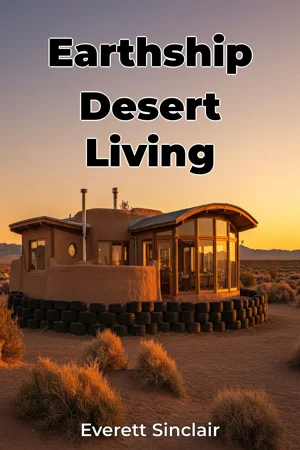
Can homes truly become self-sufficient ecosystems, harmonizing human needs with the harsh realities of arid environments? "Earthship Desert Living" delves into the innovative world of Earthships, sustainable homes constructed from recycled materials, offering a blueprint for efficient and resilient living in drylands. This book explores the design principles, construction techniques, and environmental benefits of Earthships, providing a comprehensive guide to creating off-grid homes that thrive in desert climates. This book primarily focuses on three main topics: sustainable architecture, resource reclamation, and arid-climate habitation. Sustainable architecture is important because conventional construction practices often lead to significant environmental degradation. Resource reclamation addresses the critical need to reduce waste and reuse existing materials, transforming discarded items into valuable building components. Arid-climate habitation is relevant as water scarcity and extreme temperatures pose significant challenges to traditional housing in desert regions. The concept of Earthships emerged in the 1970s, spearheaded by architect Michael Reynolds and his dedication to environmentally conscious building. Faced with the limitations of conventional architecture, Reynolds sought to create homes that could generate their own electricity, harvest their own water, and regulate their own temperature, all while utilizing waste materials. The book will discuss how Reynolds' initial vision evolved into the sophisticated Earthship designs found today and the history of the movement. The central argument of "Earthship Desert Living" is that Earthships offer a viable and ecologically sound alternative to conventional housing in arid environments. By integrating passive solar design, thermal mass, water harvesting, and waste treatment systems, Earthships minimize environmental impact and maximize self-sufficiency. This argument is important because it challenges the status quo of resource-intensive construction practices and highlights the potential for creating truly sustainable communities in even the most challenging climates. The book begins by introducing the core principles of Earthship design, explaining how each element contributes to the home's overall sustainability. It then develops these ideas through detailed case studies of existing Earthships in various arid locations, showcasing their performance and adaptability. Major points include building techniques, water harvesting, waste management, and energy production and storage. The culmination of the book lies in a practical guide to designing and building your own Earthship, providing step-by-step instructions, material lists, and design considerations. Finally, the book explores the broader implications of Earthship living, discussing its potential to address global environmental challenges and promote a more sustainable way of life. To support its arguments, "Earthship Desert Living" presents a wealth of data on Earthship performance, gathered from monitoring systems installed in various Earthship communities. This data includes information on energy consumption, water usage, indoor temperature regulation, and waste reduction. The book also draws on research from fields such as environmental science, engineering, and sustainable design, providing a broad evidence base for its claims. The book identifies interdisciplinary connections to environmental science, civil engineering, and sociology. The design principles are rooted in environmental science. Civil engineering principles are vital for structural integrity and system design, and the impact of Earthship communities on social structures and ways of life will be examined. "Earthship Desert Living" introduces the innovative concept of autonomous buildings that function as self-contained ecosystems. It explains how these homes can not only minimize their environmental impact but also actively contribute to environmental restoration. The book adopts a practical and accessible tone, making complex technical information understandable to a wide audience. It balances theoretical concepts with real-world examples and practical advice, appealing to both academics and hands-on builders. The target audience includes environmental enthusiasts, architects, builders, homeowners, and anyone interested in sustainable living. "Earthship Desert Living" would also be valuable to students and researchers in fields such as environmental science, architecture, and engineering. As an architecture book, it will include detailed floor plans, schematics, and photographs of Earthship designs. As an environmental guide, it will provide data on the environmental benefits of Earthship living. The scope focuses on Earthships in arid climates, acknowledging that design considerations may differ in other regions. This intentional limitation allows for a deeper exploration of the challenges and opportunities specific to desert environments. Readers can apply the information in "Earthship Desert Living" to design and build their own Earthships, retrofit existing homes with sustainable features, or advocate for more sustainable building practices in their communities. The book also addresses the concerns about the initial cost of Earthship construction, which can be higher than conventional building. It explores ways to reduce costs through material sourcing, labor sharing, and innovative design solutions.
Can homes truly become self-sufficient ecosystems, harmonizing human needs with the harsh realities of arid environments? "Earthship Desert Living" delves into the innovative world of Earthships, sustainable homes constructed from recycled materials, offering a blueprint for efficient and resilient living in drylands. This book explores the design principles, construction techniques, and environmental benefits of Earthships, providing a comprehensive guide to creating off-grid homes that thrive in desert climates. This book primarily focuses on three main topics: sustainable architecture, resource reclamation, and arid-climate habitation. Sustainable architecture is important because conventional construction practices often lead to significant environmental degradation. Resource reclamation addresses the critical need to reduce waste and reuse existing materials, transforming discarded items into valuable building components. Arid-climate habitation is relevant as water scarcity and extreme temperatures pose significant challenges to traditional housing in desert regions. The concept of Earthships emerged in the 1970s, spearheaded by architect Michael Reynolds and his dedication to environmentally conscious building. Faced with the limitations of conventional architecture, Reynolds sought to create homes that could generate their own electricity, harvest their own water, and regulate their own temperature, all while utilizing waste materials. The book will discuss how Reynolds' initial vision evolved into the sophisticated Earthship designs found today and the history of the movement. The central argument of "Earthship Desert Living" is that Earthships offer a viable and ecologically sound alternative to conventional housing in arid environments. By integrating passive solar design, thermal mass, water harvesting, and waste treatment systems, Earthships minimize environmental impact and maximize self-sufficiency. This argument is important because it challenges the status quo of resource-intensive construction practices and highlights the potential for creating truly sustainable communities in even the most challenging climates. The book begins by introducing the core principles of Earthship design, explaining how each element contributes to the home's overall sustainability. It then develops these ideas through detailed case studies of existing Earthships in various arid locations, showcasing their performance and adaptability. Major points include building techniques, water harvesting, waste management, and energy production and storage. The culmination of the book lies in a practical guide to designing and building your own Earthship, providing step-by-step instructions, material lists, and design considerations. Finally, the book explores the broader implications of Earthship living, discussing its potential to address global environmental challenges and promote a more sustainable way of life. To support its arguments, "Earthship Desert Living" presents a wealth of data on Earthship performance, gathered from monitoring systems installed in various Earthship communities. This data includes information on energy consumption, water usage, indoor temperature regulation, and waste reduction. The book also draws on research from fields such as environmental science, engineering, and sustainable design, providing a broad evidence base for its claims. The book identifies interdisciplinary connections to environmental science, civil engineering, and sociology. The design principles are rooted in environmental science. Civil engineering principles are vital for structural integrity and system design, and the impact of Earthship communities on social structures and ways of life will be examined. "Earthship Desert Living" introduces the innovative concept of autonomous buildings that function as self-contained ecosystems. It explains how these homes can not only minimize their environmental impact but also actively contribute to environmental restoration. The book adopts a practical and accessible tone, making complex technical information understandable to a wide audience. It balances theoretical concepts with real-world examples and practical advice, appealing to both academics and hands-on builders. The target audience includes environmental enthusiasts, architects, builders, homeowners, and anyone interested in sustainable living. "Earthship Desert Living" would also be valuable to students and researchers in fields such as environmental science, architecture, and engineering. As an architecture book, it will include detailed floor plans, schematics, and photographs of Earthship designs. As an environmental guide, it will provide data on the environmental benefits of Earthship living. The scope focuses on Earthships in arid climates, acknowledging that design considerations may differ in other regions. This intentional limitation allows for a deeper exploration of the challenges and opportunities specific to desert environments. Readers can apply the information in "Earthship Desert Living" to design and build their own Earthships, retrofit existing homes with sustainable features, or advocate for more sustainable building practices in their communities. The book also addresses the concerns about the initial cost of Earthship construction, which can be higher than conventional building. It explores ways to reduce costs through material sourcing, labor sharing, and innovative design solutions.
"Earthship Desert Living" explores Earthships, a revolutionary approach to sustainable architecture particularly suited for arid climates. It highlights how these off-grid homes, constructed from recycled materials, offer a path to resource reclamation and self-sufficient living. The book details how Earthships utilize passive solar design and thermal mass to regulate temperature, showcasing their ability to create comfortable living spaces in harsh desert conditions. The book emphasizes the importance of water harvesting and efficient waste management systems in Earthship design. It examines how these homes function as autonomous buildings, minimizing environmental impact. By integrating environmental science and civil engineering principles, Earthships challenge traditional construction methods, offering a blueprint for sustainable homes. Beginning with core design principles, the book progresses through case studies and practical guides. It provides readers with step-by-step instructions, empowering them to design and build their own Earthships. Ultimately, "Earthship Desert Living" promotes a vision of a more sustainable future, demonstrating the potential of these unique structures to address global environmental challenges.
Book Details
ISBN
9788235213174
Publisher
Publifye AS
Your Licenses
You don't own any licenses for this book
Purchase a license below to unlock this book and download the EPUB.
Purchase License
Select a tier to unlock this book
Need bulk licensing?
Contact us for enterprise agreements.