
About This Book
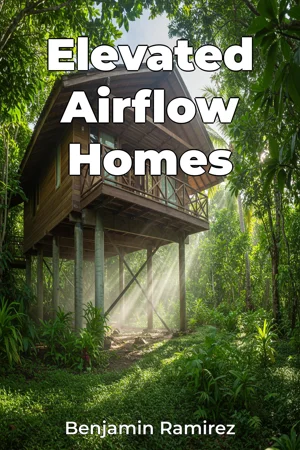
Can elevated architectural designs revolutionize natural ventilation in homes, particularly in tropical climates? "Elevated Airflow Homes" investigates the principles of raised architectural designs and their potential to significantly improve ventilation, leading to more comfortable and sustainable living environments. This book is significant because it addresses a crucial need for energy-efficient and climate-responsive building practices, especially in regions where mechanical cooling systems are heavily relied upon. The core concepts explored in this book are natural ventilation strategies, the physics of airflow around and beneath elevated structures, and the adaptation of traditional building techniques. Understanding these topics is essential for architects, designers, and homeowners seeking to minimize energy consumption and maximize thermal comfort using passive design solutions. A basic understanding of architectural design principles and climate-responsive building practices is helpful for readers to fully appreciate the content. This book argues that elevating homes is an effective strategy for enhancing natural ventilation, reducing reliance on air conditioning, and creating more sustainable and comfortable living spaces, primarily, but not exclusively, in tropical contexts. This argument is critical because it offers a tangible solution to reduce the environmental impact of buildings and improve indoor air quality. The book is structured in four key parts. First, it introduces the fundamental principles of natural ventilation and the historical context of elevated buildings in tropical regions. Second, it delves into the physics of airflow, exploring how wind interacts with raised structures to promote ventilation. This section includes case studies analyzing various elevated house designs and their ventilation performance. Third, the book explores the practical application of these concepts, providing design guidelines and strategies for architects and builders. Here, construction methods that support this design philosophy are examined. Finally, the book culminates in a discussion of the broader implications of elevated airflow homes, including their impact on energy consumption, carbon emissions, and occupant well-being, with a view to future trends in sustainable architecture. The analysis presented is supported by a range of evidence, including computational fluid dynamics (CFD) simulations, on-site measurements of temperature and airflow in elevated homes, and comparative studies of different building designs. Furthermore, the book draws upon field research conducted in tropical regions, examining traditional building practices and their effectiveness in promoting natural ventilation. "Elevated Airflow Homes" connects to several other fields, including sustainable design, environmental engineering, and urban planning. The book's focus on energy-efficient building practices aligns with the goals of sustainable design, while its analysis of airflow patterns is related to environmental engineering. The concepts discussed also have implications for urban planning, as elevated buildings can contribute to improved microclimates in dense urban areas. This book offers a unique perspective by combining scientific analysis with practical design guidelines, providing a comprehensive resource for architects and builders. It stands out for its emphasis on the integration of traditional building techniques with modern design principles, creating innovative and sustainable housing solutions. The book adopts a balanced tone, presenting information in a clear and accessible manner while maintaining a level of scientific rigor. The writing style is informative and engaging, catering to a broad audience, including architects, designers, builders, homeowners, and students. This book is intended for architects, designers, builders, homeowners, and students interested in sustainable building practices and climate-responsive design. It would be valuable to anyone seeking to reduce their environmental impact and create more comfortable and energy-efficient living spaces. As a work focusing on architectural and design principles, it provides detailed visual examples and case studies, adhering to the standards of the genre. The scope of the book is primarily focused on the design and performance of elevated homes in tropical climates. While the principles discussed can be applied to other regions, the book's emphasis is on the specific challenges and opportunities presented by tropical environments. The information in the book can be applied practically by architects and builders to design and construct elevated homes that maximize natural ventilation. Homeowners can also use the information to make informed decisions about building design and renovation, improving the comfort and sustainability of their homes. The book addresses the ongoing debate surrounding the effectiveness of passive design strategies compared to mechanical cooling systems. It presents evidence supporting the argument that elevated homes can significantly reduce the need for air conditioning, leading to lower energy consumption and reduced carbon emissions.
Can elevated architectural designs revolutionize natural ventilation in homes, particularly in tropical climates? "Elevated Airflow Homes" investigates the principles of raised architectural designs and their potential to significantly improve ventilation, leading to more comfortable and sustainable living environments. This book is significant because it addresses a crucial need for energy-efficient and climate-responsive building practices, especially in regions where mechanical cooling systems are heavily relied upon. The core concepts explored in this book are natural ventilation strategies, the physics of airflow around and beneath elevated structures, and the adaptation of traditional building techniques. Understanding these topics is essential for architects, designers, and homeowners seeking to minimize energy consumption and maximize thermal comfort using passive design solutions. A basic understanding of architectural design principles and climate-responsive building practices is helpful for readers to fully appreciate the content. This book argues that elevating homes is an effective strategy for enhancing natural ventilation, reducing reliance on air conditioning, and creating more sustainable and comfortable living spaces, primarily, but not exclusively, in tropical contexts. This argument is critical because it offers a tangible solution to reduce the environmental impact of buildings and improve indoor air quality. The book is structured in four key parts. First, it introduces the fundamental principles of natural ventilation and the historical context of elevated buildings in tropical regions. Second, it delves into the physics of airflow, exploring how wind interacts with raised structures to promote ventilation. This section includes case studies analyzing various elevated house designs and their ventilation performance. Third, the book explores the practical application of these concepts, providing design guidelines and strategies for architects and builders. Here, construction methods that support this design philosophy are examined. Finally, the book culminates in a discussion of the broader implications of elevated airflow homes, including their impact on energy consumption, carbon emissions, and occupant well-being, with a view to future trends in sustainable architecture. The analysis presented is supported by a range of evidence, including computational fluid dynamics (CFD) simulations, on-site measurements of temperature and airflow in elevated homes, and comparative studies of different building designs. Furthermore, the book draws upon field research conducted in tropical regions, examining traditional building practices and their effectiveness in promoting natural ventilation. "Elevated Airflow Homes" connects to several other fields, including sustainable design, environmental engineering, and urban planning. The book's focus on energy-efficient building practices aligns with the goals of sustainable design, while its analysis of airflow patterns is related to environmental engineering. The concepts discussed also have implications for urban planning, as elevated buildings can contribute to improved microclimates in dense urban areas. This book offers a unique perspective by combining scientific analysis with practical design guidelines, providing a comprehensive resource for architects and builders. It stands out for its emphasis on the integration of traditional building techniques with modern design principles, creating innovative and sustainable housing solutions. The book adopts a balanced tone, presenting information in a clear and accessible manner while maintaining a level of scientific rigor. The writing style is informative and engaging, catering to a broad audience, including architects, designers, builders, homeowners, and students. This book is intended for architects, designers, builders, homeowners, and students interested in sustainable building practices and climate-responsive design. It would be valuable to anyone seeking to reduce their environmental impact and create more comfortable and energy-efficient living spaces. As a work focusing on architectural and design principles, it provides detailed visual examples and case studies, adhering to the standards of the genre. The scope of the book is primarily focused on the design and performance of elevated homes in tropical climates. While the principles discussed can be applied to other regions, the book's emphasis is on the specific challenges and opportunities presented by tropical environments. The information in the book can be applied practically by architects and builders to design and construct elevated homes that maximize natural ventilation. Homeowners can also use the information to make informed decisions about building design and renovation, improving the comfort and sustainability of their homes. The book addresses the ongoing debate surrounding the effectiveness of passive design strategies compared to mechanical cooling systems. It presents evidence supporting the argument that elevated homes can significantly reduce the need for air conditioning, leading to lower energy consumption and reduced carbon emissions.
"Elevated Airflow Homes" explores how raised architectural designs can revolutionize natural ventilation, particularly in tropical climates, leading to more sustainable and comfortable living. The book highlights the potential of elevated structures to reduce reliance on air conditioning, offering a tangible solution to minimize buildings' environmental impact. It investigates the physics of airflow around elevated structures, demonstrating how wind interacts with these designs to promote ventilation. The book is divided into four parts, starting with the fundamentals of natural ventilation and the history of elevated buildings. It then delves into airflow physics with case studies, followed by design guidelines for architects and builders. The book culminates by discussing the broader implications on energy consumption and occupant well-being. Supported by CFD simulations and on-site measurements, the book uniquely combines scientific analysis with practical design advice. This book is a valuable resource for architects, designers, and homeowners interested in sustainable architecture and climate-responsive design. It emphasizes integrating traditional building techniques with modern design principles to create innovative and energy-efficient homes. By understanding airflow physics and passive design, readers can make informed decisions to enhance home comfort while reducing environmental impact.
Book Details
ISBN
9788235213143
Publisher
Publifye AS
Your Licenses
You don't own any licenses for this book
Purchase a license below to unlock this book and download the EPUB.
Purchase License
Select a tier to unlock this book
Need bulk licensing?
Contact us for enterprise agreements.