
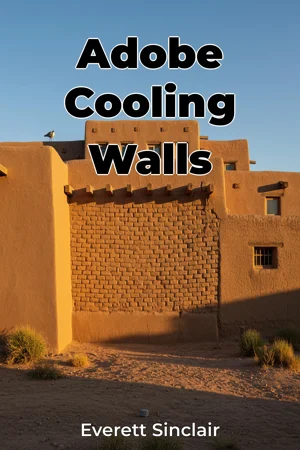
About This Book
Can ancient building techniques offer a sustainable solution to modern cooling challenges? "Adobe Cooling Walls" delves into the science and application of mud-brick construction, examining its inherent thermal properties and potential for creating energy-efficient, comfortable living spaces. The book focuses on two primary topics: the thermal mass capabilities of adobe and its practical application in contemporary architectural design. Understanding these elements is increasingly important as climate change necessitates innovative and environmentally conscious building practices. The book begins by establishing a historical and scientific context for adobe construction. It explores the material's origins in ancient civilizations, its prevalence in various arid climates around the world, and the basic principles of thermal mass. Readers will gain a foundational understanding of heat transfer, insulation, and the specific properties of earth-based materials, as a prerequisite to understanding the more advanced concepts. The central argument of "Adobe Cooling Walls" is that the intelligent utilization of adobe's thermal mass can significantly reduce the need for energy-intensive cooling systems in buildings, leading to more sustainable and cost-effective construction. This argument is crucial because it challenges conventional reliance on mechanical solutions and promotes a return to passive design strategies that are inherently more environmentally friendly. The book systematically builds its case. It starts by introducing the fundamental physics of thermal mass and how adobe, in particular, excels at absorbing, storing, and releasing heat. It then dedicates several chapters to exploring the practical application of these principles. This includes detailed analyses of wall thickness, orientation, and material composition and their impact on indoor temperatures. A significant portion of the book is devoted to case studies examining existing adobe structures from around the globe, showcasing both successful and unsuccessful implementations of adobe cooling techniques. Finally, the book culminates in a discussion of modern adaptations and innovations, exploring how adobe can be integrated with contemporary building technologies to maximize its cooling potential. “Adobe Cooling Walls” also incorporates a variety of data. It draws architectural data and insights and presents thermal performance data from scientific studies, including temperature measurements, energy consumption analyses, and computer simulations. It also references established building codes and standards related to thermal performance and energy efficiency. The interdisciplinary nature of adobe construction is explored, highlighting connections to fields such as material science, environmental engineering, and sustainable urban planning. The book uniquely bridges the gap between traditional building methods and modern scientific understanding, offering a holistic perspective on sustainable architecture. The book’s tone is technical yet accessible, blending scientific rigor with practical guidance. It is intended for architects, engineers, builders, designers, and anyone interested in sustainable building practices. "Adobe Cooling Walls" is a valuable resource for professionals seeking to incorporate passive cooling strategies into their designs and for homeowners looking to build or renovate energy-efficient homes. The scope of the book is intentionally focused on the cooling properties of adobe walls, and does not delve into other aspects of adobe construction such as structural engineering or seismic resistance. It acknowledges existing debates surrounding the use of vernacular building materials in modern construction, recognizing both the benefits and challenges of adopting adobe as a mainstream building material. One of the key real-world applications discussed in the book is the potential for adobe construction to mitigate the effects of climate change by reducing energy consumption and promoting the use of locally sourced materials.
Can ancient building techniques offer a sustainable solution to modern cooling challenges? "Adobe Cooling Walls" delves into the science and application of mud-brick construction, examining its inherent thermal properties and potential for creating energy-efficient, comfortable living spaces. The book focuses on two primary topics: the thermal mass capabilities of adobe and its practical application in contemporary architectural design. Understanding these elements is increasingly important as climate change necessitates innovative and environmentally conscious building practices. The book begins by establishing a historical and scientific context for adobe construction. It explores the material's origins in ancient civilizations, its prevalence in various arid climates around the world, and the basic principles of thermal mass. Readers will gain a foundational understanding of heat transfer, insulation, and the specific properties of earth-based materials, as a prerequisite to understanding the more advanced concepts. The central argument of "Adobe Cooling Walls" is that the intelligent utilization of adobe's thermal mass can significantly reduce the need for energy-intensive cooling systems in buildings, leading to more sustainable and cost-effective construction. This argument is crucial because it challenges conventional reliance on mechanical solutions and promotes a return to passive design strategies that are inherently more environmentally friendly. The book systematically builds its case. It starts by introducing the fundamental physics of thermal mass and how adobe, in particular, excels at absorbing, storing, and releasing heat. It then dedicates several chapters to exploring the practical application of these principles. This includes detailed analyses of wall thickness, orientation, and material composition and their impact on indoor temperatures. A significant portion of the book is devoted to case studies examining existing adobe structures from around the globe, showcasing both successful and unsuccessful implementations of adobe cooling techniques. Finally, the book culminates in a discussion of modern adaptations and innovations, exploring how adobe can be integrated with contemporary building technologies to maximize its cooling potential. “Adobe Cooling Walls” also incorporates a variety of data. It draws architectural data and insights and presents thermal performance data from scientific studies, including temperature measurements, energy consumption analyses, and computer simulations. It also references established building codes and standards related to thermal performance and energy efficiency. The interdisciplinary nature of adobe construction is explored, highlighting connections to fields such as material science, environmental engineering, and sustainable urban planning. The book uniquely bridges the gap between traditional building methods and modern scientific understanding, offering a holistic perspective on sustainable architecture. The book’s tone is technical yet accessible, blending scientific rigor with practical guidance. It is intended for architects, engineers, builders, designers, and anyone interested in sustainable building practices. "Adobe Cooling Walls" is a valuable resource for professionals seeking to incorporate passive cooling strategies into their designs and for homeowners looking to build or renovate energy-efficient homes. The scope of the book is intentionally focused on the cooling properties of adobe walls, and does not delve into other aspects of adobe construction such as structural engineering or seismic resistance. It acknowledges existing debates surrounding the use of vernacular building materials in modern construction, recognizing both the benefits and challenges of adopting adobe as a mainstream building material. One of the key real-world applications discussed in the book is the potential for adobe construction to mitigate the effects of climate change by reducing energy consumption and promoting the use of locally sourced materials.
"Adobe Cooling Walls" explores the potential of ancient adobe construction techniques to address modern cooling challenges, focusing on sustainable building practices. The book highlights adobe's inherent thermal properties, particularly its ability to act as thermal mass, absorbing and releasing heat to regulate indoor temperatures. Readers may be surprised to learn that strategically designed adobe walls can significantly reduce reliance on energy-intensive air conditioning, offering a cost-effective and environmentally friendly alternative. The book presents a systematic analysis, starting with the historical and scientific context of adobe, including its prevalence in arid climates. It then delves into the practical applications of adobe's thermal mass, examining factors like wall thickness and orientation. Case studies from around the globe showcase successful and unsuccessful implementations of adobe cooling, while modern adaptations demonstrate how adobe can be integrated with contemporary technologies. This interdisciplinary approach bridges traditional methods with modern science, making it a valuable resource for those interested in design and architecture.
Book Details
ISBN
9788235213136
Publisher
Publifye AS
Your Licenses
You don't own any licenses for this book
Purchase a license below to unlock this book and download the EPUB.
Purchase License
Select a tier to unlock this book
Need bulk licensing?
Contact us for enterprise agreements.