
About This Book
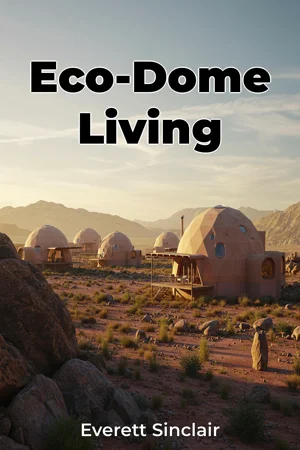
In an era defined by increasing environmental concerns and a growing need for sustainable housing solutions, how can architectural innovation address the challenges of arid climates? "Eco-Dome Living" investigates the potential of dome-shaped homes as a viable and eco-conscious alternative for sustainable living, particularly in water-scarce regions. This book explores the intersection of environmental sustainability, architectural design, and practical housing solutions. The significance of this exploration lies in its potential to provide a model for creating resilient communities capable of thriving in the face of climate change and resource limitations. Understanding the principles of sustainable architecture requires an understanding of environmental science, material science, and engineering. The book provides the necessary foundational knowledge, covering topics such as passive solar design, thermal mass, and water conservation techniques. "Eco-Dome Living" posits that dome homes, when designed and constructed with sustainability in mind, offer a compelling solution for arid regions due to their inherent structural efficiency, thermal properties, and potential for water harvesting. The argument is crucial because it challenges conventional housing norms and advocates for a paradigm shift towards environmentally responsible building practices that prioritize resource conservation and resilience. The book begins by introducing the fundamental concepts of dome architecture and their historical applications, then delves into the scientific principles that make them suitable for arid climates. Subsequent chapters examine material choices, construction techniques, and systems for water harvesting and waste management, offering guidance on designing and building eco-friendly dome homes. The arguments culminate in case studies of existing dome communities, showcasing their successes and addressing their challenges. Finally, the book outlines practical steps and resources for readers interested in building or inhabiting eco-domes, considering financial, regulatory, and social factors. Evidence will be drawn from a variety of sources, including architectural studies, engineering reports, environmental impact assessments, and first-hand accounts from dome home residents. Data from "Housing Studies" will be used to provide context, compare costs, and assess the social implications of dome living and will also feature case studies of innovative dome construction projects from around the world, illustrating the practical application of eco-dome principles. This book connects to several interdisciplinary fields, including environmental science (understanding ecosystems and resource management), civil engineering (structural integrity and construction methodologies), and sociology (community development and sustainable lifestyles). These connections enrich the book’s argument by providing a multi-faceted analysis of eco-dome living and its potential impact on society and the environment. "Eco-Dome Living' adopts a practical, solutions-oriented approach. The writing style is accessible to a broad audience, blending technical information with real-world examples and case studies. The intended audience includes architects, engineers, environmentalists, sustainable living enthusiasts, and anyone interested in alternative housing solutions. The content is valuable to them because it offers a comprehensive guide to designing, building, and living in eco-domes, providing the knowledge and resources needed to make informed decisions. As a work of non-fiction focused on architecture and environmental sustainability, readers can expect well-researched, fact-checked information, clear and concise explanations, and practical guidance. The scope of the book encompasses the design, construction, and habitation of eco-domes in arid climates, while excluding detailed discussion of specific building codes due to their variability across regions. The information in this book can be applied to various real-world scenarios, such as designing sustainable communities, retrofitting existing buildings with eco-dome principles, and developing affordable housing solutions for arid regions. The book addresses the practical challenges of dome construction and highlights the long-term benefits of sustainable living in arid climates, providing a balanced perspective on the potential and limitations of eco-dome living.
In an era defined by increasing environmental concerns and a growing need for sustainable housing solutions, how can architectural innovation address the challenges of arid climates? "Eco-Dome Living" investigates the potential of dome-shaped homes as a viable and eco-conscious alternative for sustainable living, particularly in water-scarce regions. This book explores the intersection of environmental sustainability, architectural design, and practical housing solutions. The significance of this exploration lies in its potential to provide a model for creating resilient communities capable of thriving in the face of climate change and resource limitations. Understanding the principles of sustainable architecture requires an understanding of environmental science, material science, and engineering. The book provides the necessary foundational knowledge, covering topics such as passive solar design, thermal mass, and water conservation techniques. "Eco-Dome Living" posits that dome homes, when designed and constructed with sustainability in mind, offer a compelling solution for arid regions due to their inherent structural efficiency, thermal properties, and potential for water harvesting. The argument is crucial because it challenges conventional housing norms and advocates for a paradigm shift towards environmentally responsible building practices that prioritize resource conservation and resilience. The book begins by introducing the fundamental concepts of dome architecture and their historical applications, then delves into the scientific principles that make them suitable for arid climates. Subsequent chapters examine material choices, construction techniques, and systems for water harvesting and waste management, offering guidance on designing and building eco-friendly dome homes. The arguments culminate in case studies of existing dome communities, showcasing their successes and addressing their challenges. Finally, the book outlines practical steps and resources for readers interested in building or inhabiting eco-domes, considering financial, regulatory, and social factors. Evidence will be drawn from a variety of sources, including architectural studies, engineering reports, environmental impact assessments, and first-hand accounts from dome home residents. Data from "Housing Studies" will be used to provide context, compare costs, and assess the social implications of dome living and will also feature case studies of innovative dome construction projects from around the world, illustrating the practical application of eco-dome principles. This book connects to several interdisciplinary fields, including environmental science (understanding ecosystems and resource management), civil engineering (structural integrity and construction methodologies), and sociology (community development and sustainable lifestyles). These connections enrich the book’s argument by providing a multi-faceted analysis of eco-dome living and its potential impact on society and the environment. "Eco-Dome Living' adopts a practical, solutions-oriented approach. The writing style is accessible to a broad audience, blending technical information with real-world examples and case studies. The intended audience includes architects, engineers, environmentalists, sustainable living enthusiasts, and anyone interested in alternative housing solutions. The content is valuable to them because it offers a comprehensive guide to designing, building, and living in eco-domes, providing the knowledge and resources needed to make informed decisions. As a work of non-fiction focused on architecture and environmental sustainability, readers can expect well-researched, fact-checked information, clear and concise explanations, and practical guidance. The scope of the book encompasses the design, construction, and habitation of eco-domes in arid climates, while excluding detailed discussion of specific building codes due to their variability across regions. The information in this book can be applied to various real-world scenarios, such as designing sustainable communities, retrofitting existing buildings with eco-dome principles, and developing affordable housing solutions for arid regions. The book addresses the practical challenges of dome construction and highlights the long-term benefits of sustainable living in arid climates, providing a balanced perspective on the potential and limitations of eco-dome living.
"Eco-Dome Living" explores dome architecture as a sustainable housing solution, especially for arid climates facing water scarcity. The book champions eco-domes for their structural efficiency, thermal properties, and water harvesting potential, challenging conventional norms. It introduces eco-dome living as a practical solution, where dome homes offer benefits such as resilience to environmental stressors and reduced resource consumption through passive solar design and thermal mass. The book progresses from the history and science of dome architecture to practical guidance on material selection, construction techniques, and water/waste management systems. Case studies illustrate real-world successes and challenges of existing dome communities. By blending technical information with examples, "Eco-Dome Living" provides a comprehensive guide for those interested in sustainable architecture and alternative housing, from architects to environmental enthusiasts.
Book Details
ISBN
9788235213006
Publisher
Publifye AS
Your Licenses
You don't own any licenses for this book
Purchase a license below to unlock this book and download the EPUB.
Purchase License
Select a tier to unlock this book
Need bulk licensing?
Contact us for enterprise agreements.