
About This Book
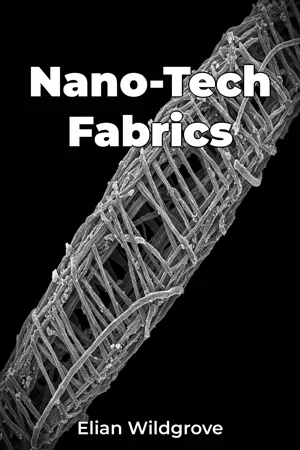
Imagine a world where your clothes can regulate your body temperature, monitor your health, or even generate power. "Nano-Tech Fabrics" explores the rapidly evolving world of textiles enhanced by nanotechnology, and how these advanced materials are poised to revolutionize industries from healthcare and sportswear to construction and energy. This book examines the underlying material science principles that enable nano-tech fabrics to possess functionalities far beyond those of conventional textiles. An understanding of basic chemistry and physics is helpful but not required, as concepts are explained with clarity. We begin by delving into the fundamentals of nanotechnology and its application to textiles. We explore how manipulating materials at the nanoscale allows for the creation of fabrics with tailored properties, such as enhanced strength, water resistance, antimicrobial capabilities, and electrical conductivity. We place these developments within the context of the broader history of textile innovation, highlighting how nano-tech fabrics represent the next stage of evolution. The central argument of "Nano-Tech Fabrics" is that the convergence of nanotechnology and textile engineering is creating a new paradigm in material science, one with the potential to address pressing global challenges and improve the quality of life. This book is structured to provide a comprehensive overview of this emerging field. Part one introduces the core concepts of nanotechnology and their relevance to textiles; explaining terms like nanoparticles, nanotubes, and nanofibers. Part two focuses on specific types of nano-enhanced fabrics and their applications. This includes chapters dedicated to water-repellent and self-cleaning fabrics, antimicrobial textiles for medical applications, and conductive fabrics for wearable electronics. Part three analyzes the challenges and opportunities associated with the widespread adoption of nano-tech fabrics, including environmental concerns, manufacturing costs, and regulatory hurdles. Throughout the book, case studies showcase real-world examples of nano-tech fabrics in action, illustrating their potential impact across diverse sectors. We rely upon academic publications, patent filings, and industry reports to support our arguments, offering a robust and evidence-based account of the field. In addition to these data sources, we present some original analysis of market trends and technological developments. This book draws connections to several related fields, including materials science, chemical engineering, biomedical engineering, and environmental science. For example, it discusses the environmental impact of nanomaterials, linking textile innovation to sustainable development goals. "Nano-Tech Fabrics" distinguishes itself by its holistic approach, combining technical details with broader industry and societal implications. It avoids excessive jargon while providing enough scientific depth to satisfy readers with a technical background. The writing style is informative and accessible, designed to appeal to both technical experts and general readers interested in the future of textiles and technology. The book is targeted towards students, researchers, engineers, and anyone seeking a comprehensive understanding of nano-tech fabrics. It would also be valuable to entrepreneurs and investors looking to identify opportunities in this rapidly growing market. As a work within the genres of science and technology, the book emphasizes empirical evidence, objective analysis, and clear communication of complex concepts, adhering to the standards expected of scientific literature. The book's scope is limited to the application of nanotechnology in textile manufacturing. The detailed physics of some quantum-mechanical effects are absent, and the focus remains on applications. "Nano-Tech Fabrics" emphasizes real-world applications. For instance, the book explores how nano-tech fabrics can be used to develop advanced wound dressings that promote faster healing, create protective clothing for first responders, and design energy-harvesting textiles that power wearable devices. The potential applications are far-reaching and continue to expand as the field evolves. The book also addresses relevant controversies, such as the potential health risks associated with exposure to nanomaterials. It presents different perspectives while evaluating the evidence, allowing readers to form their own informed opinions.
Imagine a world where your clothes can regulate your body temperature, monitor your health, or even generate power. "Nano-Tech Fabrics" explores the rapidly evolving world of textiles enhanced by nanotechnology, and how these advanced materials are poised to revolutionize industries from healthcare and sportswear to construction and energy. This book examines the underlying material science principles that enable nano-tech fabrics to possess functionalities far beyond those of conventional textiles. An understanding of basic chemistry and physics is helpful but not required, as concepts are explained with clarity. We begin by delving into the fundamentals of nanotechnology and its application to textiles. We explore how manipulating materials at the nanoscale allows for the creation of fabrics with tailored properties, such as enhanced strength, water resistance, antimicrobial capabilities, and electrical conductivity. We place these developments within the context of the broader history of textile innovation, highlighting how nano-tech fabrics represent the next stage of evolution. The central argument of "Nano-Tech Fabrics" is that the convergence of nanotechnology and textile engineering is creating a new paradigm in material science, one with the potential to address pressing global challenges and improve the quality of life. This book is structured to provide a comprehensive overview of this emerging field. Part one introduces the core concepts of nanotechnology and their relevance to textiles; explaining terms like nanoparticles, nanotubes, and nanofibers. Part two focuses on specific types of nano-enhanced fabrics and their applications. This includes chapters dedicated to water-repellent and self-cleaning fabrics, antimicrobial textiles for medical applications, and conductive fabrics for wearable electronics. Part three analyzes the challenges and opportunities associated with the widespread adoption of nano-tech fabrics, including environmental concerns, manufacturing costs, and regulatory hurdles. Throughout the book, case studies showcase real-world examples of nano-tech fabrics in action, illustrating their potential impact across diverse sectors. We rely upon academic publications, patent filings, and industry reports to support our arguments, offering a robust and evidence-based account of the field. In addition to these data sources, we present some original analysis of market trends and technological developments. This book draws connections to several related fields, including materials science, chemical engineering, biomedical engineering, and environmental science. For example, it discusses the environmental impact of nanomaterials, linking textile innovation to sustainable development goals. "Nano-Tech Fabrics" distinguishes itself by its holistic approach, combining technical details with broader industry and societal implications. It avoids excessive jargon while providing enough scientific depth to satisfy readers with a technical background. The writing style is informative and accessible, designed to appeal to both technical experts and general readers interested in the future of textiles and technology. The book is targeted towards students, researchers, engineers, and anyone seeking a comprehensive understanding of nano-tech fabrics. It would also be valuable to entrepreneurs and investors looking to identify opportunities in this rapidly growing market. As a work within the genres of science and technology, the book emphasizes empirical evidence, objective analysis, and clear communication of complex concepts, adhering to the standards expected of scientific literature. The book's scope is limited to the application of nanotechnology in textile manufacturing. The detailed physics of some quantum-mechanical effects are absent, and the focus remains on applications. "Nano-Tech Fabrics" emphasizes real-world applications. For instance, the book explores how nano-tech fabrics can be used to develop advanced wound dressings that promote faster healing, create protective clothing for first responders, and design energy-harvesting textiles that power wearable devices. The potential applications are far-reaching and continue to expand as the field evolves. The book also addresses relevant controversies, such as the potential health risks associated with exposure to nanomaterials. It presents different perspectives while evaluating the evidence, allowing readers to form their own informed opinions.
"Nano-Tech Fabrics" explores the revolutionary intersection of nanotechnology and textiles, revealing how manipulating materials at the nanoscale creates fabrics with unprecedented properties. Imagine clothes that regulate body temperature or self-cleaning textiles that repel water and stains effortlessly. These nano-enhanced fabrics are poised to transform industries, offering solutions in healthcare with antimicrobial textiles, sportswear with enhanced performance, and even energy with conductive fabrics for wearable electronics. The book progresses logically, beginning with a fundamental overview of nanotechnology and its application to textiles, explaining core concepts like nanoparticles and nanofibers. It then examines specific applications, such as water-repellent, self-cleaning, and antimicrobial textiles. Finally, it addresses the challenges and opportunities associated with the widespread adoption of these materials, including environmental concerns and manufacturing costs. The book distinguishes itself by blending technical details with broader industry and societal implications, presenting a holistic view of this rapidly evolving field. This work emphasizes real-world applications of nano-tech fabrics, such as wound dressings that promote faster healing and protective clothing for first responders. By combining empirical evidence with accessible explanations, this book provides a comprehensive understanding of the science, technology, and potential of nano-tech fabrics for a broad audience.
Book Details
ISBN
9788235212900
Publisher
Publifye AS
Your Licenses
You don't own any licenses for this book
Purchase a license below to unlock this book and download the EPUB.
Purchase License
Select a tier to unlock this book
Need bulk licensing?
Contact us for enterprise agreements.