
About This Book
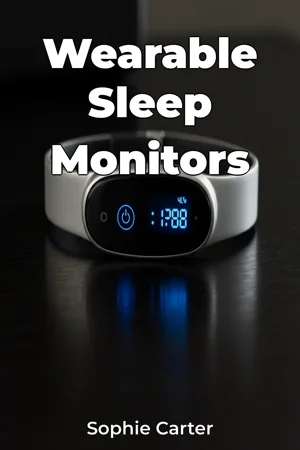
Do you ever wonder if your sleep tracker is truly giving you an accurate picture of your nightly rest, or if it's just another piece of health tech hype? "Wearable Sleep Monitors" delves deep into this question, offering a comprehensive analysis of the science, technology, and practical applications behind these increasingly popular devices focusing on their role within both personal health and the broader health tech landscape. This book tackles three primary areas: the underlying technology of wearable sleep monitors, the validity of their data, and the practical implications of using this data to improve sleep and overall health. Understanding these areas is crucial as sleep tracking becomes more integrated into our daily lives, offering potential for proactive health management but also raising concerns about accuracy, data privacy, and the potential for misinterpretation. Historically, sleep analysis relied on polysomnography (PSG) in clinical settings, a complex and expensive procedure. The advent of wearable technology promised a more accessible and convenient alternative. This book traces the evolution of sleep tracking technology, from early actigraphy devices to sophisticated wearables incorporating multiple sensors and advanced algorithms. A basic understanding of sleep stages (light, deep, REM) and common sleep disorders is helpful but not required, as these are explained in accessible terms. The central argument of "Wearable Sleep Monitors" is that while wearable sleep monitors offer valuable insights into sleep patterns, their accuracy and utility vary significantly depending on the technology used, the individual user, and the intended application. The book emphasizes a critical and informed approach to interpreting sleep data, advocating for a balanced perspective that acknowledges both the potential benefits and inherent limitations of these devices. The book begins by introducing the fundamentals of sleep science and the various technologies used in wearable monitors, such as accelerometers, heart rate sensors, and EEG. It then dedicates chapters to evaluating the accuracy and reliability of these devices compared to clinical gold standards like PSG. A major section explores how sleep data can be used to identify potential sleep problems, improve sleep hygiene, and personalize sleep-related interventions. The culmination of the argument highlights the ethical considerations surrounding sleep data privacy and the potential for misuse. The book concludes with practical guidance on selecting, using, and interpreting data from wearable sleep monitors. Supporting the arguments presented, "Wearable Sleep Monitors" synthesizes findings from numerous research studies validating (or invalidating) consumer sleep trackers against PSG. It also incorporates data from large-scale population studies using wearable devices to analyze sleep patterns and their correlation with various health outcomes. The book includes critical appraisals of the methodologies used in these studies. The book also connects to fields such as behavioral science (understanding sleep habits), data science (analyzing large datasets of sleep data), and public health (using sleep data to promote population-level sleep health). These interdisciplinary connections enrich the book's analysis by providing a broader context for understanding the impact of wearable sleep monitors. A unique aspect of "Wearable Sleep Monitors" is its balanced and critical perspective. While acknowledging the advancements in sleep tracking technology, it avoids hype and presents a realistic assessment of the current state of the field. It emphasizes the importance of individual variability and the need for personalized interpretation of sleep data. The tone of the book is informative and analytical, striking a balance between academic rigor and accessibility. The writing style is clear and concise, avoiding technical jargon whenever possible. The target audience includes healthcare professionals (physicians, nurses, sleep specialists), researchers in sleep science and health technology, and consumers interested in using wearable devices to improve their sleep. It will be valuable to anyone seeking an evidence-based understanding of wearable sleep monitors. As a book in the 'Health & Fitness, Health Fitness, Technology' genres, it adheres to the conventions of providing factual information, citing credible sources, and presenting a balanced perspective on the subject matter. The scope of the book is limited to consumer-grade wearable sleep monitors and their application to sleep tracking and improvement. It does not cover clinical sleep diagnostics or treatments in detail, focusing instead on the role of wearable technology in personal sleep management. The information in "Wearable Sleep Monitors" can be applied by readers to make informed decisions about using sleep trackers, interpreting sleep data, and implementing strategies to improve their sleep. It also provides healthcare professionals with a valuable resource for counseling patients on the use of these devices. The book addresses the ongoing debates surrounding the accuracy and clinical utility of wearable sleep monitors, highlighting the conflicting findings in the research literature and offering a nuanced perspective on these controversies.
Do you ever wonder if your sleep tracker is truly giving you an accurate picture of your nightly rest, or if it's just another piece of health tech hype? "Wearable Sleep Monitors" delves deep into this question, offering a comprehensive analysis of the science, technology, and practical applications behind these increasingly popular devices focusing on their role within both personal health and the broader health tech landscape. This book tackles three primary areas: the underlying technology of wearable sleep monitors, the validity of their data, and the practical implications of using this data to improve sleep and overall health. Understanding these areas is crucial as sleep tracking becomes more integrated into our daily lives, offering potential for proactive health management but also raising concerns about accuracy, data privacy, and the potential for misinterpretation. Historically, sleep analysis relied on polysomnography (PSG) in clinical settings, a complex and expensive procedure. The advent of wearable technology promised a more accessible and convenient alternative. This book traces the evolution of sleep tracking technology, from early actigraphy devices to sophisticated wearables incorporating multiple sensors and advanced algorithms. A basic understanding of sleep stages (light, deep, REM) and common sleep disorders is helpful but not required, as these are explained in accessible terms. The central argument of "Wearable Sleep Monitors" is that while wearable sleep monitors offer valuable insights into sleep patterns, their accuracy and utility vary significantly depending on the technology used, the individual user, and the intended application. The book emphasizes a critical and informed approach to interpreting sleep data, advocating for a balanced perspective that acknowledges both the potential benefits and inherent limitations of these devices. The book begins by introducing the fundamentals of sleep science and the various technologies used in wearable monitors, such as accelerometers, heart rate sensors, and EEG. It then dedicates chapters to evaluating the accuracy and reliability of these devices compared to clinical gold standards like PSG. A major section explores how sleep data can be used to identify potential sleep problems, improve sleep hygiene, and personalize sleep-related interventions. The culmination of the argument highlights the ethical considerations surrounding sleep data privacy and the potential for misuse. The book concludes with practical guidance on selecting, using, and interpreting data from wearable sleep monitors. Supporting the arguments presented, "Wearable Sleep Monitors" synthesizes findings from numerous research studies validating (or invalidating) consumer sleep trackers against PSG. It also incorporates data from large-scale population studies using wearable devices to analyze sleep patterns and their correlation with various health outcomes. The book includes critical appraisals of the methodologies used in these studies. The book also connects to fields such as behavioral science (understanding sleep habits), data science (analyzing large datasets of sleep data), and public health (using sleep data to promote population-level sleep health). These interdisciplinary connections enrich the book's analysis by providing a broader context for understanding the impact of wearable sleep monitors. A unique aspect of "Wearable Sleep Monitors" is its balanced and critical perspective. While acknowledging the advancements in sleep tracking technology, it avoids hype and presents a realistic assessment of the current state of the field. It emphasizes the importance of individual variability and the need for personalized interpretation of sleep data. The tone of the book is informative and analytical, striking a balance between academic rigor and accessibility. The writing style is clear and concise, avoiding technical jargon whenever possible. The target audience includes healthcare professionals (physicians, nurses, sleep specialists), researchers in sleep science and health technology, and consumers interested in using wearable devices to improve their sleep. It will be valuable to anyone seeking an evidence-based understanding of wearable sleep monitors. As a book in the 'Health & Fitness, Health Fitness, Technology' genres, it adheres to the conventions of providing factual information, citing credible sources, and presenting a balanced perspective on the subject matter. The scope of the book is limited to consumer-grade wearable sleep monitors and their application to sleep tracking and improvement. It does not cover clinical sleep diagnostics or treatments in detail, focusing instead on the role of wearable technology in personal sleep management. The information in "Wearable Sleep Monitors" can be applied by readers to make informed decisions about using sleep trackers, interpreting sleep data, and implementing strategies to improve their sleep. It also provides healthcare professionals with a valuable resource for counseling patients on the use of these devices. The book addresses the ongoing debates surrounding the accuracy and clinical utility of wearable sleep monitors, highlighting the conflicting findings in the research literature and offering a nuanced perspective on these controversies.
"Wearable Sleep Monitors" explores the burgeoning field of sleep tracking technology, examining the science and practical uses of wearable devices. The book addresses whether these devices provide accurate insights into our sleep or if they are simply another example of health tech overpromise. It explains how these monitors work, assessing the validity of the data they collect and how that data can be used to improve sleep and overall health. The book reveals that while wearable sleep monitors offer potentially valuable information, their accuracy can vary. It emphasizes the importance of understanding both the benefits and limitations of using sleep trackers. The book synthesizes findings from research studies, comparing consumer sleep trackers against clinical gold standards like polysomnography (PSG). Readers will gain an understanding of how sleep data can be used to identify potential sleep problems and improve sleep hygiene. Beginning with the fundamentals of sleep science, "Wearable Sleep Monitors" progresses through the technologies used in wearables, evaluations of their accuracy, and the ethical considerations of sleep data privacy. This approach allows healthcare professionals, researchers, and interested consumers to make informed decisions about using sleep trackers and interpreting their data.
Book Details
ISBN
9788235212894
Publisher
Publifye AS
Your Licenses
You don't own any licenses for this book
Purchase a license below to unlock this book and download the EPUB.
Purchase License
Select a tier to unlock this book
Need bulk licensing?
Contact us for enterprise agreements.