
About This Book
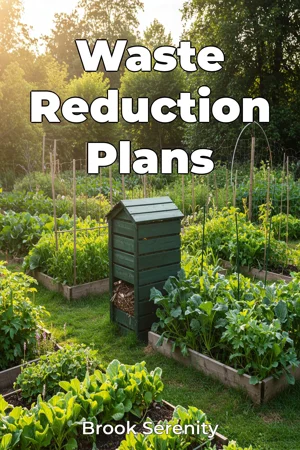
In an era defined by overflowing landfills and escalating stress levels, can conscious waste reduction significantly contribute to a more peaceful and sustainable existence? "Waste Reduction Plans" argues that it can. This book delves into the practical intersection of environmental responsibility and self-management, demonstrating how minimizing waste in our daily lives not only benefits the planet but also fosters a sense of calm and control in our increasingly chaotic world. The core topics explored are mindful consumption, effective waste diversion strategies, and the integration of these practices into a holistic approach to well-being. It's important because global waste generation continues to rise exponentially, placing immense strain on ecosystems and contributing to climate change. Simultaneously, individuals grapple with feelings of overwhelm and lack of control in their personal lives. This book posits that these two seemingly disparate problems share a common solution: a deliberate and thoughtful approach to reducing waste. This book leverages established knowledge from environmental studies, providing context for the current waste crisis, examining historical trends in consumption and disposal, and referencing scientific data on the environmental impact of various waste streams. No prior advanced knowledge is required; the book is designed to be accessible to anyone with an interest in environmental issues and personal well-being. The central argument is that a proactive approach to waste reduction, incorporating practical strategies and mindful awareness, offers a tangible pathway to both environmental sustainability and enhanced personal well-being. This argument is crucial because it reframes waste reduction as not merely an obligation but as a personally rewarding practice that contributes to a more fulfilling life. The book is structured as follows: First, we introduce the fundamental concepts of waste generation and its environmental consequences. We then explore the psychological impact of clutter and excess on personal well-being, establishing a connection between external and internal environments. The core of the book then develops through three major sections: (1) a detailed examination of source reduction strategies, including mindful purchasing and product life extension; (2) an in-depth analysis of waste diversion methods, such as composting, recycling, and reuse programs; and (3) a guide to integrating waste reduction practices into daily routines, emphasizing habit formation and long-term sustainability. The book culminates with a discussion of the broader societal implications of widespread waste reduction, highlighting the role of individual action in driving systemic change. The arguments presented are supported by evidence from environmental studies, including data on waste generation rates, landfill capacity, and the environmental impacts of various disposal methods. We draw on research in behavioral psychology to understand the factors that influence consumption habits and the effectiveness of different behavior change strategies. The book also incorporates case studies of successful waste reduction initiatives at the individual, community, and organizational levels. "Waste Reduction Plans" makes connections to several other fields, including economics (examining the economic implications of waste management and the circular economy), sociology (exploring the social norms and cultural values that influence consumption patterns), and public health (investigating the health impacts of environmental pollution associated with waste disposal). These interdisciplinary connections enrich the book's analysis and demonstrate the multifaceted nature of the waste problem. A unique aspect of this book is its integrated approach, which combines practical waste reduction strategies with principles of self-management and mindfulness. Rather than simply providing a list of "do's and don'ts," it emphasizes the importance of developing a conscious and intentional relationship with consumption and disposal. The tone is primarily informative and practical, with a focus on providing readers with actionable strategies they can implement immediately. The writing style is accessible and engaging, avoiding jargon and technical terms whenever possible. The intended audience includes environmentally conscious individuals, those seeking to simplify their lives and reduce stress, and anyone interested in learning more about sustainable living practices. This book will be valuable to them because it offers a comprehensive and practical guide to waste reduction that goes beyond simple recycling tips. As a self-help book, it offers actionable strategies, goal-setting frameworks, and progress-tracking techniques to support readers in making lasting changes to their waste-related behaviors. As an environment-focused work, it stays true to scientific accuracy and citations of existing research. The scope of "Waste Reduction Plans" is limited to practical strategies for waste reduction at the individual and household levels. While the broader societal and policy implications of waste management are discussed, the primary focus is on empowering readers to take control of their own waste footprint. The information can be applied practically in a variety of ways, from implementing simple changes in purchasing habits to developing comprehensive waste management plans for homes, offices, and community organizations. The book provides numerous examples and case studies to illustrate how the strategies can be adapted to different contexts. The book addresses some of the ongoing debates in the field of waste management, such as the effectiveness of different recycling programs and the role of incineration in waste reduction. It presents a balanced perspective on these issues.
In an era defined by overflowing landfills and escalating stress levels, can conscious waste reduction significantly contribute to a more peaceful and sustainable existence? "Waste Reduction Plans" argues that it can. This book delves into the practical intersection of environmental responsibility and self-management, demonstrating how minimizing waste in our daily lives not only benefits the planet but also fosters a sense of calm and control in our increasingly chaotic world. The core topics explored are mindful consumption, effective waste diversion strategies, and the integration of these practices into a holistic approach to well-being. It's important because global waste generation continues to rise exponentially, placing immense strain on ecosystems and contributing to climate change. Simultaneously, individuals grapple with feelings of overwhelm and lack of control in their personal lives. This book posits that these two seemingly disparate problems share a common solution: a deliberate and thoughtful approach to reducing waste. This book leverages established knowledge from environmental studies, providing context for the current waste crisis, examining historical trends in consumption and disposal, and referencing scientific data on the environmental impact of various waste streams. No prior advanced knowledge is required; the book is designed to be accessible to anyone with an interest in environmental issues and personal well-being. The central argument is that a proactive approach to waste reduction, incorporating practical strategies and mindful awareness, offers a tangible pathway to both environmental sustainability and enhanced personal well-being. This argument is crucial because it reframes waste reduction as not merely an obligation but as a personally rewarding practice that contributes to a more fulfilling life. The book is structured as follows: First, we introduce the fundamental concepts of waste generation and its environmental consequences. We then explore the psychological impact of clutter and excess on personal well-being, establishing a connection between external and internal environments. The core of the book then develops through three major sections: (1) a detailed examination of source reduction strategies, including mindful purchasing and product life extension; (2) an in-depth analysis of waste diversion methods, such as composting, recycling, and reuse programs; and (3) a guide to integrating waste reduction practices into daily routines, emphasizing habit formation and long-term sustainability. The book culminates with a discussion of the broader societal implications of widespread waste reduction, highlighting the role of individual action in driving systemic change. The arguments presented are supported by evidence from environmental studies, including data on waste generation rates, landfill capacity, and the environmental impacts of various disposal methods. We draw on research in behavioral psychology to understand the factors that influence consumption habits and the effectiveness of different behavior change strategies. The book also incorporates case studies of successful waste reduction initiatives at the individual, community, and organizational levels. "Waste Reduction Plans" makes connections to several other fields, including economics (examining the economic implications of waste management and the circular economy), sociology (exploring the social norms and cultural values that influence consumption patterns), and public health (investigating the health impacts of environmental pollution associated with waste disposal). These interdisciplinary connections enrich the book's analysis and demonstrate the multifaceted nature of the waste problem. A unique aspect of this book is its integrated approach, which combines practical waste reduction strategies with principles of self-management and mindfulness. Rather than simply providing a list of "do's and don'ts," it emphasizes the importance of developing a conscious and intentional relationship with consumption and disposal. The tone is primarily informative and practical, with a focus on providing readers with actionable strategies they can implement immediately. The writing style is accessible and engaging, avoiding jargon and technical terms whenever possible. The intended audience includes environmentally conscious individuals, those seeking to simplify their lives and reduce stress, and anyone interested in learning more about sustainable living practices. This book will be valuable to them because it offers a comprehensive and practical guide to waste reduction that goes beyond simple recycling tips. As a self-help book, it offers actionable strategies, goal-setting frameworks, and progress-tracking techniques to support readers in making lasting changes to their waste-related behaviors. As an environment-focused work, it stays true to scientific accuracy and citations of existing research. The scope of "Waste Reduction Plans" is limited to practical strategies for waste reduction at the individual and household levels. While the broader societal and policy implications of waste management are discussed, the primary focus is on empowering readers to take control of their own waste footprint. The information can be applied practically in a variety of ways, from implementing simple changes in purchasing habits to developing comprehensive waste management plans for homes, offices, and community organizations. The book provides numerous examples and case studies to illustrate how the strategies can be adapted to different contexts. The book addresses some of the ongoing debates in the field of waste management, such as the effectiveness of different recycling programs and the role of incineration in waste reduction. It presents a balanced perspective on these issues.
"Waste Reduction Plans" proposes that minimizing waste can lead to a more sustainable planet and a more serene personal life. The book explores the connection between environmental responsibility and self-management, highlighting how mindful consumption and effective waste diversion strategies can reduce waste and promote personal well-being. Did you know that global waste generation is rising exponentially, straining ecosystems and contributing to climate change? The book reframes waste reduction as a rewarding practice, not just an obligation. The book takes an integrated approach, combining practical strategies with mindfulness principles. It begins by introducing waste generation and its environmental consequences, then explores the psychological impact of clutter. The book progresses through source reduction, waste diversion, and integrating waste reduction into daily routines, emphasizing habit formation. By understanding the environmental impact and adopting simple changes, individuals can significantly reduce their waste footprint and reduce stress.
Book Details
ISBN
9788235212696
Publisher
Publifye AS
Your Licenses
You don't own any licenses for this book
Purchase a license below to unlock this book and download the EPUB.
Purchase License
Select a tier to unlock this book
Need bulk licensing?
Contact us for enterprise agreements.