
About This Book
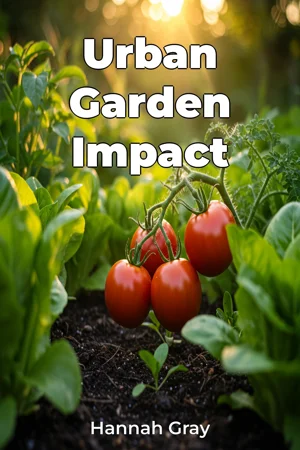
Can a simple backyard garden truly cultivate well-being alongside fresh produce? "Urban Garden Impact" delves into the profound connection between urban gardening and improved health outcomes, exploring how engaging with nature in our own backyards can significantly impact our physical and mental states. This book examines the multifaceted benefits of backyard gardening, spanning from enhanced nutrition to reduced stress levels, and demonstrates how these benefits are supported by rigorous scientific research. The core topics explored include the physiological and psychological effects of gardening, the role of gardening in promoting healthy eating habits, and the social and community-building aspects of urban agricultural practices. These topics are vital because they address pressing contemporary issues, such as rising rates of chronic diseases, increasing levels of stress and anxiety, and the need for sustainable and community-oriented solutions in urban environments. "Urban Garden Impact" provides a comprehensive overview of the current scientific literature on gardening and health. It builds upon existing research in public health, environmental psychology, and urban planning to present a holistic view of how gardening contributes to overall well-being. No specific prerequisite knowledge is required, as foundational concepts are clearly defined throughout the text. The central argument posits that consistent engagement in backyard gardening serves as an effective, accessible, and enjoyable method for improving individual and community health. This argument is important because it offers a practical, nature-based solution to many of the health challenges facing modern society. It challenges the perception of gardening as merely a hobby and elevates it to the status of a proactive health intervention. The book begins by introducing the fundamental concepts of urban gardening and its potential health benefits, setting the stage for a deeper exploration. It then develops its argument through three major sections. The first section focuses on the physiological impacts of gardening, examining how physical activity in the garden improves cardiovascular health, strengthens muscles, and enhances immune function. The second part investigates the psychological benefits, discussing how gardening reduces stress, alleviates symptoms of depression and anxiety, and promotes a sense of connection with nature. The third section explores the social dimensions of gardening, highlighting how community gardens foster social interaction, build stronger neighborhoods, and promote intergenerational learning. These sections culminate in a discussion of practical applications, offering guidance on how readers can incorporate gardening into their lives to maximize its health benefits. The evidence presented will draw from a wide range of sources, including peer-reviewed studies in medical journals, epidemiological surveys, and qualitative research examining the lived experiences of gardeners. The book will reference studies that employ various methodologies, such as randomized controlled trials, longitudinal studies, and meta-analyses, to provide a robust and evidence-based analysis. "Urban Garden Impact" connects to several interdisciplinary fields. Firstly, it links to nutrition science by exploring how gardening encourages the consumption of fresh, healthy produce, contributing to improved dietary habits. Secondly, it aligns with environmental science by examining the ecological benefits of urban gardens, such as increased biodiversity and reduced carbon footprint. Thirdly, it intersects with sociology by investigating the social dynamics and community-building aspects of urban gardening initiatives. These connections enrich the book's argument and provide a broader perspective on the impact of gardening. This book takes a uniquely holistic approach, integrating insights from various disciplines to provide a complete picture of the benefits of backyard gardening. It moves beyond simply stating the benefits and delves into the underlying mechanisms and processes that explain why gardening is so beneficial for health. The tone is informative and accessible, designed to appeal to a broad audience. It blends scientific rigor with practical advice, making it both educational and engaging. This book is targeted towards health-conscious individuals, gardening enthusiasts, urban dwellers interested in sustainable living, and healthcare professionals seeking alternative therapies for their patients. It offers valuable insights and practical guidance for anyone looking to enhance their well-being through the practice of gardening. As a book categorized under Gardening General, Health & Fitness, and Health Fitness, it aligns with the genre conventions by providing evidence-based information, practical tips, and motivational content. It focuses on the practical applications of gardening for improving physical and mental health, offering a comprehensive guide for readers interested in cultivating well-being through nature. Its scope is intentionally limited to backyard gardening, with a primary focus on individual and community-level impacts. It does not delve into large-scale agricultural practices or commercial farming. This focus allows for a more in-depth exploration of the specific benefits and challenges of gardening in an urban context. The information can be applied practically by readers to create their own backyard gardens, improve their dietary habits, reduce stress, and connect with their community. While the benefits of gardening are widely recognized, there are ongoing debates about the optimal approaches to urban gardening and the extent to which these benefits can be quantified. "Urban Garden Impact" addresses these debates by presenting a balanced view of the evidence, highlighting the strengths and limitations of existing research.
Can a simple backyard garden truly cultivate well-being alongside fresh produce? "Urban Garden Impact" delves into the profound connection between urban gardening and improved health outcomes, exploring how engaging with nature in our own backyards can significantly impact our physical and mental states. This book examines the multifaceted benefits of backyard gardening, spanning from enhanced nutrition to reduced stress levels, and demonstrates how these benefits are supported by rigorous scientific research. The core topics explored include the physiological and psychological effects of gardening, the role of gardening in promoting healthy eating habits, and the social and community-building aspects of urban agricultural practices. These topics are vital because they address pressing contemporary issues, such as rising rates of chronic diseases, increasing levels of stress and anxiety, and the need for sustainable and community-oriented solutions in urban environments. "Urban Garden Impact" provides a comprehensive overview of the current scientific literature on gardening and health. It builds upon existing research in public health, environmental psychology, and urban planning to present a holistic view of how gardening contributes to overall well-being. No specific prerequisite knowledge is required, as foundational concepts are clearly defined throughout the text. The central argument posits that consistent engagement in backyard gardening serves as an effective, accessible, and enjoyable method for improving individual and community health. This argument is important because it offers a practical, nature-based solution to many of the health challenges facing modern society. It challenges the perception of gardening as merely a hobby and elevates it to the status of a proactive health intervention. The book begins by introducing the fundamental concepts of urban gardening and its potential health benefits, setting the stage for a deeper exploration. It then develops its argument through three major sections. The first section focuses on the physiological impacts of gardening, examining how physical activity in the garden improves cardiovascular health, strengthens muscles, and enhances immune function. The second part investigates the psychological benefits, discussing how gardening reduces stress, alleviates symptoms of depression and anxiety, and promotes a sense of connection with nature. The third section explores the social dimensions of gardening, highlighting how community gardens foster social interaction, build stronger neighborhoods, and promote intergenerational learning. These sections culminate in a discussion of practical applications, offering guidance on how readers can incorporate gardening into their lives to maximize its health benefits. The evidence presented will draw from a wide range of sources, including peer-reviewed studies in medical journals, epidemiological surveys, and qualitative research examining the lived experiences of gardeners. The book will reference studies that employ various methodologies, such as randomized controlled trials, longitudinal studies, and meta-analyses, to provide a robust and evidence-based analysis. "Urban Garden Impact" connects to several interdisciplinary fields. Firstly, it links to nutrition science by exploring how gardening encourages the consumption of fresh, healthy produce, contributing to improved dietary habits. Secondly, it aligns with environmental science by examining the ecological benefits of urban gardens, such as increased biodiversity and reduced carbon footprint. Thirdly, it intersects with sociology by investigating the social dynamics and community-building aspects of urban gardening initiatives. These connections enrich the book's argument and provide a broader perspective on the impact of gardening. This book takes a uniquely holistic approach, integrating insights from various disciplines to provide a complete picture of the benefits of backyard gardening. It moves beyond simply stating the benefits and delves into the underlying mechanisms and processes that explain why gardening is so beneficial for health. The tone is informative and accessible, designed to appeal to a broad audience. It blends scientific rigor with practical advice, making it both educational and engaging. This book is targeted towards health-conscious individuals, gardening enthusiasts, urban dwellers interested in sustainable living, and healthcare professionals seeking alternative therapies for their patients. It offers valuable insights and practical guidance for anyone looking to enhance their well-being through the practice of gardening. As a book categorized under Gardening General, Health & Fitness, and Health Fitness, it aligns with the genre conventions by providing evidence-based information, practical tips, and motivational content. It focuses on the practical applications of gardening for improving physical and mental health, offering a comprehensive guide for readers interested in cultivating well-being through nature. Its scope is intentionally limited to backyard gardening, with a primary focus on individual and community-level impacts. It does not delve into large-scale agricultural practices or commercial farming. This focus allows for a more in-depth exploration of the specific benefits and challenges of gardening in an urban context. The information can be applied practically by readers to create their own backyard gardens, improve their dietary habits, reduce stress, and connect with their community. While the benefits of gardening are widely recognized, there are ongoing debates about the optimal approaches to urban gardening and the extent to which these benefits can be quantified. "Urban Garden Impact" addresses these debates by presenting a balanced view of the evidence, highlighting the strengths and limitations of existing research.
"Urban Garden Impact" explores the powerful link between urban gardening and better health, demonstrating how backyard gardening can significantly improve both physical and mental well-being. The book highlights intriguing facts, such as how gardening promotes healthier eating habits and acts as a natural method for stress reduction. It provides a comprehensive overview of scientific research, showing how gardening contributes to overall health and fitness. This book uniquely integrates insights from multiple disciplines, offering a complete picture of gardening's benefits. It begins by introducing the fundamentals of urban gardening and its potential, progressing through physiological and psychological impacts before exploring the social dimensions of community gardens. "Urban Garden Impact" argues that consistent engagement in gardening is an effective and enjoyable way to improve individual and community health, making it a valuable resource for anyone interested in sustainable living and enhancing their well-being through horticulture.
Book Details
ISBN
9788235212603
Publisher
Publifye AS
Your Licenses
You don't own any licenses for this book
Purchase a license below to unlock this book and download the EPUB.
Purchase License
Select a tier to unlock this book
Need bulk licensing?
Contact us for enterprise agreements.