
About This Book
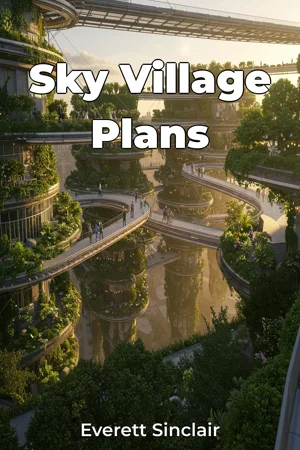
Can we reimagine our cities not just as sprawling horizontal landscapes, but as layered, interconnected aerial ecosystems? "Sky Village Plans" explores this question by delving into the innovative concept of multi-level aerial communities and the complex logistical frameworks required to sustain them. This book argues that, by drawing inspiration from urban design principles and adapting them to a three-dimensional plane, we can unlock solutions to pressing issues of urban density, resource management, and community building. The central focus of "Sky Village Plans" revolves around three core topics: the architectural design of aerial structures capable of supporting residential and communal spaces; the logistical networks needed for resource distribution, waste management, and transportation within these structures; and the social implications of vertical community living. These topics are crucial because, as urban populations continue to surge, traditional land-based development struggles to keep pace, leading to overcrowding, environmental strain, and social fragmentation. Exploring aerial possibilities offers a new direction for sustainable and equitable urban growth. Drawing upon historical precedents of dense urban environments and case studies of existing vertical structures, "Sky Village Plans" provides the context needed to understand the evolution of urban design and its potential future trajectories. Readers should have a basic understanding of architectural principles, urban planning concepts, and ecological systems to fully appreciate the book's interdisciplinary approach. However, complex technical details will be presented accessibly, ensuring the material remains engaging for a broad audience. The central argument presented is that the successful implementation of multi-level aerial communities depends on a holistic design approach integrating architectural innovation, logistical efficiency, and social considerations. This is not merely about building structures in the sky; it is about creating self-sustaining, vibrant ecosystems that enhance the quality of life for their inhabitants and minimize their environmental impact. The importance of this argument lies in its potential to reshape how we think about urban development and address the challenges of a rapidly urbanizing world. The book's structure will unfold in several stages. First, it introduces the fundamental concepts of multi-level aerial communities, outlining the potential benefits and challenges associated with this approach. Second, it delves into the architectural design considerations, exploring structural engineering, material science, and environmental integration. Third, it examines the logistical frameworks required for resource management, transportation, and waste disposal, drawing on principles of supply chain management, renewable energy systems, and closed-loop ecosystems. Finally, it addresses the social and cultural implications of vertical community living, considering issues of privacy, community cohesion, and governance. The book culminates with practical applications, showcasing potential design scenarios and policy recommendations for implementing sky villages in diverse urban settings. "Sky Village Plans" will present evidence from a variety of sources, including architectural renderings, engineering simulations, case studies of existing vertical communities, and data on urban resource consumption. Unique data sources include analyses of urban microclimates and simulations of resource flows within a vertical community. Methodologies will include comparative analysis of architectural typologies, systems modeling, and scenario planning. The book connects to other fields such as environmental science, sociology, and transportation engineering. The connection to environmental science lies in the need to design sky villages that minimize their environmental impact and promote ecological sustainability. The connection to sociology highlights the importance of understanding social dynamics and community building within vertical environments. The connection to transportation engineering emphasizes the need for efficient and sustainable transportation systems within and around sky villages. This book offers a unique perspective by treating urban space not as a two-dimensional plane, but as a three-dimensional volume capable of supporting a multitude of interconnected ecosystems. It challenges conventional thinking about urban development and offers a blueprint for a more sustainable and equitable future. The writing style is professional and accessible, aiming to bridge the gap between technical expertise and general understanding. The tone is optimistic yet realistic, acknowledging the challenges associated with implementing sky villages while emphasizing their potential benefits. The target audience includes architects, urban planners, engineers, policymakers, and anyone interested in the future of urban development. The book would be valuable to them because it provides a comprehensive overview of the concepts, challenges, and opportunities associated with multi-level aerial communities. As a work of design and architecture, the book will include visual elements like diagrams, renderings, and plans. The scope of "Sky Village Plans" is broad, encompassing the architectural, logistical, and social aspects of multi-level aerial communities. However, its scope is limited in its focus on conceptual design and strategic planning, rather than detailed engineering specifications or specific policy implementations. The information presented in the book can be applied practically by readers by informing their design decisions, policy recommendations, and research agendas. It provides a framework for thinking about urban development in a more holistic and sustainable way. The book addresses ongoing debates in the field of urban planning, such as the optimal density of urban environments and the role of technology in shaping the future of cities. It offers a fresh perspective on these debates by exploring the potential of multi-level aerial communities.
Can we reimagine our cities not just as sprawling horizontal landscapes, but as layered, interconnected aerial ecosystems? "Sky Village Plans" explores this question by delving into the innovative concept of multi-level aerial communities and the complex logistical frameworks required to sustain them. This book argues that, by drawing inspiration from urban design principles and adapting them to a three-dimensional plane, we can unlock solutions to pressing issues of urban density, resource management, and community building. The central focus of "Sky Village Plans" revolves around three core topics: the architectural design of aerial structures capable of supporting residential and communal spaces; the logistical networks needed for resource distribution, waste management, and transportation within these structures; and the social implications of vertical community living. These topics are crucial because, as urban populations continue to surge, traditional land-based development struggles to keep pace, leading to overcrowding, environmental strain, and social fragmentation. Exploring aerial possibilities offers a new direction for sustainable and equitable urban growth. Drawing upon historical precedents of dense urban environments and case studies of existing vertical structures, "Sky Village Plans" provides the context needed to understand the evolution of urban design and its potential future trajectories. Readers should have a basic understanding of architectural principles, urban planning concepts, and ecological systems to fully appreciate the book's interdisciplinary approach. However, complex technical details will be presented accessibly, ensuring the material remains engaging for a broad audience. The central argument presented is that the successful implementation of multi-level aerial communities depends on a holistic design approach integrating architectural innovation, logistical efficiency, and social considerations. This is not merely about building structures in the sky; it is about creating self-sustaining, vibrant ecosystems that enhance the quality of life for their inhabitants and minimize their environmental impact. The importance of this argument lies in its potential to reshape how we think about urban development and address the challenges of a rapidly urbanizing world. The book's structure will unfold in several stages. First, it introduces the fundamental concepts of multi-level aerial communities, outlining the potential benefits and challenges associated with this approach. Second, it delves into the architectural design considerations, exploring structural engineering, material science, and environmental integration. Third, it examines the logistical frameworks required for resource management, transportation, and waste disposal, drawing on principles of supply chain management, renewable energy systems, and closed-loop ecosystems. Finally, it addresses the social and cultural implications of vertical community living, considering issues of privacy, community cohesion, and governance. The book culminates with practical applications, showcasing potential design scenarios and policy recommendations for implementing sky villages in diverse urban settings. "Sky Village Plans" will present evidence from a variety of sources, including architectural renderings, engineering simulations, case studies of existing vertical communities, and data on urban resource consumption. Unique data sources include analyses of urban microclimates and simulations of resource flows within a vertical community. Methodologies will include comparative analysis of architectural typologies, systems modeling, and scenario planning. The book connects to other fields such as environmental science, sociology, and transportation engineering. The connection to environmental science lies in the need to design sky villages that minimize their environmental impact and promote ecological sustainability. The connection to sociology highlights the importance of understanding social dynamics and community building within vertical environments. The connection to transportation engineering emphasizes the need for efficient and sustainable transportation systems within and around sky villages. This book offers a unique perspective by treating urban space not as a two-dimensional plane, but as a three-dimensional volume capable of supporting a multitude of interconnected ecosystems. It challenges conventional thinking about urban development and offers a blueprint for a more sustainable and equitable future. The writing style is professional and accessible, aiming to bridge the gap between technical expertise and general understanding. The tone is optimistic yet realistic, acknowledging the challenges associated with implementing sky villages while emphasizing their potential benefits. The target audience includes architects, urban planners, engineers, policymakers, and anyone interested in the future of urban development. The book would be valuable to them because it provides a comprehensive overview of the concepts, challenges, and opportunities associated with multi-level aerial communities. As a work of design and architecture, the book will include visual elements like diagrams, renderings, and plans. The scope of "Sky Village Plans" is broad, encompassing the architectural, logistical, and social aspects of multi-level aerial communities. However, its scope is limited in its focus on conceptual design and strategic planning, rather than detailed engineering specifications or specific policy implementations. The information presented in the book can be applied practically by readers by informing their design decisions, policy recommendations, and research agendas. It provides a framework for thinking about urban development in a more holistic and sustainable way. The book addresses ongoing debates in the field of urban planning, such as the optimal density of urban environments and the role of technology in shaping the future of cities. It offers a fresh perspective on these debates by exploring the potential of multi-level aerial communities.
"Sky Village Plans" explores the concept of multi-level aerial communities as a solution to urban density and resource management challenges. The book argues that by adapting urban design principles to a three-dimensional plane, we can create sustainable and equitable urban growth. Interestingly, these aerial ecosystems draw inspiration from historical precedents of dense urban environments. The book delves into the architectural design of aerial structures, the logistical networks needed for resource distribution, and the social implications of vertical community living. It highlights the importance of a holistic design approach that integrates architectural innovation, logistical efficiency, and social considerations, going beyond mere construction to create self-sustaining ecosystems. "Sky Village Plans" progresses by introducing the concept, exploring design considerations, examining logistical frameworks, and addressing social implications, culminating in practical design scenarios.
Book Details
ISBN
9788235212511
Publisher
Publifye AS
Your Licenses
You don't own any licenses for this book
Purchase a license below to unlock this book and download the EPUB.
Purchase License
Select a tier to unlock this book
Need bulk licensing?
Contact us for enterprise agreements.