
About This Book
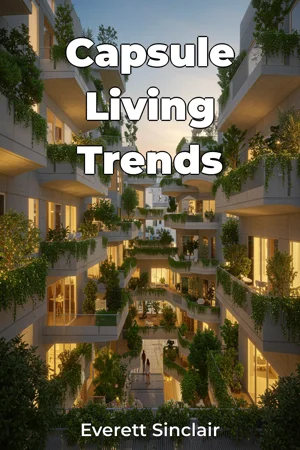
As urban populations surge and land becomes increasingly scarce, how can we reimagine living spaces to create sustainable and fulfilling urban experiences? "Capsule Living Trends" addresses this urgent question by exploring the potential of ultra-compact pods as a viable housing solution for the 21st century and beyond. The book delves into the core concepts of space optimization, sustainable design, and community building, demonstrating their crucial role in addressing contemporary urban housing challenges. These topics are paramount as cities grapple with increasing population densities, affordability crises, and the need for environmentally conscious development. This book offers a comprehensive analysis of capsule living, examining its historical precedents, technological advancements, and socio-economic implications. It builds from the understanding that traditional notions of housing are often unsustainable and impractical in dense urban environments. "Capsule Living Trends" challenges readers to reconsider their assumptions about living space, quality of life, and urban planning. The central argument of this book is that thoughtfully designed and strategically implemented capsule living can significantly contribute to more sustainable, equitable, and vibrant urban environments. This argument is vital because it offers a tangible alternative to conventional housing models that often exacerbate existing urban problems such as sprawl, resource depletion, and social isolation. The book's structure begins with an introduction to the fundamental principles of capsule living, including its historical roots in minimalist design and its evolution through technological innovations. It then explores the practical considerations of designing and implementing capsule housing, covering topics such as space optimization techniques, material selection, and the integration of smart home technologies. A significant portion of the book is dedicated to analyzing real-world case studies of successful capsule living projects from around the globe. These examples showcase the diverse applications of capsule living, from micro-apartments to co-living spaces. The book culminates by considering the broader societal implications of capsule living, exploring its potential to address issues such as affordability, sustainability, and community building. It also provides a framework for policymakers, developers, and residents to evaluate and implement capsule living solutions effectively. The evidence presented in "Capsule Living Trends" draws upon a variety of sources, including architectural plans, urban planning reports, demographic data, and sociological studies. Population density statistics serve as a key reference point, illustrating the growing need for innovative housing solutions in urban areas. The book also incorporates insights from interviews with architects, developers, and residents involved in capsule living projects. This book connects to several related fields, including urban planning, sustainable design, and sociology. By integrating perspectives from these disciplines, "Capsule Living Trends" offers a holistic understanding of the challenges and opportunities associated with capsule living. Moreover, the book examines the intersection of technology and architecture, further enhancing its core argument. "Capsule Living Trends" adopts a balanced and informative tone, presenting complex information in an accessible manner. The writing style is clear and concise, making it suitable for a wide audience. The book avoids jargon and technical language, ensuring that readers from diverse backgrounds can easily grasp the key concepts. The target audience includes architects, urban planners, developers, policymakers, and anyone interested in sustainable urban living. This book is valuable to them because it provides a comprehensive overview of capsule living, offering practical insights and evidence-based recommendations. As a work of architecture and social science, "Capsule Living Trends" adheres to the conventions of rigorous research, clear argumentation, and practical application. It aims to contribute to the ongoing conversation about urban housing by providing a fresh perspective and actionable strategies. The scope of the book is intentionally broad, covering a wide range of topics related to capsule living. However, it does not delve into highly technical engineering details, focusing instead on the architectural, social, and economic aspects of this emerging trend. Capsule Living Trends tackles the ongoing debate about urban design and offers potential solutions for sustainable urban growth. Ultimately, the information presented in "Capsule Living Trends" can be applied by readers to inform their own design projects, policy decisions, or housing choices. The book provides a framework for evaluating the potential of capsule living in different contexts and offers practical guidance for implementing capsule housing solutions effectively.
As urban populations surge and land becomes increasingly scarce, how can we reimagine living spaces to create sustainable and fulfilling urban experiences? "Capsule Living Trends" addresses this urgent question by exploring the potential of ultra-compact pods as a viable housing solution for the 21st century and beyond. The book delves into the core concepts of space optimization, sustainable design, and community building, demonstrating their crucial role in addressing contemporary urban housing challenges. These topics are paramount as cities grapple with increasing population densities, affordability crises, and the need for environmentally conscious development. This book offers a comprehensive analysis of capsule living, examining its historical precedents, technological advancements, and socio-economic implications. It builds from the understanding that traditional notions of housing are often unsustainable and impractical in dense urban environments. "Capsule Living Trends" challenges readers to reconsider their assumptions about living space, quality of life, and urban planning. The central argument of this book is that thoughtfully designed and strategically implemented capsule living can significantly contribute to more sustainable, equitable, and vibrant urban environments. This argument is vital because it offers a tangible alternative to conventional housing models that often exacerbate existing urban problems such as sprawl, resource depletion, and social isolation. The book's structure begins with an introduction to the fundamental principles of capsule living, including its historical roots in minimalist design and its evolution through technological innovations. It then explores the practical considerations of designing and implementing capsule housing, covering topics such as space optimization techniques, material selection, and the integration of smart home technologies. A significant portion of the book is dedicated to analyzing real-world case studies of successful capsule living projects from around the globe. These examples showcase the diverse applications of capsule living, from micro-apartments to co-living spaces. The book culminates by considering the broader societal implications of capsule living, exploring its potential to address issues such as affordability, sustainability, and community building. It also provides a framework for policymakers, developers, and residents to evaluate and implement capsule living solutions effectively. The evidence presented in "Capsule Living Trends" draws upon a variety of sources, including architectural plans, urban planning reports, demographic data, and sociological studies. Population density statistics serve as a key reference point, illustrating the growing need for innovative housing solutions in urban areas. The book also incorporates insights from interviews with architects, developers, and residents involved in capsule living projects. This book connects to several related fields, including urban planning, sustainable design, and sociology. By integrating perspectives from these disciplines, "Capsule Living Trends" offers a holistic understanding of the challenges and opportunities associated with capsule living. Moreover, the book examines the intersection of technology and architecture, further enhancing its core argument. "Capsule Living Trends" adopts a balanced and informative tone, presenting complex information in an accessible manner. The writing style is clear and concise, making it suitable for a wide audience. The book avoids jargon and technical language, ensuring that readers from diverse backgrounds can easily grasp the key concepts. The target audience includes architects, urban planners, developers, policymakers, and anyone interested in sustainable urban living. This book is valuable to them because it provides a comprehensive overview of capsule living, offering practical insights and evidence-based recommendations. As a work of architecture and social science, "Capsule Living Trends" adheres to the conventions of rigorous research, clear argumentation, and practical application. It aims to contribute to the ongoing conversation about urban housing by providing a fresh perspective and actionable strategies. The scope of the book is intentionally broad, covering a wide range of topics related to capsule living. However, it does not delve into highly technical engineering details, focusing instead on the architectural, social, and economic aspects of this emerging trend. Capsule Living Trends tackles the ongoing debate about urban design and offers potential solutions for sustainable urban growth. Ultimately, the information presented in "Capsule Living Trends" can be applied by readers to inform their own design projects, policy decisions, or housing choices. The book provides a framework for evaluating the potential of capsule living in different contexts and offers practical guidance for implementing capsule housing solutions effectively.
"Capsule Living Trends" explores how ultra-compact living spaces can address the challenges of surging urban populations and scarce land. It examines the core principles of space optimization, sustainable design, and community building, showcasing their importance in contemporary urban housing. The book argues that thoughtfully designed capsule living can lead to more sustainable and equitable urban environments. For example, strategic use of vertical space mirrors how skyscrapers maximize land use, only on a smaller scale. The book begins by tracing the historical roots of capsule living, from minimalist design to technological innovations. It then explores practical design considerations, including space optimization techniques and the integration of smart home technology. Case studies from around the world highlight successful capsule living projects, like micro-apartments and co-living spaces. The book concludes by considering the broader societal implications, offering a framework for policymakers and residents to evaluate and implement capsule living solutions effectively.
Book Details
ISBN
9788235212498
Publisher
Publifye AS
Your Licenses
You don't own any licenses for this book
Purchase a license below to unlock this book and download the EPUB.
Purchase License
Select a tier to unlock this book
Need bulk licensing?
Contact us for enterprise agreements.