
About This Book
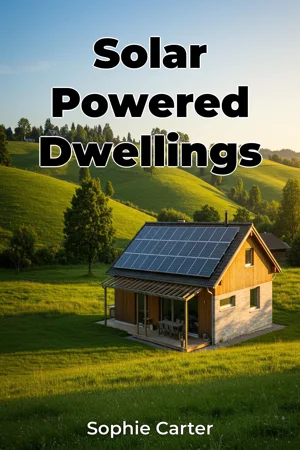
Can homes truly function independently, powered entirely by the sun? "Solar Powered Dwellings" explores this question, detailing the design, implementation, and viability of homes that rely solely on solar energy systems. This book is a crucial resource in a world increasingly focused on sustainable living and renewable energy solutions. We delve into three primary areas: the fundamental principles of solar energy conversion and storage, the architectural and engineering considerations for designing solar-powered homes, and the economic and environmental impacts of widespread adoption. Understanding these core concepts is essential for anyone seeking to minimize their carbon footprint and embrace energy independence. The transition to solar power is not new, but its feasibility for complete residential reliance has only recently become a tangible reality due to advancements in photovoltaic technology and energy storage. Historically, solar energy was primarily used for supplemental power or in off-grid applications. Now, with improved battery technology and more efficient solar panels, homes can function entirely independently from the traditional power grid. This book provides a detailed examination of this evolution and the enabling technologies. The central argument of "Solar Powered Dwellings" is that fully solar-powered homes are not only technically feasible but also increasingly economically viable and environmentally imperative. This argument challenges conventional notions about energy consumption and promotes a paradigm shift towards decentralized, sustainable power generation. It is crucial because it offers a tangible solution to climate change and energy security concerns. The book begins by introducing the basic physics of solar energy and the components of a solar power system, including photovoltaic panels, inverters, and battery storage systems. It then develops the architectural and engineering aspects, covering topics such as optimal panel placement, energy-efficient building design, and smart home energy management systems. The book culminates in an analysis of the economic and environmental benefits, including reduced carbon emissions, lower energy bills, and increased property value. Case studies of existing solar-powered homes illustrate these concepts. Finally, it looks at future innovations to improve existing systems and cut costs. The evidence presented is derived from a wide range of sources, including peer-reviewed renewable energy research, technical reports from solar panel manufacturers, and real-world data from homeowners using solar power. The book also incorporates data from government agencies on energy consumption and renewable energy adoption rates. The book uses original data collected from homes using these systems to provide comparison, contrasting theoretical and real-world performance. "Solar Powered Dwellings" is inherently interdisciplinary, connecting to fields such as environmental science, engineering, and economics. Its discussion of solar panel technology and energy storage solutions is directly relevant to engineering. The analysis of the environmental impact of solar power connects to environmental science. Finally, its exploration of the cost-effectiveness of solar energy systems connects to economics. The book takes a practical, solutions-oriented approach, offering a comprehensive guide to designing and implementing solar power systems for residential use. It emphasizes practical considerations, such as cost, efficiency, and maintenance, making it a valuable resource for homeowners, contractors, and policymakers. Written in a clear and accessible style, "Solar Powered Dwellings" is aimed at homeowners, architects, engineers, environmental scientists, and policymakers. It provides the necessary information to understand the potential of solar energy for residential use and how to implement these systems. As a non-fiction book on a technical subject, it uses clear language and provides data that is easily verified. It avoids technical jargon where possible and provides definitions for the terms that it does use. The book focuses specifically on residential applications of solar power, excluding large-scale solar farms and industrial applications. It also doesn't delve into the political and regulatory challenges of renewable energy adoption beyond what is relevant to home installation. Readers can use this book as a practical guide for designing and implementing solar power systems for their own homes, as well as a comprehensive resource for understanding the economic and environmental benefits of solar energy. Contractors and architects can reference the book for efficient panel-placement and to create homes that maximize the benefits of solar energy. While solar energy is generally considered beneficial, there are debates about its environmental impact, including the manufacturing process of solar panels and the disposal of old panels. "Solar Powered Dwellings" addresses these concerns, providing a balanced perspective on the pros and cons of solar energy.
Can homes truly function independently, powered entirely by the sun? "Solar Powered Dwellings" explores this question, detailing the design, implementation, and viability of homes that rely solely on solar energy systems. This book is a crucial resource in a world increasingly focused on sustainable living and renewable energy solutions. We delve into three primary areas: the fundamental principles of solar energy conversion and storage, the architectural and engineering considerations for designing solar-powered homes, and the economic and environmental impacts of widespread adoption. Understanding these core concepts is essential for anyone seeking to minimize their carbon footprint and embrace energy independence. The transition to solar power is not new, but its feasibility for complete residential reliance has only recently become a tangible reality due to advancements in photovoltaic technology and energy storage. Historically, solar energy was primarily used for supplemental power or in off-grid applications. Now, with improved battery technology and more efficient solar panels, homes can function entirely independently from the traditional power grid. This book provides a detailed examination of this evolution and the enabling technologies. The central argument of "Solar Powered Dwellings" is that fully solar-powered homes are not only technically feasible but also increasingly economically viable and environmentally imperative. This argument challenges conventional notions about energy consumption and promotes a paradigm shift towards decentralized, sustainable power generation. It is crucial because it offers a tangible solution to climate change and energy security concerns. The book begins by introducing the basic physics of solar energy and the components of a solar power system, including photovoltaic panels, inverters, and battery storage systems. It then develops the architectural and engineering aspects, covering topics such as optimal panel placement, energy-efficient building design, and smart home energy management systems. The book culminates in an analysis of the economic and environmental benefits, including reduced carbon emissions, lower energy bills, and increased property value. Case studies of existing solar-powered homes illustrate these concepts. Finally, it looks at future innovations to improve existing systems and cut costs. The evidence presented is derived from a wide range of sources, including peer-reviewed renewable energy research, technical reports from solar panel manufacturers, and real-world data from homeowners using solar power. The book also incorporates data from government agencies on energy consumption and renewable energy adoption rates. The book uses original data collected from homes using these systems to provide comparison, contrasting theoretical and real-world performance. "Solar Powered Dwellings" is inherently interdisciplinary, connecting to fields such as environmental science, engineering, and economics. Its discussion of solar panel technology and energy storage solutions is directly relevant to engineering. The analysis of the environmental impact of solar power connects to environmental science. Finally, its exploration of the cost-effectiveness of solar energy systems connects to economics. The book takes a practical, solutions-oriented approach, offering a comprehensive guide to designing and implementing solar power systems for residential use. It emphasizes practical considerations, such as cost, efficiency, and maintenance, making it a valuable resource for homeowners, contractors, and policymakers. Written in a clear and accessible style, "Solar Powered Dwellings" is aimed at homeowners, architects, engineers, environmental scientists, and policymakers. It provides the necessary information to understand the potential of solar energy for residential use and how to implement these systems. As a non-fiction book on a technical subject, it uses clear language and provides data that is easily verified. It avoids technical jargon where possible and provides definitions for the terms that it does use. The book focuses specifically on residential applications of solar power, excluding large-scale solar farms and industrial applications. It also doesn't delve into the political and regulatory challenges of renewable energy adoption beyond what is relevant to home installation. Readers can use this book as a practical guide for designing and implementing solar power systems for their own homes, as well as a comprehensive resource for understanding the economic and environmental benefits of solar energy. Contractors and architects can reference the book for efficient panel-placement and to create homes that maximize the benefits of solar energy. While solar energy is generally considered beneficial, there are debates about its environmental impact, including the manufacturing process of solar panels and the disposal of old panels. "Solar Powered Dwellings" addresses these concerns, providing a balanced perspective on the pros and cons of solar energy.
"Solar Powered Dwellings" explores the feasibility of homes operating entirely on solar energy, a crucial topic given the increasing focus on sustainable living. It examines the principles of solar energy conversion and storage, architectural and engineering considerations, and the economic and environmental impacts. The book highlights that advancements in photovoltaic technology and energy storage now make complete residential solar reliance a tangible reality, challenging conventional notions of energy consumption. The book begins by introducing the physics of solar energy and components of solar power systems, such as photovoltaic panels and battery storage. It then details architectural and engineering aspects, including energy-efficient building design. The book uses real-world data from homeowners using solar power to compare and contrast theoretical and real-world performance. It concludes with an analysis of economic and environmental benefits, like reduced carbon emissions and lower energy bills. This book's unique value lies in its practical, solutions-oriented approach, offering a comprehensive guide for homeowners, architects, and policymakers. It emphasizes considerations such as cost, efficiency, and maintenance, providing a balanced perspective on the pros and cons of solar energy, including the environmental impact of manufacturing and disposal.
Book Details
ISBN
9788235212481
Publisher
Publifye AS
Your Licenses
You don't own any licenses for this book
Purchase a license below to unlock this book and download the EPUB.
Purchase License
Select a tier to unlock this book
Need bulk licensing?
Contact us for enterprise agreements.