
About This Book
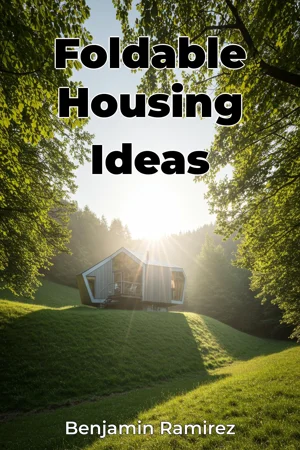
What if our homes could adapt to our changing lives, shrinking or expanding as needed? "Foldable Housing Ideas" explores the innovative realm of collapsible structures designed to create flexible and adaptable living spaces. This book addresses the increasing need for housing solutions that are not only sustainable but also responsive to the dynamic nature of modern life. The core concept is based on design studies of housing that can be folded, expanded, or otherwise transformed to meet varying spatial requirements. This is important because traditional housing models often lack the adaptability needed for diverse populations and evolving lifestyle needs. The ideas presented also tackle issues of urban density, affordability, and the efficient use of resources in home construction. The concept of foldable architecture builds upon a history of deployable structures, from tents and yurts to more sophisticated emergency shelters. However, this book moves beyond temporary solutions to envision permanent or semi-permanent residences that integrate advanced materials and engineering principles. Prior knowledge of basic architectural concepts, such as spatial planning and structural integrity, will be helpful but not essential. The central argument presented is that foldable housing represents a viable and necessary step toward a more sustainable and responsive built environment. By embracing modularity, prefabrication, and innovative folding mechanisms, we can create homes that minimize environmental impact, maximize space utilization, and adapt to the changing needs of their occupants. The book begins by introducing the fundamental principles of foldable structures, exploring different types of folding mechanisms and materials suitable for housing applications. It will delve into the design considerations for creating habitable and structurally sound foldable homes. The second major section presents a range of case studies and design proposals, showcasing innovative concepts for foldable houses, apartments, and even community spaces. These examples illustrate the potential for creating high-quality living environments that are both aesthetically pleasing and functionally efficient. The final part of the book focuses on the practical applications of foldable housing, including its potential for addressing housing shortages, disaster relief, and mobile living scenarios. It also examines the challenges associated with implementing foldable housing on a large scale, such as regulatory hurdles, infrastructure requirements, and public acceptance. The arguments are supported by a combination of design studies, engineering analyses, and material science research. The book draws upon a wide range of sources, including academic papers, industry reports, and case studies of existing foldable structures. This book connects to other fields, such as sustainable design, urban planning, and disaster management. By integrating principles from these disciplines, it provides a holistic perspective on the potential of foldable housing to address a range of societal challenges. The book also has connections to engineering (structural and mechanical) by incorporating elements from these disciplines, it offers a full perspective on the viability of foldable housing to deliver solutions. A unique aspect of this book is its focus on the integration of design innovation with practical considerations. It not only showcases creative concepts but also addresses the real-world challenges of implementing foldable housing solutions. The writing style is professional yet accessible, aiming to bridge the gap between academic research and practical application. The target audience includes architects, designers, engineers, urban planners, and anyone interested in sustainable and innovative housing solutions. It would also be valuable to policy makers and housing developers seeking to address the challenges of affordability, density, and environmental impact. This book aligns with the conventions of the Design and Architecture genres by presenting a blend of theoretical concepts, practical examples, and visual illustrations. It provides a comprehensive overview of the field while also offering a forward-looking perspective on the future of housing. The scope of the book is limited to residential applications of foldable structures, although some examples of commercial or public spaces may be included for illustrative purposes. It does not delve into the technical details of specific folding mechanisms or materials but rather provides a broad overview of the available options and their respective advantages and disadvantages. The information presented can be applied by readers in a variety of ways, from informing their own design projects to advocating for policy changes that support the adoption of foldable housing solutions. It can also serve as a valuable resource for educators and students seeking to learn more about this emerging field. The book addresses ongoing debates in the field, such as the relative cost-effectiveness of foldable housing compared to traditional construction methods, as well as public perceptions about the desirability of living in adaptable spaces.
What if our homes could adapt to our changing lives, shrinking or expanding as needed? "Foldable Housing Ideas" explores the innovative realm of collapsible structures designed to create flexible and adaptable living spaces. This book addresses the increasing need for housing solutions that are not only sustainable but also responsive to the dynamic nature of modern life. The core concept is based on design studies of housing that can be folded, expanded, or otherwise transformed to meet varying spatial requirements. This is important because traditional housing models often lack the adaptability needed for diverse populations and evolving lifestyle needs. The ideas presented also tackle issues of urban density, affordability, and the efficient use of resources in home construction. The concept of foldable architecture builds upon a history of deployable structures, from tents and yurts to more sophisticated emergency shelters. However, this book moves beyond temporary solutions to envision permanent or semi-permanent residences that integrate advanced materials and engineering principles. Prior knowledge of basic architectural concepts, such as spatial planning and structural integrity, will be helpful but not essential. The central argument presented is that foldable housing represents a viable and necessary step toward a more sustainable and responsive built environment. By embracing modularity, prefabrication, and innovative folding mechanisms, we can create homes that minimize environmental impact, maximize space utilization, and adapt to the changing needs of their occupants. The book begins by introducing the fundamental principles of foldable structures, exploring different types of folding mechanisms and materials suitable for housing applications. It will delve into the design considerations for creating habitable and structurally sound foldable homes. The second major section presents a range of case studies and design proposals, showcasing innovative concepts for foldable houses, apartments, and even community spaces. These examples illustrate the potential for creating high-quality living environments that are both aesthetically pleasing and functionally efficient. The final part of the book focuses on the practical applications of foldable housing, including its potential for addressing housing shortages, disaster relief, and mobile living scenarios. It also examines the challenges associated with implementing foldable housing on a large scale, such as regulatory hurdles, infrastructure requirements, and public acceptance. The arguments are supported by a combination of design studies, engineering analyses, and material science research. The book draws upon a wide range of sources, including academic papers, industry reports, and case studies of existing foldable structures. This book connects to other fields, such as sustainable design, urban planning, and disaster management. By integrating principles from these disciplines, it provides a holistic perspective on the potential of foldable housing to address a range of societal challenges. The book also has connections to engineering (structural and mechanical) by incorporating elements from these disciplines, it offers a full perspective on the viability of foldable housing to deliver solutions. A unique aspect of this book is its focus on the integration of design innovation with practical considerations. It not only showcases creative concepts but also addresses the real-world challenges of implementing foldable housing solutions. The writing style is professional yet accessible, aiming to bridge the gap between academic research and practical application. The target audience includes architects, designers, engineers, urban planners, and anyone interested in sustainable and innovative housing solutions. It would also be valuable to policy makers and housing developers seeking to address the challenges of affordability, density, and environmental impact. This book aligns with the conventions of the Design and Architecture genres by presenting a blend of theoretical concepts, practical examples, and visual illustrations. It provides a comprehensive overview of the field while also offering a forward-looking perspective on the future of housing. The scope of the book is limited to residential applications of foldable structures, although some examples of commercial or public spaces may be included for illustrative purposes. It does not delve into the technical details of specific folding mechanisms or materials but rather provides a broad overview of the available options and their respective advantages and disadvantages. The information presented can be applied by readers in a variety of ways, from informing their own design projects to advocating for policy changes that support the adoption of foldable housing solutions. It can also serve as a valuable resource for educators and students seeking to learn more about this emerging field. The book addresses ongoing debates in the field, such as the relative cost-effectiveness of foldable housing compared to traditional construction methods, as well as public perceptions about the desirability of living in adaptable spaces.
"Foldable Housing Ideas" explores the revolutionary concept of housing that adapts to its inhabitants' needs, addressing issues of sustainability, affordability, and efficient space utilization. It delves into designs that can be folded, expanded, or transformed, showcasing how these structures can respond to the dynamic nature of modern life. One intriguing fact is that foldable architecture builds upon a history of deployable structures, from tents to sophisticated emergency shelters. The book uniquely envisions permanent residences integrating advanced materials and engineering principles, moving beyond temporary solutions. This book presents design studies and case studies illustrating innovative concepts for foldable houses, apartments, and community spaces. These examples demonstrate the potential for aesthetically pleasing and functionally efficient living environments. The approach combines design innovation with practical considerations, addressing real-world challenges in implementing these solutions. Beginning with the fundamental principles of foldable structures, the book progresses to explore design considerations and finally examines practical applications, such as addressing housing shortages and disaster relief.
Book Details
ISBN
9788235212467
Publisher
Publifye AS
Your Licenses
You don't own any licenses for this book
Purchase a license below to unlock this book and download the EPUB.
Purchase License
Select a tier to unlock this book
Need bulk licensing?
Contact us for enterprise agreements.