
About This Book
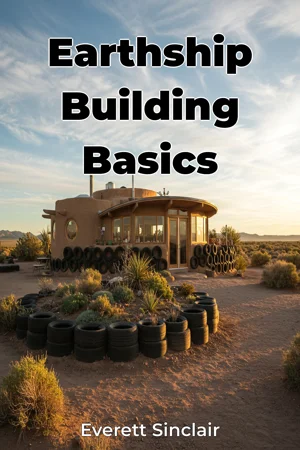
Have you ever considered a home that not only shelters you but also actively contributes to environmental preservation? "Earthship Building Basics" delves into the world of sustainable, off-grid living through the construction of Earthships – homes built with recycled materials that function as self-sufficient ecosystems. This book explores the core tenets of Earthship architecture, detailing how these structures address pressing environmental concerns while providing comfortable and functional living spaces. Two significant topics covered are the principles of thermal mass construction and integrated water management systems. Thermal mass, utilizing materials like tires filled with earth, allows Earthships to maintain stable indoor temperatures, minimizing the need for external heating and cooling. Integrated water management systems harvest rainwater, filter it for potable use, and recycle greywater for irrigation, reducing reliance on municipal water sources. Understanding these concepts is increasingly important as we face growing concerns about resource depletion and climate change. The Earthship concept emerged in the 1970s as a response to the growing awareness of environmental degradation and the need for sustainable alternatives to conventional construction. It draws inspiration from passive solar design principles, permaculture, and a desire to utilize waste materials constructively. A basic understanding of building construction and environmental science principles will be helpful, though the book is designed to be accessible to readers with varying levels of technical expertise. The central argument of "Earthship Building Basics" is that sustainable housing is not only achievable but also economically viable and environmentally responsible through the creative use of recycled materials and passive design strategies. This argument is crucial in an era where the building sector is a major contributor to greenhouse gas emissions and resource consumption. The book begins by introducing the foundational principles of Earthship architecture, covering the philosophy behind the design, the selection of appropriate building sites, and the legal considerations involved in constructing off-grid homes. It then systematically develops key areas: (1) detailed construction techniques for building load-bearing walls using recycled tires, (2) the design and implementation of water harvesting and filtration systems (3) waste management and food production within an Earthship environment. The culmination of these topics demonstrates how an Earthship can function as a completely self-sustaining ecosystem. Practical applications and implications of Earthship construction, including cost analysis, maintenance requirements, and potential challenges are discussed with real-world examples of existing Earthship communities. Evidence presented throughout the book draws from extensive research and practical experience accumulated over decades of Earthship construction. Sustainability reports from organizations involved in ecological building, as well as case studies of established Earthship communities worldwide are used. Technical data on thermal performance, water quality, and energy consumption within Earthships are also presented. The book bridges the gap between architecture, environmental science, and sustainable living. It touches on the sociological aspects of community building, the economic considerations of alternative construction, and the engineering principles involved in designing self-sufficient systems. "Earthship Building Basics" offers a unique perspective by providing a comprehensive, hands-on guide to building sustainable homes using readily available recycled materials. It demystifies the construction process and empowers readers to take control of their housing needs while minimizing their environmental impact. The tone is informative and practical, aiming to inspire and guide readers interested in sustainable living. The target audience includes homeowners, environmental enthusiasts, architects, builders, and anyone interested in sustainable construction and off-grid living. The book appeals to those seeking practical solutions to environmental problems and those who want to reduce their carbon footprint. As a book falling under the genres of ‘Environment, Architecture General, Architecture’, it meets the non-fiction expectations of providing accurate, verifiable information and practical guidance. The scope of the book is limited to the fundamental principles and techniques of Earthship construction suitable for a beginner to early intermediate level reader or builder. It does not delve into advanced engineering calculations or complex architectural designs. Readers can apply the information presented in the book to design and build their own Earthships, retrofit existing structures with sustainable features, or advocate for changes in building codes and regulations to promote sustainable construction practices. While Earthship construction is gaining popularity, debates persist regarding its scalability and suitability for different climates and regulatory environments. The book addresses these concerns objectively, acknowledging the challenges and limitations while highlighting the potential benefits of this innovative approach to sustainable housing.
Have you ever considered a home that not only shelters you but also actively contributes to environmental preservation? "Earthship Building Basics" delves into the world of sustainable, off-grid living through the construction of Earthships – homes built with recycled materials that function as self-sufficient ecosystems. This book explores the core tenets of Earthship architecture, detailing how these structures address pressing environmental concerns while providing comfortable and functional living spaces. Two significant topics covered are the principles of thermal mass construction and integrated water management systems. Thermal mass, utilizing materials like tires filled with earth, allows Earthships to maintain stable indoor temperatures, minimizing the need for external heating and cooling. Integrated water management systems harvest rainwater, filter it for potable use, and recycle greywater for irrigation, reducing reliance on municipal water sources. Understanding these concepts is increasingly important as we face growing concerns about resource depletion and climate change. The Earthship concept emerged in the 1970s as a response to the growing awareness of environmental degradation and the need for sustainable alternatives to conventional construction. It draws inspiration from passive solar design principles, permaculture, and a desire to utilize waste materials constructively. A basic understanding of building construction and environmental science principles will be helpful, though the book is designed to be accessible to readers with varying levels of technical expertise. The central argument of "Earthship Building Basics" is that sustainable housing is not only achievable but also economically viable and environmentally responsible through the creative use of recycled materials and passive design strategies. This argument is crucial in an era where the building sector is a major contributor to greenhouse gas emissions and resource consumption. The book begins by introducing the foundational principles of Earthship architecture, covering the philosophy behind the design, the selection of appropriate building sites, and the legal considerations involved in constructing off-grid homes. It then systematically develops key areas: (1) detailed construction techniques for building load-bearing walls using recycled tires, (2) the design and implementation of water harvesting and filtration systems (3) waste management and food production within an Earthship environment. The culmination of these topics demonstrates how an Earthship can function as a completely self-sustaining ecosystem. Practical applications and implications of Earthship construction, including cost analysis, maintenance requirements, and potential challenges are discussed with real-world examples of existing Earthship communities. Evidence presented throughout the book draws from extensive research and practical experience accumulated over decades of Earthship construction. Sustainability reports from organizations involved in ecological building, as well as case studies of established Earthship communities worldwide are used. Technical data on thermal performance, water quality, and energy consumption within Earthships are also presented. The book bridges the gap between architecture, environmental science, and sustainable living. It touches on the sociological aspects of community building, the economic considerations of alternative construction, and the engineering principles involved in designing self-sufficient systems. "Earthship Building Basics" offers a unique perspective by providing a comprehensive, hands-on guide to building sustainable homes using readily available recycled materials. It demystifies the construction process and empowers readers to take control of their housing needs while minimizing their environmental impact. The tone is informative and practical, aiming to inspire and guide readers interested in sustainable living. The target audience includes homeowners, environmental enthusiasts, architects, builders, and anyone interested in sustainable construction and off-grid living. The book appeals to those seeking practical solutions to environmental problems and those who want to reduce their carbon footprint. As a book falling under the genres of ‘Environment, Architecture General, Architecture’, it meets the non-fiction expectations of providing accurate, verifiable information and practical guidance. The scope of the book is limited to the fundamental principles and techniques of Earthship construction suitable for a beginner to early intermediate level reader or builder. It does not delve into advanced engineering calculations or complex architectural designs. Readers can apply the information presented in the book to design and build their own Earthships, retrofit existing structures with sustainable features, or advocate for changes in building codes and regulations to promote sustainable construction practices. While Earthship construction is gaining popularity, debates persist regarding its scalability and suitability for different climates and regulatory environments. The book addresses these concerns objectively, acknowledging the challenges and limitations while highlighting the potential benefits of this innovative approach to sustainable housing.
"Earthship Building Basics" introduces a unique approach to sustainable housing through Earthship architecture, emphasizing self-sufficient ecosystems built from recycled materials. This architecture addresses environmental concerns by integrating features like thermal mass construction, where materials like earth-filled tires maintain stable indoor temperatures, reducing the need for conventional heating and cooling. Integrated water management systems further enhance sustainability by harvesting rainwater and recycling greywater, decreasing reliance on municipal water sources. The book systematically covers Earthship construction, beginning with foundational principles like site selection and legal considerations. It then progresses through detailed techniques for building load-bearing walls, designing water harvesting systems, and implementing waste management strategies. The approach balances practical guidance with accessible explanations, empowering readers to understand and apply these concepts. Ultimately, "Earthship Building Basics" demonstrates that sustainable housing is achievable through creative use of recycled materials and passive design. By providing a comprehensive guide, the book aims to inspire homeowners, environmental enthusiasts, and architects to embrace sustainable living and reduce their environmental impact.
Book Details
ISBN
9788235212443
Publisher
Publifye AS
Your Licenses
You don't own any licenses for this book
Purchase a license below to unlock this book and download the EPUB.
Purchase License
Select a tier to unlock this book
Need bulk licensing?
Contact us for enterprise agreements.