
About This Book
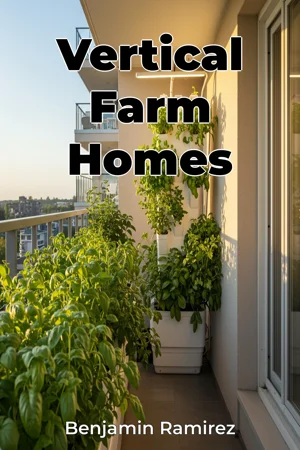
Can our homes become vital ecosystems, seamlessly integrating food production into our urban landscapes? "Vertical Farm Homes" explores this question by examining the feasibility and benefits of incorporating agriculture directly into residential tower design. This book asserts that integrating farming into vertical living spaces represents a crucial step toward sustainable urban development. This integrated approach can address growing concerns about food security, environmental impact, and community well-being in increasingly dense urban environments. The book tackles three key topics: first, the architectural and engineering challenges of embedding agricultural systems within residential structures; second, the potential for increased food security and reduced environmental footprint through localized food production; and third, the social and economic impacts of integrating farming into daily domestic life. These topics are important because they address the urgent need for innovative solutions to the challenges of urbanization, climate change, and resource scarcity. The concept of vertical farming isn't new, dating back to speculative proposals from the early 20th century. However, recent advancements in hydroponics, aeroponics, lighting technology, and building design have made the integration of agriculture into residential buildings a more realistic and economically viable proposition. The reader should have a basic understanding of architectural design principles, agricultural practices, and environmental sustainability concepts. The central argument of "Vertical Farm Homes" is that the successful integration of agriculture into residential towers offers a viable pathway toward creating more sustainable, resilient, and community-oriented urban environments. It argues that these integrated systems can significantly reduce the environmental impact associated with food production and transportation while simultaneously improving access to fresh, healthy food for urban residents and fostering stronger community bonds. The book begins by introducing the core concepts of vertical farming and sustainable architecture. It then delves into the technical aspects of designing and constructing vertical farm homes, considering factors such as structural support, lighting, irrigation, waste management, and climate control. The book then moves on to explore the potential benefits of this integration, examining case studies of existing vertical farms and pilot projects focusing on increased food security and reduced environmental impact. Following this, the social and economic dimensions are explored, considering the potential for job creation, community engagement, and enhanced quality of life. The book culminates by offering practical guidelines and recommendations for architects, developers, and policymakers interested in implementing vertical farm home projects. The evidence presented in the book draws from a variety of sources, including agricultural data on crop yields and resource consumption, architectural plans and engineering specifications for vertical farm structures, and social science research on the impact of urban agriculture on communities. Unique data sources include proprietary data from leading vertical farming companies and case studies of innovative building designs from around the world. "Vertical Farm Homes" connects to several other fields, including environmental science (analyzing the environmental impacts of food production and transportation), urban planning (examining the integration of agriculture into urban development strategies), and public health (assessing the nutritional and social benefits of localized food production). These interdisciplinary connections enhance the book's argument by providing a holistic perspective on the potential of vertical farm homes to address multiple societal challenges. The book differentiates itself through its focus on the architectural integration of farming within residential spaces. Where other works concentrate on vast warehouse-style operations, this book zeroes in on the design and lifestyle implications of incorporating agriculture into the everyday home. The book adopts a professional yet accessible style, presenting complex technical information in a clear and engaging manner. It is intended for architects, urban planners, developers, policymakers, and anyone interested in sustainable urban development and innovative food production systems. Readers will find value in the book's practical guidance, real-world examples, and forward-looking perspective. As an architecture book, professional renderings and diagrams explain spatial and technical concepts. Given the genre of environmental studies, data charts and scientifically supported claims are expected. The book's scope centers on the integration of agriculture into residential towers in urban environments, with a deliberate limitation on discussing large-scale commercial vertical farms. The information presented in the book can be applied practically by architects and developers seeking to design and build vertical farm home projects, by policymakers developing regulations and incentives for sustainable urban development, and by individuals interested in exploring the potential of urban agriculture to enhance their communities. The book addresses ongoing debates about the economic viability and environmental sustainability of vertical farming, presenting a balanced assessment of the potential benefits and challenges of this emerging field.
Can our homes become vital ecosystems, seamlessly integrating food production into our urban landscapes? "Vertical Farm Homes" explores this question by examining the feasibility and benefits of incorporating agriculture directly into residential tower design. This book asserts that integrating farming into vertical living spaces represents a crucial step toward sustainable urban development. This integrated approach can address growing concerns about food security, environmental impact, and community well-being in increasingly dense urban environments. The book tackles three key topics: first, the architectural and engineering challenges of embedding agricultural systems within residential structures; second, the potential for increased food security and reduced environmental footprint through localized food production; and third, the social and economic impacts of integrating farming into daily domestic life. These topics are important because they address the urgent need for innovative solutions to the challenges of urbanization, climate change, and resource scarcity. The concept of vertical farming isn't new, dating back to speculative proposals from the early 20th century. However, recent advancements in hydroponics, aeroponics, lighting technology, and building design have made the integration of agriculture into residential buildings a more realistic and economically viable proposition. The reader should have a basic understanding of architectural design principles, agricultural practices, and environmental sustainability concepts. The central argument of "Vertical Farm Homes" is that the successful integration of agriculture into residential towers offers a viable pathway toward creating more sustainable, resilient, and community-oriented urban environments. It argues that these integrated systems can significantly reduce the environmental impact associated with food production and transportation while simultaneously improving access to fresh, healthy food for urban residents and fostering stronger community bonds. The book begins by introducing the core concepts of vertical farming and sustainable architecture. It then delves into the technical aspects of designing and constructing vertical farm homes, considering factors such as structural support, lighting, irrigation, waste management, and climate control. The book then moves on to explore the potential benefits of this integration, examining case studies of existing vertical farms and pilot projects focusing on increased food security and reduced environmental impact. Following this, the social and economic dimensions are explored, considering the potential for job creation, community engagement, and enhanced quality of life. The book culminates by offering practical guidelines and recommendations for architects, developers, and policymakers interested in implementing vertical farm home projects. The evidence presented in the book draws from a variety of sources, including agricultural data on crop yields and resource consumption, architectural plans and engineering specifications for vertical farm structures, and social science research on the impact of urban agriculture on communities. Unique data sources include proprietary data from leading vertical farming companies and case studies of innovative building designs from around the world. "Vertical Farm Homes" connects to several other fields, including environmental science (analyzing the environmental impacts of food production and transportation), urban planning (examining the integration of agriculture into urban development strategies), and public health (assessing the nutritional and social benefits of localized food production). These interdisciplinary connections enhance the book's argument by providing a holistic perspective on the potential of vertical farm homes to address multiple societal challenges. The book differentiates itself through its focus on the architectural integration of farming within residential spaces. Where other works concentrate on vast warehouse-style operations, this book zeroes in on the design and lifestyle implications of incorporating agriculture into the everyday home. The book adopts a professional yet accessible style, presenting complex technical information in a clear and engaging manner. It is intended for architects, urban planners, developers, policymakers, and anyone interested in sustainable urban development and innovative food production systems. Readers will find value in the book's practical guidance, real-world examples, and forward-looking perspective. As an architecture book, professional renderings and diagrams explain spatial and technical concepts. Given the genre of environmental studies, data charts and scientifically supported claims are expected. The book's scope centers on the integration of agriculture into residential towers in urban environments, with a deliberate limitation on discussing large-scale commercial vertical farms. The information presented in the book can be applied practically by architects and developers seeking to design and build vertical farm home projects, by policymakers developing regulations and incentives for sustainable urban development, and by individuals interested in exploring the potential of urban agriculture to enhance their communities. The book addresses ongoing debates about the economic viability and environmental sustainability of vertical farming, presenting a balanced assessment of the potential benefits and challenges of this emerging field.
"Vertical Farm Homes" explores integrating agriculture into residential tower design as a key component of sustainable urban development. This approach seeks to address food security and reduce environmental impact in densely populated areas. The book highlights how advancements in hydroponics, aeroponics, and lighting technologies make incorporating farming into homes increasingly viable. It uniquely focuses on the architectural integration of agriculture within residential spaces, contrasting with approaches that concentrate on large-scale commercial operations. The book examines the architectural and engineering challenges, as well as the social and economic implications of vertical farm homes. Did you know that localized food production can reduce the environmental footprint associated with food transportation? Or that integrating farming into daily life can foster stronger community bonds? Using case studies and innovative building designs, the book presents a balanced assessment of the benefits and challenges. The book begins with core concepts of vertical farming and sustainable architecture. It then delves into technical aspects like structural support and climate control, before exploring social and economic dimensions, and concluding with practical guidelines for implementation of vertical farm home projects. This progression offers a holistic understanding of how to create more resilient and community-oriented urban environments.
Book Details
ISBN
9788235212429
Publisher
Publifye AS
Your Licenses
You don't own any licenses for this book
Purchase a license below to unlock this book and download the EPUB.
Purchase License
Select a tier to unlock this book
Need bulk licensing?
Contact us for enterprise agreements.