
About This Book
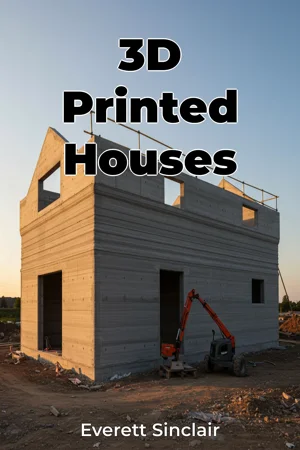
Can houses be printed as easily as documents? "3D Printed Houses" delves into the burgeoning field of additive construction, commonly known as 3D printing, to explore its potential revolutionizing the architecture and construction industries. This book examines the technology, the innovative materials, and the design methodologies driving the creation of habitable structures through automated processes. It addresses the core question: how can 3D printing technology reshape housing, and what are the limitations, possibilities and challenges in its broader implementation. This book provides a comprehensive overview of 3D printing in construction, addressing its foundations, current applications, and future potential. We begin by establishing context. Readers do not need prior detailed knowledge, but a basic understanding of architectural principles and technological concepts is helpful. We then discuss the historical evolution of construction techniques and the emerging need for faster, more sustainable, and cost-effective solutions. The book establishes the central argument that 3D printing presents a viable and transformative approach to addressing global housing challenges, promising to reduce construction time, material waste, and labor costs, while also enabling design freedom and customization. The book's structure follows a logical progression. First, an introduction to the core concepts of 3D printing technologies, focusing on the specific methods adapted for construction, like concrete printing, powder-bed fusion, as well as binder jetting. Materials science forms a considerable part of the discussion including cementitious mixes and alternative materials. The book moves on to discuss design for 3D printing, which is essential to realize its benefits. It explores case studies of existing 3D-printed houses and construction projects worldwide, offering insights into real-world applications and lessons learned. The book then shifts to the economic and environmental impacts of 3D printing in construction, including a life cycle assessment of 3D-printed structures and an analysis of their potential to reduce carbon emissions. The culmination is a forward-looking vision of the future of housing, where 3D printing plays a central role in addressing urban development challenges and creating more sustainable and resilient communities. The arguments are supported by a combination of empirical data, case studies, and expert opinions. The book analyzes construction time, material usage, and cost comparisons between traditional and 3D-printed construction methods. Data from pilot projects and research institutions will be presented, along with insights from architects, engineers, and construction professionals involved in 3D printing projects. "3D Printed Houses" has strong interdisciplinary connections. It intersects with materials science, exploring the development of printable materials with enhanced properties. It also connects with sustainable design, examining the potential of 3D printing to reduce construction waste and promote resource efficiency. Furthermore, it has intersections with urban planning and social science, considering the implications of 3D-printed housing for urban development and social equity. The book adopts a balanced approach, presenting information in a clear and accessible manner, while also acknowledging the limitations and challenges associated with 3D printing in construction. This includes addressing issues related to structural integrity, regulatory frameworks, and public acceptance. The target audience includes architects, engineers, construction professionals, urban planners, policymakers, and students in related fields. This book is valuable to these readers due to its comprehensive coverage of 3D printing in construction, its practical insights, and its forward-looking perspective. As a work of non-fiction in the fields of architecture and technology, the book adheres to conventions of accuracy, objectivity, and evidence-based reasoning. It presents information in a structured and coherent manner, with clear citations and references to source materials. While the book provides a broad overview of 3D printing in construction, its scope is limited to residential buildings and small to mid-size structures. It does not delve into large-scale infrastructure projects or specialized applications such as bridges or tunnels. The information presented in the book can be applied practically by readers in a variety of ways. Architects and engineers can use the book as a guide for designing and implementing 3D-printed construction projects. Construction professionals can leverage the insights to integrate 3D printing into their existing workflows. Policymakers can inform regulations and policies that promote the responsible use of 3D printing in construction. This book will address ongoing debates. It highlights controversies surrounding the scalability, safety, and aesthetic appeal of 3D-printed buildings. It also evaluates the technology's potential to disrupt established practices.
Can houses be printed as easily as documents? "3D Printed Houses" delves into the burgeoning field of additive construction, commonly known as 3D printing, to explore its potential revolutionizing the architecture and construction industries. This book examines the technology, the innovative materials, and the design methodologies driving the creation of habitable structures through automated processes. It addresses the core question: how can 3D printing technology reshape housing, and what are the limitations, possibilities and challenges in its broader implementation. This book provides a comprehensive overview of 3D printing in construction, addressing its foundations, current applications, and future potential. We begin by establishing context. Readers do not need prior detailed knowledge, but a basic understanding of architectural principles and technological concepts is helpful. We then discuss the historical evolution of construction techniques and the emerging need for faster, more sustainable, and cost-effective solutions. The book establishes the central argument that 3D printing presents a viable and transformative approach to addressing global housing challenges, promising to reduce construction time, material waste, and labor costs, while also enabling design freedom and customization. The book's structure follows a logical progression. First, an introduction to the core concepts of 3D printing technologies, focusing on the specific methods adapted for construction, like concrete printing, powder-bed fusion, as well as binder jetting. Materials science forms a considerable part of the discussion including cementitious mixes and alternative materials. The book moves on to discuss design for 3D printing, which is essential to realize its benefits. It explores case studies of existing 3D-printed houses and construction projects worldwide, offering insights into real-world applications and lessons learned. The book then shifts to the economic and environmental impacts of 3D printing in construction, including a life cycle assessment of 3D-printed structures and an analysis of their potential to reduce carbon emissions. The culmination is a forward-looking vision of the future of housing, where 3D printing plays a central role in addressing urban development challenges and creating more sustainable and resilient communities. The arguments are supported by a combination of empirical data, case studies, and expert opinions. The book analyzes construction time, material usage, and cost comparisons between traditional and 3D-printed construction methods. Data from pilot projects and research institutions will be presented, along with insights from architects, engineers, and construction professionals involved in 3D printing projects. "3D Printed Houses" has strong interdisciplinary connections. It intersects with materials science, exploring the development of printable materials with enhanced properties. It also connects with sustainable design, examining the potential of 3D printing to reduce construction waste and promote resource efficiency. Furthermore, it has intersections with urban planning and social science, considering the implications of 3D-printed housing for urban development and social equity. The book adopts a balanced approach, presenting information in a clear and accessible manner, while also acknowledging the limitations and challenges associated with 3D printing in construction. This includes addressing issues related to structural integrity, regulatory frameworks, and public acceptance. The target audience includes architects, engineers, construction professionals, urban planners, policymakers, and students in related fields. This book is valuable to these readers due to its comprehensive coverage of 3D printing in construction, its practical insights, and its forward-looking perspective. As a work of non-fiction in the fields of architecture and technology, the book adheres to conventions of accuracy, objectivity, and evidence-based reasoning. It presents information in a structured and coherent manner, with clear citations and references to source materials. While the book provides a broad overview of 3D printing in construction, its scope is limited to residential buildings and small to mid-size structures. It does not delve into large-scale infrastructure projects or specialized applications such as bridges or tunnels. The information presented in the book can be applied practically by readers in a variety of ways. Architects and engineers can use the book as a guide for designing and implementing 3D-printed construction projects. Construction professionals can leverage the insights to integrate 3D printing into their existing workflows. Policymakers can inform regulations and policies that promote the responsible use of 3D printing in construction. This book will address ongoing debates. It highlights controversies surrounding the scalability, safety, and aesthetic appeal of 3D-printed buildings. It also evaluates the technology's potential to disrupt established practices.
"3D Printed Houses" explores the groundbreaking potential of 3D printing technology to revolutionize architecture and the construction industry. It examines how additive construction, using innovative materials and design methodologies, can create habitable structures more efficiently. The book highlights the promise of reducing construction time, material waste, and labor costs through automated processes, while also enabling greater design freedom. Did you know that 3D printing allows for the creation of complex geometries and customized designs that would be difficult or impossible to achieve with traditional methods. The book progresses logically, starting with the core concepts of 3D printing technologies like concrete printing and binder jetting, then moves into materials science, focusing on cementitious mixes. Case studies of existing 3D-printed houses worldwide offer real-world insights. Finally, the book analyzes the economic and environmental impacts, including the potential for reduced carbon emissions. It adopts a balanced approach, presenting information clearly while acknowledging the challenges related to structural integrity and regulatory frameworks.
Book Details
ISBN
9788235212405
Publisher
Publifye AS
Your Licenses
You don't own any licenses for this book
Purchase a license below to unlock this book and download the EPUB.
Purchase License
Select a tier to unlock this book
Need bulk licensing?
Contact us for enterprise agreements.