
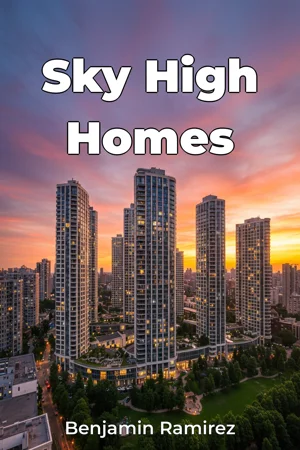
About This Book
Are high-rise residential buildings truly a sustainable solution for our ever-growing urban populations, or are they simply monuments to architectural ambition? "Sky High Homes" delves into the multifaceted world of vertical living, examining the benefits and challenges associated with high-rise residential buildings in the 21st century. This book will explore the architectural, social, and environmental implications of concentrating housing upwards, providing a balanced perspective supported by real-world examples and rigorous analysis. The central argument of "Sky High Homes" is that high-rise residential buildings, when designed and implemented thoughtfully, can contribute significantly to sustainable urban development and improved quality of life. However, this potential hinges on careful consideration of factors such as energy efficiency, material selection, community integration, and social equity. The book aims to provide a comprehensive understanding of these factors, equipping architects, urban planners, policymakers, and residents with the knowledge to create and inhabit successful vertical communities. This book is structured to provide a comprehensive understanding of high-rise living. It begins with an introduction to the historical context of high-rise development, tracing its evolution from early skyscrapers to contemporary towers. This section also lays the groundwork for understanding the underlying principles of structural engineering and material science that make these buildings possible. The core of the book is divided into three major sections. First, environmental sustainability: This section analyzes the environmental impact of high-rise buildings, considering energy consumption, carbon emissions, water usage, and waste management. It also explores innovative design strategies for reducing the environmental footprint of these structures. Second, Socio-economic Impacts: This section examines the social and economic implications of high-rise living, including affordability, community building, social isolation, and health impacts. It addresses the challenges of creating inclusive and equitable vertical communities. Third, Architectural and Urban Design: This section focuses on the architectural and urban design considerations of high-rise buildings, exploring topics such as building form, spatial organization, access to daylight and ventilation, and integration with the surrounding urban fabric. It also examines the role of technology in shaping the future of high-rise design. Throughout the book, evidence and research are drawn from diverse sources, including construction reports, case studies of successful and unsuccessful high-rise projects, statistical data on energy consumption and social demographics, and interviews with architects, engineers, urban planners, and residents. The book also incorporates data from government agencies and international organizations involved in urban development and sustainability. "Sky High Homes" connects to other fields, including environmental science, urban sociology, and public health. Environmental science informs the assessment of the ecological footprint of high-rise buildings. Urban sociology provides insights into the social dynamics of vertical communities. Public health informs the analysis of the health impacts of high-rise living. What sets this book apart is its holistic approach, integrating architectural design with environmental and social considerations. It offers a balanced and nuanced perspective on the potential and limitations of high-rise residential buildings. The book avoids overly technical jargon, striving for a conversational tone that is accessible to a broad audience. The target audience for "Sky High Homes" includes architecture students, practicing architects, urban planners, policymakers, developers, and anyone interested in sustainable urban development and the future of housing. The information presented can be applied practically in the design and planning of high-rise buildings, as well as in the development of urban policies and regulations. "Sky High Homes" addresses the ongoing debate about the role of high-rise buildings in sustainable urban development. While some argue that they are inherently unsustainable due to their high energy consumption and social isolation, others believe that they can be part of the solution if designed and managed effectively. This book seeks to provide a balanced and informed perspective on this crucial issue. The scope is limited to residential high-rises, setting aside commercial buildings for the sake of focus.
Are high-rise residential buildings truly a sustainable solution for our ever-growing urban populations, or are they simply monuments to architectural ambition? "Sky High Homes" delves into the multifaceted world of vertical living, examining the benefits and challenges associated with high-rise residential buildings in the 21st century. This book will explore the architectural, social, and environmental implications of concentrating housing upwards, providing a balanced perspective supported by real-world examples and rigorous analysis. The central argument of "Sky High Homes" is that high-rise residential buildings, when designed and implemented thoughtfully, can contribute significantly to sustainable urban development and improved quality of life. However, this potential hinges on careful consideration of factors such as energy efficiency, material selection, community integration, and social equity. The book aims to provide a comprehensive understanding of these factors, equipping architects, urban planners, policymakers, and residents with the knowledge to create and inhabit successful vertical communities. This book is structured to provide a comprehensive understanding of high-rise living. It begins with an introduction to the historical context of high-rise development, tracing its evolution from early skyscrapers to contemporary towers. This section also lays the groundwork for understanding the underlying principles of structural engineering and material science that make these buildings possible. The core of the book is divided into three major sections. First, environmental sustainability: This section analyzes the environmental impact of high-rise buildings, considering energy consumption, carbon emissions, water usage, and waste management. It also explores innovative design strategies for reducing the environmental footprint of these structures. Second, Socio-economic Impacts: This section examines the social and economic implications of high-rise living, including affordability, community building, social isolation, and health impacts. It addresses the challenges of creating inclusive and equitable vertical communities. Third, Architectural and Urban Design: This section focuses on the architectural and urban design considerations of high-rise buildings, exploring topics such as building form, spatial organization, access to daylight and ventilation, and integration with the surrounding urban fabric. It also examines the role of technology in shaping the future of high-rise design. Throughout the book, evidence and research are drawn from diverse sources, including construction reports, case studies of successful and unsuccessful high-rise projects, statistical data on energy consumption and social demographics, and interviews with architects, engineers, urban planners, and residents. The book also incorporates data from government agencies and international organizations involved in urban development and sustainability. "Sky High Homes" connects to other fields, including environmental science, urban sociology, and public health. Environmental science informs the assessment of the ecological footprint of high-rise buildings. Urban sociology provides insights into the social dynamics of vertical communities. Public health informs the analysis of the health impacts of high-rise living. What sets this book apart is its holistic approach, integrating architectural design with environmental and social considerations. It offers a balanced and nuanced perspective on the potential and limitations of high-rise residential buildings. The book avoids overly technical jargon, striving for a conversational tone that is accessible to a broad audience. The target audience for "Sky High Homes" includes architecture students, practicing architects, urban planners, policymakers, developers, and anyone interested in sustainable urban development and the future of housing. The information presented can be applied practically in the design and planning of high-rise buildings, as well as in the development of urban policies and regulations. "Sky High Homes" addresses the ongoing debate about the role of high-rise buildings in sustainable urban development. While some argue that they are inherently unsustainable due to their high energy consumption and social isolation, others believe that they can be part of the solution if designed and managed effectively. This book seeks to provide a balanced and informed perspective on this crucial issue. The scope is limited to residential high-rises, setting aside commercial buildings for the sake of focus.
"Sky High Homes" explores the complex role of high-rise residential buildings in modern urban environments. It investigates whether these structures are truly a sustainable solution for growing urban populations or simply architectural statements. The book balances the potential benefits and challenges of vertical living by examining architectural designs, social impacts, and environmental implications, supported by real-world examples. Did you know thoughtful design can significantly improve the energy efficiency of skyscrapers? Or that careful planning can foster community within these vertical environments? The book uniquely integrates architectural design with environmental and social considerations, presenting a balanced perspective on high-rise living. It avoids technical jargon, making it accessible to a broad audience. Beginning with a historical overview of high-rise development, the book progresses through sections on environmental sustainability, socio-economic impacts, and architectural and urban design. This approach equips readers with a comprehensive understanding of creating successful vertical communities.
Book Details
ISBN
9788235212344
Publisher
Publifye AS
Your Licenses
You don't own any licenses for this book
Purchase a license below to unlock this book and download the EPUB.
Purchase License
Select a tier to unlock this book
Need bulk licensing?
Contact us for enterprise agreements.