
About This Book
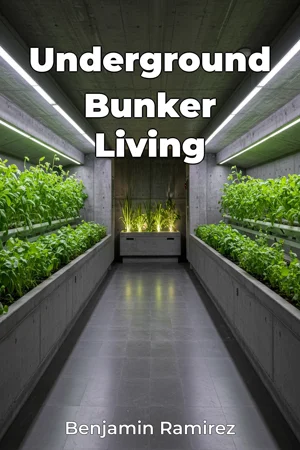
In an era of increasing global uncertainty, have we adequately considered the potential of subterranean spaces for safe and sustainable living? "Underground Bunker Living" delves into the multifaceted world of below-ground shelters, examining their design, functionality, and potential as viable alternatives to conventional housing. This book addresses two core topics: the architectural and engineering principles behind constructing effective underground bunkers and the psychological and sociological impact of residing in these environments. These topics are vital as they challenge traditional notions of domestic spaces and offer solutions to issues such as natural disasters, resource scarcity, and security concerns. Historically, underground structures have been utilized for storage, religious practices, and defense. From ancient catacombs to Cold War bunkers, these spaces reflect humanity's enduring need for protection and resourcefulness. A basic understanding of structural engineering and environmental control systems will aid in fully grasping the concepts presented. The central argument of "Underground Bunker Living" posits that well-designed subterranean shelters, incorporating principles of sustainable design and psychological well-being, can provide secure, comfortable, and even desirable living environments. This reframes the common perception of bunkers as merely temporary shelters, highlighting their potential for long-term habitation. The book unfolds systematically, beginning with an introduction to the history and evolution of underground architecture. It then explores key design considerations, including structural integrity, ventilation, water management, and energy efficiency. Major sections focus on: 1) the architectural elements of bunker design, exploring spatial layout, material selection, and aesthetic considerations; 2) the engineering challenges involved in creating self-sufficient underground environments, such as waste recycling, power generation, and food production; and 3) the psychological impact of underground living, examining the importance of natural light simulation, social interaction, and creating a sense of normalcy. The book culminates in a discussion of real-world applications, including case studies of existing underground homes and potential solutions for urban development. The arguments presented are supported by a range of evidence, including case studies of existing underground structures, data from environmental control experiments, and psychological research on the effects of confined spaces. Architectural plans and engineering schematics are used throughout the book to visually illustrate key concepts. Interdisciplinary connections are crucial to this study. Firstly, environmental science informs the sections on sustainability and resource management. Sociology provides context on community dynamics and the social implications of underground living. Finally, psychology helps us understand the mental well-being of individuals in underground environments. "Underground Bunker Living" offers a unique perspective by combining architectural design principles with practical engineering solutions and psychological insights. This holistic approach challenges conventional thinking and promotes a more nuanced understanding of subterranean living. The book adopts an informative and accessible tone, avoiding technical jargon where possible and providing clear explanations of complex concepts. It is targeted towards architects, engineers, designers, urban planners, and anyone interested in sustainable living, unconventional housing solutions, and disaster preparedness. The value for these readers lies in the practical guidance provided, the thought-provoking analysis of design possibilities, and the challenge to conventional architectural norms. As a work of design and architectural analysis, the book adheres to genre conventions, including detailed diagrams, technical specifications, and real-world examples. However, it also strives to push the boundaries of these conventions by incorporating psychological and sociological perspectives. While the book covers a broad range of topics related to underground living, it intentionally limits its scope to residential applications, avoiding detailed discussions of large-scale underground infrastructure or military installations. Ultimately, "Underground Bunker Living" demonstrates how to apply the discussed principles to design and build more resilient and sustainable homes. It offers actionable guidelines for individuals seeking to explore underground living as a viable housing alternative. The book also addresses some of the controversies surrounding underground living, such as the perceived lack of natural light and space, the potential for social isolation, and the high initial cost of construction. It offers solutions to these challenges, promoting the idea that underground living can be a positive and fulfilling experience with careful planning and innovative design.
In an era of increasing global uncertainty, have we adequately considered the potential of subterranean spaces for safe and sustainable living? "Underground Bunker Living" delves into the multifaceted world of below-ground shelters, examining their design, functionality, and potential as viable alternatives to conventional housing. This book addresses two core topics: the architectural and engineering principles behind constructing effective underground bunkers and the psychological and sociological impact of residing in these environments. These topics are vital as they challenge traditional notions of domestic spaces and offer solutions to issues such as natural disasters, resource scarcity, and security concerns. Historically, underground structures have been utilized for storage, religious practices, and defense. From ancient catacombs to Cold War bunkers, these spaces reflect humanity's enduring need for protection and resourcefulness. A basic understanding of structural engineering and environmental control systems will aid in fully grasping the concepts presented. The central argument of "Underground Bunker Living" posits that well-designed subterranean shelters, incorporating principles of sustainable design and psychological well-being, can provide secure, comfortable, and even desirable living environments. This reframes the common perception of bunkers as merely temporary shelters, highlighting their potential for long-term habitation. The book unfolds systematically, beginning with an introduction to the history and evolution of underground architecture. It then explores key design considerations, including structural integrity, ventilation, water management, and energy efficiency. Major sections focus on: 1) the architectural elements of bunker design, exploring spatial layout, material selection, and aesthetic considerations; 2) the engineering challenges involved in creating self-sufficient underground environments, such as waste recycling, power generation, and food production; and 3) the psychological impact of underground living, examining the importance of natural light simulation, social interaction, and creating a sense of normalcy. The book culminates in a discussion of real-world applications, including case studies of existing underground homes and potential solutions for urban development. The arguments presented are supported by a range of evidence, including case studies of existing underground structures, data from environmental control experiments, and psychological research on the effects of confined spaces. Architectural plans and engineering schematics are used throughout the book to visually illustrate key concepts. Interdisciplinary connections are crucial to this study. Firstly, environmental science informs the sections on sustainability and resource management. Sociology provides context on community dynamics and the social implications of underground living. Finally, psychology helps us understand the mental well-being of individuals in underground environments. "Underground Bunker Living" offers a unique perspective by combining architectural design principles with practical engineering solutions and psychological insights. This holistic approach challenges conventional thinking and promotes a more nuanced understanding of subterranean living. The book adopts an informative and accessible tone, avoiding technical jargon where possible and providing clear explanations of complex concepts. It is targeted towards architects, engineers, designers, urban planners, and anyone interested in sustainable living, unconventional housing solutions, and disaster preparedness. The value for these readers lies in the practical guidance provided, the thought-provoking analysis of design possibilities, and the challenge to conventional architectural norms. As a work of design and architectural analysis, the book adheres to genre conventions, including detailed diagrams, technical specifications, and real-world examples. However, it also strives to push the boundaries of these conventions by incorporating psychological and sociological perspectives. While the book covers a broad range of topics related to underground living, it intentionally limits its scope to residential applications, avoiding detailed discussions of large-scale underground infrastructure or military installations. Ultimately, "Underground Bunker Living" demonstrates how to apply the discussed principles to design and build more resilient and sustainable homes. It offers actionable guidelines for individuals seeking to explore underground living as a viable housing alternative. The book also addresses some of the controversies surrounding underground living, such as the perceived lack of natural light and space, the potential for social isolation, and the high initial cost of construction. It offers solutions to these challenges, promoting the idea that underground living can be a positive and fulfilling experience with careful planning and innovative design.
"Underground Bunker Living" explores the potential of subterranean spaces as sustainable and secure alternatives to conventional housing, especially in an era of increasing global uncertainty. The book examines the architectural and engineering principles involved in constructing effective underground bunkers, highlighting design elements such as spatial layout and material selection. It also delves into the psychological aspects of residing in these environments, addressing the importance of natural light simulation and social interaction. Historically, underground structures have served various purposes, from storage to defense. This book posits that well-designed bunkers, incorporating sustainable design and attention to psychological well-being, can be comfortable and desirable long-term living spaces. The book systematically progresses through the history of underground architecture, key design considerations like ventilation and water management, and engineering challenges such as waste recycling and power generation. Ultimately, the book combines architectural design with practical engineering solutions and psychological insights. Through case studies, architectural plans, and engineering schematics, "Underground Bunker Living" offers practical guidelines for individuals seeking to explore underground living and challenges conventional architectural norms, demonstrating how to build more resilient and sustainable homes.
Book Details
ISBN
9788235212337
Publisher
Publifye AS
Your Licenses
You don't own any licenses for this book
Purchase a license below to unlock this book and download the EPUB.
Purchase License
Select a tier to unlock this book
Need bulk licensing?
Contact us for enterprise agreements.