
About This Book
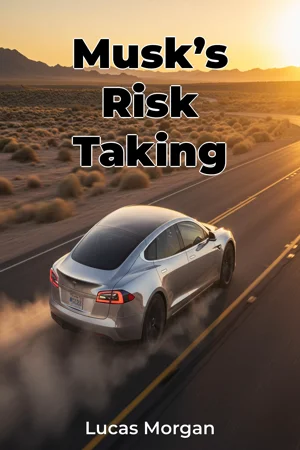
Why do some entrepreneurs succeed where others fail, especially when pursuing seemingly impossible ventures? "Musk's Risk Taking" delves into the core strategies and philosophies that have defined Elon Musk's approach to business, specifically focusing on how he assesses, manages, and leverages risk to achieve ambitious goals. This book analyzes the key decisions and calculated gambles behind Musk's ventures, exploring the blend of vision, technical expertise, and resilience that characterizes his entrepreneurial spirit. The book addresses business entrepreneurship, entrepreneurship in general, and biography. The central argument revolves around Musk's unique risk-taking framework: a combination of first-principles thinking, aggressive goal setting, and a willingness to embrace failure as a learning opportunity. This framework is not simply about reckless abandon; it's a calculated approach informed by deep industry knowledge and a relentless focus on innovation. The book posits that understanding and adapting this framework can provide valuable insights for any entrepreneur seeking to disrupt established industries or tackle complex challenges. The structure of the book unfolds in three major sections. First, an introduction explores the foundations of Musk's risk tolerance, examining his early influences, pivotal career decisions, and the development of his core business principles. Second, the book delves into specific case studies: Tesla, SpaceX, Neuralink, and The Boring Company. For each venture, the analysis focuses on the specific risks undertaken, the strategies employed to mitigate those risks, and the eventual outcomes, both positive and negative. This section utilizes business analyses, including financial reports, market analyses, and technological reviews, to provide an objective assessment of each endeavor. Third, the book synthesizes these case studies to outline a comprehensive model for entrepreneurial risk-taking, highlighting actionable strategies and key takeaways for readers. It culminates in a discussion of the broader implications of Musk's approach for innovation, leadership, and the future of business. The evidence and research presented includes publicly available financial data, industry reports, technological assessments, and biographical information drawn from credible sources. While not an authorized biography, the book relies on documented facts and business analyses to support its claims. The methodology involves a comparative analysis of Musk's various ventures, identifying patterns and principles that define his risk-taking style. Interdisciplinary connections enhance the book's argument. The book connects to fields such as behavioral economics, exploring the psychological factors that influence decision-making under uncertainty. It also relates to innovation management, examining how Musk's approach fosters a culture of experimentation and rapid iteration. Furthermore, it explores the impact of technological forecasting in assessing risk, utilizing experts in fields such as space economy to gauge project viability. This book stands out by analyzing Musk's risk-taking not as an innate personality trait but as a learned and adaptable skill. The book avoids hagiography, presenting both successes and failures within a framework of objective analysis. The tone balances academic rigor with accessible language, aiming to engage both seasoned business professionals and aspiring entrepreneurs. The target audience includes entrepreneurs, business students, investors, and anyone interested in understanding the dynamics of high-stakes innovation. The book offers practical insights into risk management, strategic planning, and leadership, making it valuable for those seeking to navigate the complexities of the modern business landscape. As a work of business entrepreneurship and biography, "Musk's Risk Taking" focuses on verifiable actions and strategies rather than speculative interpretations of personal motivations. The book's scope is limited to analyzing Musk's professional risk-taking; it does not delve into his personal life beyond its direct impact on his business decisions. The book addresses ongoing debates surrounding the ethics of disruptive innovation, the role of government regulation in fostering entrepreneurship, and the long-term societal impacts of technological advancement. It acknowledges these controversies while remaining focused on the core theme of understanding and applying Musk's risk-taking framework. "Musk's Risk Taking" provides a structured framework for understanding and potentially emulating a specific approach to entrepreneurial risk.
Why do some entrepreneurs succeed where others fail, especially when pursuing seemingly impossible ventures? "Musk's Risk Taking" delves into the core strategies and philosophies that have defined Elon Musk's approach to business, specifically focusing on how he assesses, manages, and leverages risk to achieve ambitious goals. This book analyzes the key decisions and calculated gambles behind Musk's ventures, exploring the blend of vision, technical expertise, and resilience that characterizes his entrepreneurial spirit. The book addresses business entrepreneurship, entrepreneurship in general, and biography. The central argument revolves around Musk's unique risk-taking framework: a combination of first-principles thinking, aggressive goal setting, and a willingness to embrace failure as a learning opportunity. This framework is not simply about reckless abandon; it's a calculated approach informed by deep industry knowledge and a relentless focus on innovation. The book posits that understanding and adapting this framework can provide valuable insights for any entrepreneur seeking to disrupt established industries or tackle complex challenges. The structure of the book unfolds in three major sections. First, an introduction explores the foundations of Musk's risk tolerance, examining his early influences, pivotal career decisions, and the development of his core business principles. Second, the book delves into specific case studies: Tesla, SpaceX, Neuralink, and The Boring Company. For each venture, the analysis focuses on the specific risks undertaken, the strategies employed to mitigate those risks, and the eventual outcomes, both positive and negative. This section utilizes business analyses, including financial reports, market analyses, and technological reviews, to provide an objective assessment of each endeavor. Third, the book synthesizes these case studies to outline a comprehensive model for entrepreneurial risk-taking, highlighting actionable strategies and key takeaways for readers. It culminates in a discussion of the broader implications of Musk's approach for innovation, leadership, and the future of business. The evidence and research presented includes publicly available financial data, industry reports, technological assessments, and biographical information drawn from credible sources. While not an authorized biography, the book relies on documented facts and business analyses to support its claims. The methodology involves a comparative analysis of Musk's various ventures, identifying patterns and principles that define his risk-taking style. Interdisciplinary connections enhance the book's argument. The book connects to fields such as behavioral economics, exploring the psychological factors that influence decision-making under uncertainty. It also relates to innovation management, examining how Musk's approach fosters a culture of experimentation and rapid iteration. Furthermore, it explores the impact of technological forecasting in assessing risk, utilizing experts in fields such as space economy to gauge project viability. This book stands out by analyzing Musk's risk-taking not as an innate personality trait but as a learned and adaptable skill. The book avoids hagiography, presenting both successes and failures within a framework of objective analysis. The tone balances academic rigor with accessible language, aiming to engage both seasoned business professionals and aspiring entrepreneurs. The target audience includes entrepreneurs, business students, investors, and anyone interested in understanding the dynamics of high-stakes innovation. The book offers practical insights into risk management, strategic planning, and leadership, making it valuable for those seeking to navigate the complexities of the modern business landscape. As a work of business entrepreneurship and biography, "Musk's Risk Taking" focuses on verifiable actions and strategies rather than speculative interpretations of personal motivations. The book's scope is limited to analyzing Musk's professional risk-taking; it does not delve into his personal life beyond its direct impact on his business decisions. The book addresses ongoing debates surrounding the ethics of disruptive innovation, the role of government regulation in fostering entrepreneurship, and the long-term societal impacts of technological advancement. It acknowledges these controversies while remaining focused on the core theme of understanding and applying Musk's risk-taking framework. "Musk's Risk Taking" provides a structured framework for understanding and potentially emulating a specific approach to entrepreneurial risk.
"Musk's Risk Taking" examines the strategies behind Elon Musk's ambitious ventures, focusing on his unique approach to risk. The book analyzes how Musk assesses, manages, and leverages risk, highlighting his blend of vision, technical expertise, and resilience. It argues that understanding his risk-taking framework, which combines first-principles thinking with a willingness to learn from failure, can provide valuable insights for entrepreneurs. One intriguing aspect is Musk's aggressive goal-setting, which pushes boundaries and fosters innovation, even in the face of potential setbacks. The book progresses through three key sections, beginning with an exploration of the foundations that shaped Musk's risk tolerance. It then delves into case studies of Tesla, SpaceX, and Neuralink, analyzing the specific risks undertaken and the strategies employed. Finally, it synthesizes these case studies into a comprehensive model for entrepreneurial risk-taking. It demonstrates that Musk's approach isn't reckless but is calculated and informed by deep industry knowledge. The book stands out by analyzing risk-taking as a skill that can be learned and adapted, making it valuable for anyone seeking to disrupt industries or tackle complex challenges.
Book Details
ISBN
9788235212221
Publisher
Publifye AS
Your Licenses
You don't own any licenses for this book
Purchase a license below to unlock this book and download the EPUB.
Purchase License
Select a tier to unlock this book
Need bulk licensing?
Contact us for enterprise agreements.