
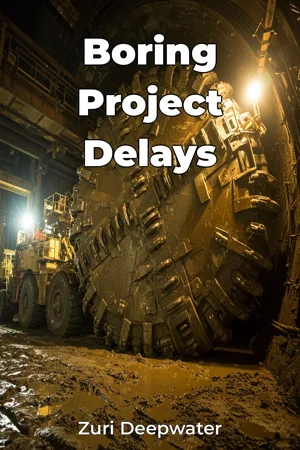
About This Book
Why do ambitious infrastructure projects consistently face delays? "Boring Project Delays" delves into the persistent challenges plaguing The Boring Company's (TBC) envisioned timelines, offering a critical examination of the factors contributing to these setbacks. This book tackles two key topics: the systematic underestimation of project complexity within innovative ventures and the impact of regulatory hurdles on technologically advanced infrastructure development. Understanding these issues is paramount for investors, policymakers, and engineers involved in future large-scale projects, as cost overruns and extended schedules can erode public trust and hinder progress. To provide context, the book explores the history of tunneling and infrastructure development, highlighting the inherent risks and uncertainties associated with such endeavors. Readers should possess a basic understanding of project management principles and an awareness of the complexities involved in urban planning and regulatory compliance. The central argument of "Boring Project Delays" is that a confluence of factors, including over-optimistic projections, unforeseen geological challenges, and protracted negotiations with regulatory bodies, significantly contribute to the consistent delays experienced by The Boring Company. This argument is crucial because it challenges the prevailing narrative of technological solutionism, advocating for a more pragmatic and realistic approach to infrastructure innovation. The book is structured to systematically unpack the complexities of TBC's project delays. First, it introduces the core concepts of risk assessment and project scheduling within the context of tunneling and infrastructure. Second, it analyzes specific case studies, drawing from project reports and public records, to demonstrate how initial timelines deviated from actual completion dates. These case studies will focus on projects such as the Las Vegas Convention Center Loop and proposed projects in other cities, examining the specific factors that contributed to delays in each instance. The analysis will include a detailed examination of geological surveys, permitting processes, and technological challenges encountered during construction. Third, the book synthesizes these findings to identify common patterns and underlying causes of the delays. It will then culminate in a set of actionable recommendations for improving project planning and execution in similar ventures, emphasizing the importance of realistic forecasting, proactive risk management, and effective communication with stakeholders. The evidence presented will consist primarily of publicly available project reports, regulatory filings, and independent analyses of TBC's projects. The book will also draw on interviews with industry experts and insights from academic research on infrastructure development. "Boring Project Delays" connects to several other fields. It relates to the field of economics by examining the economic impact of project delays on investment returns and taxpayer burden. There are connections to political science via analysis around government regulation and public policy regarding infrastructural development. Furthermore, there are connections to environmental studies through discussions of environmental impact assessments and mitigation strategies. These connections enhance the book's argument by providing a holistic understanding of the challenges associated with these complex projects. This book offers a detailed, empirically grounded analysis of The Boring Company's project delays, offering a more nuanced perspective than often found in media coverage. The overall tone is analytical and objective, aimed at providing a clear and balanced assessment of the challenges and opportunities in urban infrastructure innovation. The target audience includes investors, urban planners, policymakers, engineers, and anyone interested in the future of transportation and infrastructure. This book would be valuable as this provides a data-driven evaluation of the factors influencing project timelines. "Boring Project Delays" adheres to the conventions of business management and technology genres by providing a structured analysis of real-world case studies and offering practical recommendations for improving project outcomes. The book's scope is limited to an analysis of project timelines. It will not delve into the broader social or political implications of The Boring Company's vision beyond cost and schedule. The information presented can be applied to the management and oversight of future infrastructure projects. Further, this would assist in improving the accuracy of cost estimation. The book will address ongoing debates about the effectiveness of innovative tunneling technologies and the role of private companies in public infrastructure development. It will not attempt to take sides in these debates but rather to provide a data-driven analysis that informs the discussion.
Why do ambitious infrastructure projects consistently face delays? "Boring Project Delays" delves into the persistent challenges plaguing The Boring Company's (TBC) envisioned timelines, offering a critical examination of the factors contributing to these setbacks. This book tackles two key topics: the systematic underestimation of project complexity within innovative ventures and the impact of regulatory hurdles on technologically advanced infrastructure development. Understanding these issues is paramount for investors, policymakers, and engineers involved in future large-scale projects, as cost overruns and extended schedules can erode public trust and hinder progress. To provide context, the book explores the history of tunneling and infrastructure development, highlighting the inherent risks and uncertainties associated with such endeavors. Readers should possess a basic understanding of project management principles and an awareness of the complexities involved in urban planning and regulatory compliance. The central argument of "Boring Project Delays" is that a confluence of factors, including over-optimistic projections, unforeseen geological challenges, and protracted negotiations with regulatory bodies, significantly contribute to the consistent delays experienced by The Boring Company. This argument is crucial because it challenges the prevailing narrative of technological solutionism, advocating for a more pragmatic and realistic approach to infrastructure innovation. The book is structured to systematically unpack the complexities of TBC's project delays. First, it introduces the core concepts of risk assessment and project scheduling within the context of tunneling and infrastructure. Second, it analyzes specific case studies, drawing from project reports and public records, to demonstrate how initial timelines deviated from actual completion dates. These case studies will focus on projects such as the Las Vegas Convention Center Loop and proposed projects in other cities, examining the specific factors that contributed to delays in each instance. The analysis will include a detailed examination of geological surveys, permitting processes, and technological challenges encountered during construction. Third, the book synthesizes these findings to identify common patterns and underlying causes of the delays. It will then culminate in a set of actionable recommendations for improving project planning and execution in similar ventures, emphasizing the importance of realistic forecasting, proactive risk management, and effective communication with stakeholders. The evidence presented will consist primarily of publicly available project reports, regulatory filings, and independent analyses of TBC's projects. The book will also draw on interviews with industry experts and insights from academic research on infrastructure development. "Boring Project Delays" connects to several other fields. It relates to the field of economics by examining the economic impact of project delays on investment returns and taxpayer burden. There are connections to political science via analysis around government regulation and public policy regarding infrastructural development. Furthermore, there are connections to environmental studies through discussions of environmental impact assessments and mitigation strategies. These connections enhance the book's argument by providing a holistic understanding of the challenges associated with these complex projects. This book offers a detailed, empirically grounded analysis of The Boring Company's project delays, offering a more nuanced perspective than often found in media coverage. The overall tone is analytical and objective, aimed at providing a clear and balanced assessment of the challenges and opportunities in urban infrastructure innovation. The target audience includes investors, urban planners, policymakers, engineers, and anyone interested in the future of transportation and infrastructure. This book would be valuable as this provides a data-driven evaluation of the factors influencing project timelines. "Boring Project Delays" adheres to the conventions of business management and technology genres by providing a structured analysis of real-world case studies and offering practical recommendations for improving project outcomes. The book's scope is limited to an analysis of project timelines. It will not delve into the broader social or political implications of The Boring Company's vision beyond cost and schedule. The information presented can be applied to the management and oversight of future infrastructure projects. Further, this would assist in improving the accuracy of cost estimation. The book will address ongoing debates about the effectiveness of innovative tunneling technologies and the role of private companies in public infrastructure development. It will not attempt to take sides in these debates but rather to provide a data-driven analysis that informs the discussion.
"Boring Project Delays" examines the persistent challenges causing delays in infrastructure projects, specifically focusing on The Boring Company's (TBC) experiences. The book tackles the underestimation of project complexity and the impact of regulatory hurdles on advanced infrastructure development. It argues that over-optimistic projections, geological challenges, and regulatory negotiations significantly contribute to these delays. One intriguing fact is the systematic deviation between initial project timelines and actual completion dates, largely due to unforeseen obstacles. Another insight involves the considerable economic impact of these delays on investment returns and taxpayer burden. The book progresses systematically, starting with core concepts of risk assessment and project scheduling. It then analyzes case studies, such as the Las Vegas Convention Center Loop, using project reports and public records to demonstrate timeline deviations. This approach allows "Boring Project Delays" to identify common patterns and offer actionable recommendations for improving project planning in similar ventures. By providing a data-driven evaluation, the book offers a nuanced perspective valuable to investors, urban planners, and policymakers navigating the complexities of urban infrastructure innovation and infrastructure development.
Book Details
ISBN
9788235212207
Publisher
Publifye AS
Your Licenses
You don't own any licenses for this book
Purchase a license below to unlock this book and download the EPUB.
Purchase License
Select a tier to unlock this book
Need bulk licensing?
Contact us for enterprise agreements.