
About This Book
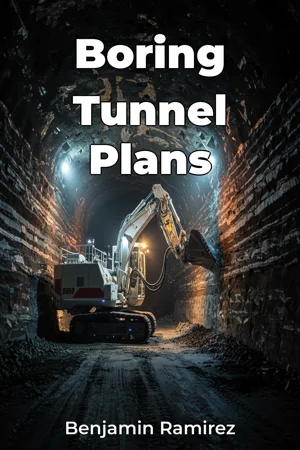
Can well-established principles of infrastructure development be reconciled with the innovative yet sometimes controversial traffic solutions proposed by figures like Elon Musk? "Boring Tunnel Plans" tackles this question head-on, offering a detailed examination of Musk's vision for underground transportation systems and placing it within the broader context of established infrastructure studies and architectural design. This book focuses on two key areas: the engineering feasibility of large-scale tunnel networks for vehicular traffic and the potential socio-economic impacts of such infrastructure projects on urban environments. These topics are significant because they directly address the growing challenges of urban congestion and the search for sustainable transportation solutions, issues of paramount importance to city planners, architects, and policymakers alike. The book provides essential historical and technical background, beginning with a review of the development of underground infrastructure from early subway systems to modern tunneling techniques. It assumes readers have a basic understanding of urban planning principles and infrastructural engineering concepts, providing further explanation of increasingly complex topics. This foundation sets the stage for a critical analysis of Musk's proposals, particularly those put forward by The Boring Company. The central argument asserts that while Musk's vision presents intriguing possibilities for alleviating traffic congestion and reshaping urban landscapes, its successful implementation hinges on rigorous adherence to established engineering standards, comprehensive cost-benefit analyses, and careful consideration of long-term environmental and social consequences. This argument is vital, as it encourages a balanced perspective, avoiding both uncritical acceptance and outright dismissal of potentially transformative technologies. The book's structure begins by introducing the core concepts of tunnel construction, traffic flow management, and urban planning. It then develops these ideas across three major sections. The first section delves into the technical aspects of tunnel boring, examining different methods, geological considerations, and safety protocols. The second section analyzes the proposed transportation models, evaluating their capacity, efficiency, and integration with existing transportation networks. The third section assesses the economic, social, and environmental impacts of the large-scale implementation of such tunnel systems, considering factors like land use, energy consumption, and accessibility. The book culminates by presenting a framework for evaluating the viability and sustainability of future underground transportation projects. "Boring Tunnel Plans" supports its arguments with evidence drawn from a variety of sources, including case studies of existing tunnel projects worldwide, engineering reports on soil mechanics and structural stability, and economic analyses of infrastructure investments. It incorporates data from government transportation departments, academic research institutions, and industry publications, offering a comprehensive and fact-based assessment. The book connects to several interdisciplinary fields. Firstly, it intersects with economics through the analysis of project financing, cost-benefit ratios, and potential economic impacts on local communities. Secondly, it connects with environmental science by examining the ecological consequences of tunnel construction, including noise pollution, groundwater contamination, and habitat disruption. Thirdly, it ties into sociology through its consideration of the social equity implications of new transportation infrastructure, assessing how different communities might benefit or be disadvantaged. A unique aspect of this book is its critical yet constructive approach to evaluating Musk's proposals in particular. It moves beyond the hype and speculation, offering a grounded assessment based on established engineering principles and rigorous data analysis. Written in a formal and accessible style, "Boring Tunnel Plans" is targeted towards a broad audience, including urban planners, architects, engineers, policymakers, and anyone interested in the future of urban transportation. It is valuable because it provides a comprehensive and unbiased analysis of a potentially transformative technology, helping readers to make informed decisions about the future of urban infrastructure. As a work of non-fiction architecture and technology, the book adheres to the genre's conventions by providing detailed technical information, supporting arguments with evidence, and presenting a balanced perspective on complex issues. The scope of "Boring Tunnel Plans” is limited to the technical, economic, and social aspects of tunnel-based transportation systems, focusing primarily on vehicular traffic. It does not delve into the political or regulatory challenges associated with such projects, nor does it explore alternative transportation technologies in depth. The information presented in this book can be applied practically by city planners and policymakers when evaluating proposals for underground transportation systems. It offers a framework for assessing the feasibility, sustainability, and societal impact of such projects. The topic of underground transportation systems and, in particular, the proposals of The Boring Company, is enmeshed within debates regarding cost, practicality, and environmental effects. This book directly addresses these debates, offering a balanced and well-researched perspective.
Can well-established principles of infrastructure development be reconciled with the innovative yet sometimes controversial traffic solutions proposed by figures like Elon Musk? "Boring Tunnel Plans" tackles this question head-on, offering a detailed examination of Musk's vision for underground transportation systems and placing it within the broader context of established infrastructure studies and architectural design. This book focuses on two key areas: the engineering feasibility of large-scale tunnel networks for vehicular traffic and the potential socio-economic impacts of such infrastructure projects on urban environments. These topics are significant because they directly address the growing challenges of urban congestion and the search for sustainable transportation solutions, issues of paramount importance to city planners, architects, and policymakers alike. The book provides essential historical and technical background, beginning with a review of the development of underground infrastructure from early subway systems to modern tunneling techniques. It assumes readers have a basic understanding of urban planning principles and infrastructural engineering concepts, providing further explanation of increasingly complex topics. This foundation sets the stage for a critical analysis of Musk's proposals, particularly those put forward by The Boring Company. The central argument asserts that while Musk's vision presents intriguing possibilities for alleviating traffic congestion and reshaping urban landscapes, its successful implementation hinges on rigorous adherence to established engineering standards, comprehensive cost-benefit analyses, and careful consideration of long-term environmental and social consequences. This argument is vital, as it encourages a balanced perspective, avoiding both uncritical acceptance and outright dismissal of potentially transformative technologies. The book's structure begins by introducing the core concepts of tunnel construction, traffic flow management, and urban planning. It then develops these ideas across three major sections. The first section delves into the technical aspects of tunnel boring, examining different methods, geological considerations, and safety protocols. The second section analyzes the proposed transportation models, evaluating their capacity, efficiency, and integration with existing transportation networks. The third section assesses the economic, social, and environmental impacts of the large-scale implementation of such tunnel systems, considering factors like land use, energy consumption, and accessibility. The book culminates by presenting a framework for evaluating the viability and sustainability of future underground transportation projects. "Boring Tunnel Plans" supports its arguments with evidence drawn from a variety of sources, including case studies of existing tunnel projects worldwide, engineering reports on soil mechanics and structural stability, and economic analyses of infrastructure investments. It incorporates data from government transportation departments, academic research institutions, and industry publications, offering a comprehensive and fact-based assessment. The book connects to several interdisciplinary fields. Firstly, it intersects with economics through the analysis of project financing, cost-benefit ratios, and potential economic impacts on local communities. Secondly, it connects with environmental science by examining the ecological consequences of tunnel construction, including noise pollution, groundwater contamination, and habitat disruption. Thirdly, it ties into sociology through its consideration of the social equity implications of new transportation infrastructure, assessing how different communities might benefit or be disadvantaged. A unique aspect of this book is its critical yet constructive approach to evaluating Musk's proposals in particular. It moves beyond the hype and speculation, offering a grounded assessment based on established engineering principles and rigorous data analysis. Written in a formal and accessible style, "Boring Tunnel Plans" is targeted towards a broad audience, including urban planners, architects, engineers, policymakers, and anyone interested in the future of urban transportation. It is valuable because it provides a comprehensive and unbiased analysis of a potentially transformative technology, helping readers to make informed decisions about the future of urban infrastructure. As a work of non-fiction architecture and technology, the book adheres to the genre's conventions by providing detailed technical information, supporting arguments with evidence, and presenting a balanced perspective on complex issues. The scope of "Boring Tunnel Plans” is limited to the technical, economic, and social aspects of tunnel-based transportation systems, focusing primarily on vehicular traffic. It does not delve into the political or regulatory challenges associated with such projects, nor does it explore alternative transportation technologies in depth. The information presented in this book can be applied practically by city planners and policymakers when evaluating proposals for underground transportation systems. It offers a framework for assessing the feasibility, sustainability, and societal impact of such projects. The topic of underground transportation systems and, in particular, the proposals of The Boring Company, is enmeshed within debates regarding cost, practicality, and environmental effects. This book directly addresses these debates, offering a balanced and well-researched perspective.
"Boring Tunnel Plans" examines the feasibility and impact of underground transportation systems, particularly those proposed by The Boring Company. It bridges the gap between innovative ideas and established infrastructure development principles. The book explores whether such projects can realistically address urban traffic congestion while adhering to engineering standards and considering socio-economic factors. Did you know that tunnel construction involves complex geological considerations and rigorous safety protocols? Or that the success of these projects hinges on comprehensive cost-benefit analyses? The book provides a historical and technical foundation, then analyzes transportation models and their integration with existing networks. It assesses economic, social, and environmental impacts, offering a framework for evaluating the viability of these projects. It supports arguments with case studies, engineering reports, and economic analyses. This approach offers a unique, balanced perspective on potentially transformative technologies, moving beyond hype to provide a grounded assessment. Beginning with core concepts, the book progresses through sections on tunnel boring techniques, transportation models, and impact assessments. This structure allows urban planners, architects, and policymakers to make informed decisions about the future of underground infrastructure, by providing a comprehensive and unbiased analysis.
Book Details
ISBN
9788235212191
Publisher
Publifye AS
Your Licenses
You don't own any licenses for this book
Purchase a license below to unlock this book and download the EPUB.
Purchase License
Select a tier to unlock this book
Need bulk licensing?
Contact us for enterprise agreements.