
About This Book
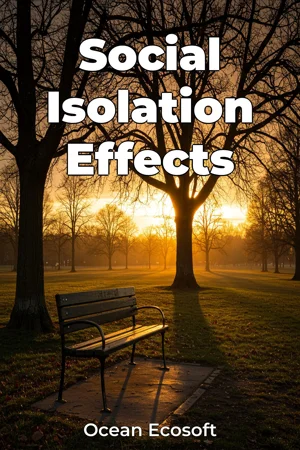
Are we truly alone, even in a crowd? "Social Isolation Effects" delves into the profound and often underestimated impact of social isolation on mental health, exploring its origins, manifestations, and potential remedies. This book examines the intricate relationship between human connection and psychological well-being, providing a comprehensive overview of a phenomenon that affects individuals across all demographics. Two central themes emerge: the psychological mechanisms through which social isolation erodes mental health, and the societal factors that contribute to its increasing prevalence. Why do feelings of loneliness and disconnection lead to specific mental health challenges like depression, anxiety, and cognitive decline? And how have factors such as urbanization, digital communication, and changing social structures reshaped our experiences of connection and isolation? These critical questions drive the analysis within this work. Understanding the effects of social isolation requires a look at both historical and evolving social conditions. The book explores how shifts in community structures, from close-knit rural societies to increasingly atomized urban environments, have contributed to feelings of isolation. It also examines the paradox of digital connectivity – how, despite unprecedented access to communication, individuals can still experience profound loneliness and a lack of meaningful social interaction. At its core, "Social Isolation Effects" argues that sustained social isolation represents a significant risk factor for a range of mental health disorders. Furthermore, it posits that recognizing and addressing the root causes of social disconnection is crucial for promoting individual well-being and building healthier, more resilient communities. This argument is vital because it challenges the common misconception that loneliness is merely a fleeting emotion, highlighting its potential to trigger serious and long-lasting psychological harm. The book unfolds in a structured manner, beginning with an introduction to the core concepts of social isolation, loneliness, and social support. It defines these terms precisely and establishes a theoretical framework for understanding their interrelationships. Successive components then delve into the psychological and physiological effects of isolation, drawing from research on stress responses, immune function, and cognitive performance. Major sections will focus on specific populations vulnerable to social isolation, such as the elderly, individuals with disabilities, and marginalized communities, examining the unique challenges they face and the specific interventions that may be effective. A comprehensive analysis of contributing societal factors follows, considering the roles of urbanization, technology, and socioeconomic inequality. The concluding section synthesizes the findings and offers practical recommendations for individuals, communities, and policymakers seeking to mitigate the negative effects of social isolation. The analysis presented relies heavily on empirical evidence drawn from psychology studies and health surveys. It incorporates findings from both quantitative research, such as large-scale epidemiological studies, and qualitative research, which provides richer insights into the lived experiences of individuals facing social isolation. Longitudinal studies tracking the long-term effects of social isolation are given particular weight. "Social Isolation Effects" connects to several other fields of study, including sociology, public health, and urban planning. By drawing on sociological theories of social capital and community cohesion, the book provides a broader understanding of the societal forces that shape individual experiences of isolation. Connections to public health research highlight the importance of addressing social isolation as a preventable risk factor for mental illness. Furthermore, insights from urban planning shed light on how the design of cities and neighborhoods can either foster or hinder social interaction. This book adopts an evidence-based approach, presenting information in a clear and accessible style suitable for a broad audience. While grounded in academic research, the writing avoids jargon and technical language, making it accessible to readers without specialized knowledge of psychology or social science. The intended audience includes students and researchers in psychology, sociology, and public health; healthcare professionals working with vulnerable populations; policymakers involved in community development and social welfare; and anyone interested in understanding the social and psychological impact of isolation. This book offers valuable insights for anyone seeking to improve their own social connections or to create more inclusive and supportive communities. In alignment with the conventions of non-fiction social science writing, the book emphasizes objectivity, rigor, and transparency. It clearly identifies the sources of information and acknowledges any limitations in the available research. While striving to provide a comprehensive overview, this work acknowledges the vastness and complexity of the topic. It does not attempt to cover every aspect of social isolation, but rather focuses on the most salient issues and areas where research has yielded significant insights. The information presented has real-world applications for individuals seeking to combat loneliness and improve their mental well-being. It also offers practical guidance for communities and organizations seeking to develop programs and policies that promote social inclusion and reduce isolation. While the detrimental effects of social isolation are widely recognized, ongoing debates persist regarding the most effective interventions and policies for addressing it. This books acknowledges these controversies and presents a balanced discussion of different approaches. It recognizes that there is no one-size-fits-all solution and that effective interventions must be tailored to the specific needs and circumstances of different populations.
Are we truly alone, even in a crowd? "Social Isolation Effects" delves into the profound and often underestimated impact of social isolation on mental health, exploring its origins, manifestations, and potential remedies. This book examines the intricate relationship between human connection and psychological well-being, providing a comprehensive overview of a phenomenon that affects individuals across all demographics. Two central themes emerge: the psychological mechanisms through which social isolation erodes mental health, and the societal factors that contribute to its increasing prevalence. Why do feelings of loneliness and disconnection lead to specific mental health challenges like depression, anxiety, and cognitive decline? And how have factors such as urbanization, digital communication, and changing social structures reshaped our experiences of connection and isolation? These critical questions drive the analysis within this work. Understanding the effects of social isolation requires a look at both historical and evolving social conditions. The book explores how shifts in community structures, from close-knit rural societies to increasingly atomized urban environments, have contributed to feelings of isolation. It also examines the paradox of digital connectivity – how, despite unprecedented access to communication, individuals can still experience profound loneliness and a lack of meaningful social interaction. At its core, "Social Isolation Effects" argues that sustained social isolation represents a significant risk factor for a range of mental health disorders. Furthermore, it posits that recognizing and addressing the root causes of social disconnection is crucial for promoting individual well-being and building healthier, more resilient communities. This argument is vital because it challenges the common misconception that loneliness is merely a fleeting emotion, highlighting its potential to trigger serious and long-lasting psychological harm. The book unfolds in a structured manner, beginning with an introduction to the core concepts of social isolation, loneliness, and social support. It defines these terms precisely and establishes a theoretical framework for understanding their interrelationships. Successive components then delve into the psychological and physiological effects of isolation, drawing from research on stress responses, immune function, and cognitive performance. Major sections will focus on specific populations vulnerable to social isolation, such as the elderly, individuals with disabilities, and marginalized communities, examining the unique challenges they face and the specific interventions that may be effective. A comprehensive analysis of contributing societal factors follows, considering the roles of urbanization, technology, and socioeconomic inequality. The concluding section synthesizes the findings and offers practical recommendations for individuals, communities, and policymakers seeking to mitigate the negative effects of social isolation. The analysis presented relies heavily on empirical evidence drawn from psychology studies and health surveys. It incorporates findings from both quantitative research, such as large-scale epidemiological studies, and qualitative research, which provides richer insights into the lived experiences of individuals facing social isolation. Longitudinal studies tracking the long-term effects of social isolation are given particular weight. "Social Isolation Effects" connects to several other fields of study, including sociology, public health, and urban planning. By drawing on sociological theories of social capital and community cohesion, the book provides a broader understanding of the societal forces that shape individual experiences of isolation. Connections to public health research highlight the importance of addressing social isolation as a preventable risk factor for mental illness. Furthermore, insights from urban planning shed light on how the design of cities and neighborhoods can either foster or hinder social interaction. This book adopts an evidence-based approach, presenting information in a clear and accessible style suitable for a broad audience. While grounded in academic research, the writing avoids jargon and technical language, making it accessible to readers without specialized knowledge of psychology or social science. The intended audience includes students and researchers in psychology, sociology, and public health; healthcare professionals working with vulnerable populations; policymakers involved in community development and social welfare; and anyone interested in understanding the social and psychological impact of isolation. This book offers valuable insights for anyone seeking to improve their own social connections or to create more inclusive and supportive communities. In alignment with the conventions of non-fiction social science writing, the book emphasizes objectivity, rigor, and transparency. It clearly identifies the sources of information and acknowledges any limitations in the available research. While striving to provide a comprehensive overview, this work acknowledges the vastness and complexity of the topic. It does not attempt to cover every aspect of social isolation, but rather focuses on the most salient issues and areas where research has yielded significant insights. The information presented has real-world applications for individuals seeking to combat loneliness and improve their mental well-being. It also offers practical guidance for communities and organizations seeking to develop programs and policies that promote social inclusion and reduce isolation. While the detrimental effects of social isolation are widely recognized, ongoing debates persist regarding the most effective interventions and policies for addressing it. This books acknowledges these controversies and presents a balanced discussion of different approaches. It recognizes that there is no one-size-fits-all solution and that effective interventions must be tailored to the specific needs and circumstances of different populations.
"Social Isolation Effects" explores how disconnection impacts mental health and overall well-being. It examines the psychological roots of loneliness, its links to conditions like depression and anxiety, and the societal changes exacerbating this issue. Did you know that feelings of social isolation can actually impact cognitive functions, potentially leading to cognitive decline? The book also highlights the paradox of digital connectivity, showing how increased online interaction doesn't always translate to genuine social connection. The book considers urbanization, changing community structures, and other contributing factors, presenting research-based evidence and real-world examples. It progresses from defining core concepts like loneliness and social support to analyzing specific vulnerable populations and societal influences. Ultimately, the book emphasizes that social isolation is not just a fleeting emotion, but a significant risk factor needing proactive solutions. It adopts an accessible, evidence-based approach, providing insights for individuals, communities, and policymakers seeking to foster social connection and mitigate the harmful effects of social isolation and loneliness. The book's value lies in its comprehensive analysis and practical recommendations for building healthier, more resilient communities.
Book Details
ISBN
9788235211927
Publisher
Publifye AS
Your Licenses
You don't own any licenses for this book
Purchase a license below to unlock this book and download the EPUB.
Purchase License
Select a tier to unlock this book
Need bulk licensing?
Contact us for enterprise agreements.