
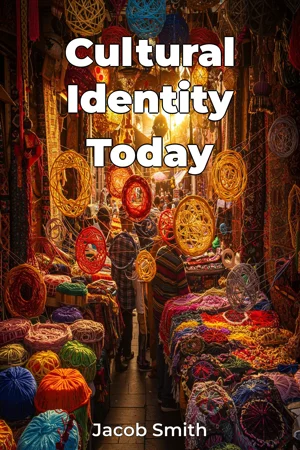
About This Book
In an increasingly interconnected world, how are individual and collective identities shaped and reshaped by the forces of globalization? "Cultural Identity Today" delves into this critical question, exploring the complex interplay between global trends and the enduring significance of cultural identity in the 21st century. This book examines how globalization, driven by factors such as migration, technology, and economic interdependence, affects traditional notions of culture, community, and belonging. These topics are crucial because understanding the dynamics of cultural identity is essential for navigating an era marked by both unprecedented interconnectedness and persistent social divisions. We begin by establishing a comprehensive understanding of globalization as a multifaceted process encompassing economic, political, and cultural dimensions. A crucial understanding is the inherent fluidity and dynamism of cultural identities, challenging static or essentialist views that often dominate public discourse. We define key concepts, such as cultural hybridization, glocalization, and diaspora, providing a theoretical framework for analyzing the impact of globalization on cultural expressions and social structures. The book's central argument is that globalization does not lead to a homogenization of cultures but rather to a complex and often contradictory process of cultural adaptation, innovation, and resistance. It argues that while global forces undoubtedly exert pressure on local cultures, they also create new opportunities for cultural exchange, creativity, and the formation of hybrid identities. This nuanced perspective moves beyond simplistic narratives of cultural loss or cultural imperialism. The book is structured into three main parts. The first part introduces the theoretical foundations, drawing on sociological studies and demographic data to illustrate the scope of cultural shifts. The second part examines specific case studies across different regions of the world. It explores how globalization impacts national identities, ethnic communities, and religious affiliations, highlighting the diverse ways in which people negotiate their cultural identities in response to global pressures. This section draws heavily on empirical research, including ethnographic studies, surveys, and statistical analysis. The third part focuses on the political implications of cultural identity in the age of globalization. It analyzes how cultural identities shape political movements, social conflicts, and international relations. It also discusses the challenges of multiculturalism, integration, and the rise of populism in various societies. Evidence presented includes a wide range of sources, from quantitative demographic data illustrating migration patterns and cultural diversity to qualitative sociological studies analyzing the lived experiences of individuals and communities. The book incorporates comparative analysis, examining how different countries and regions respond to the challenges and opportunities of globalization. Interdisciplinary connections are made with economics, political science, and communication studies. The economic dimensions of globalization, such as the spread of consumer culture, are analyzed in relation to their impact on cultural values and practices. The political science angle considers how states manage cultural diversity and address issues of identity politics. The field of communication studies informs our overview of how media and technology shape cultural perceptions and interactions across borders. What sets this book apart is its emphasis on a balanced and evidence-based analysis. It avoids both alarmist predictions of cultural homogenization and romanticized notions of cultural purity. Instead, it offers a realistic assessment of the challenges and opportunities that globalization presents for cultural identity. Written in an accessible yet academically rigorous style, "Cultural Identity Today" is aimed at students, researchers, policymakers, and anyone interested in understanding the complexities of cultural identity in the modern world. The book provides valuable insights for those seeking to navigate the challenges and opportunities of an increasingly globalized society. The scope of the book is intentionally broad, encompassing a wide range of cultural identities and geographical regions. However, it acknowledges limitations in terms of in-depth analysis of every specific case. The book's real-world applications lie in its ability to inform policy debates on issues such as immigration, integration, and cultural preservation. Furthermore, it can help individuals develop a more nuanced understanding of their own cultural identities and the identities of others. The book addresses ongoing debates about the impact of globalization on cultural diversity, including the tension between universal values and cultural relativism, as well as the potential for cultural conflict in multicultural societies.
In an increasingly interconnected world, how are individual and collective identities shaped and reshaped by the forces of globalization? "Cultural Identity Today" delves into this critical question, exploring the complex interplay between global trends and the enduring significance of cultural identity in the 21st century. This book examines how globalization, driven by factors such as migration, technology, and economic interdependence, affects traditional notions of culture, community, and belonging. These topics are crucial because understanding the dynamics of cultural identity is essential for navigating an era marked by both unprecedented interconnectedness and persistent social divisions. We begin by establishing a comprehensive understanding of globalization as a multifaceted process encompassing economic, political, and cultural dimensions. A crucial understanding is the inherent fluidity and dynamism of cultural identities, challenging static or essentialist views that often dominate public discourse. We define key concepts, such as cultural hybridization, glocalization, and diaspora, providing a theoretical framework for analyzing the impact of globalization on cultural expressions and social structures. The book's central argument is that globalization does not lead to a homogenization of cultures but rather to a complex and often contradictory process of cultural adaptation, innovation, and resistance. It argues that while global forces undoubtedly exert pressure on local cultures, they also create new opportunities for cultural exchange, creativity, and the formation of hybrid identities. This nuanced perspective moves beyond simplistic narratives of cultural loss or cultural imperialism. The book is structured into three main parts. The first part introduces the theoretical foundations, drawing on sociological studies and demographic data to illustrate the scope of cultural shifts. The second part examines specific case studies across different regions of the world. It explores how globalization impacts national identities, ethnic communities, and religious affiliations, highlighting the diverse ways in which people negotiate their cultural identities in response to global pressures. This section draws heavily on empirical research, including ethnographic studies, surveys, and statistical analysis. The third part focuses on the political implications of cultural identity in the age of globalization. It analyzes how cultural identities shape political movements, social conflicts, and international relations. It also discusses the challenges of multiculturalism, integration, and the rise of populism in various societies. Evidence presented includes a wide range of sources, from quantitative demographic data illustrating migration patterns and cultural diversity to qualitative sociological studies analyzing the lived experiences of individuals and communities. The book incorporates comparative analysis, examining how different countries and regions respond to the challenges and opportunities of globalization. Interdisciplinary connections are made with economics, political science, and communication studies. The economic dimensions of globalization, such as the spread of consumer culture, are analyzed in relation to their impact on cultural values and practices. The political science angle considers how states manage cultural diversity and address issues of identity politics. The field of communication studies informs our overview of how media and technology shape cultural perceptions and interactions across borders. What sets this book apart is its emphasis on a balanced and evidence-based analysis. It avoids both alarmist predictions of cultural homogenization and romanticized notions of cultural purity. Instead, it offers a realistic assessment of the challenges and opportunities that globalization presents for cultural identity. Written in an accessible yet academically rigorous style, "Cultural Identity Today" is aimed at students, researchers, policymakers, and anyone interested in understanding the complexities of cultural identity in the modern world. The book provides valuable insights for those seeking to navigate the challenges and opportunities of an increasingly globalized society. The scope of the book is intentionally broad, encompassing a wide range of cultural identities and geographical regions. However, it acknowledges limitations in terms of in-depth analysis of every specific case. The book's real-world applications lie in its ability to inform policy debates on issues such as immigration, integration, and cultural preservation. Furthermore, it can help individuals develop a more nuanced understanding of their own cultural identities and the identities of others. The book addresses ongoing debates about the impact of globalization on cultural diversity, including the tension between universal values and cultural relativism, as well as the potential for cultural conflict in multicultural societies.
"Cultural Identity Today" explores the intricate relationship between globalization and cultural identity, examining how increased interconnectedness reshapes individual and collective senses of self. It delves into the idea that globalization, fueled by migration and technology, doesn't simply erase cultural differences. Instead, it fosters a dynamic process of adaptation and innovation. The book highlights the fluidity of cultural identities, challenging static views and demonstrating how concepts like cultural hybridization and glocalization emerge. The book uniquely argues that globalization creates opportunities for cultural exchange and the formation of hybrid identities. It avoids simplistic narratives of cultural loss. It examines case studies from around the world, analyzing how globalization impacts national identities, ethnic communities, and political movements. For example, the rise of identity politics can be seen as a response to the perceived threat of cultural homogenization, with groups asserting their unique cultural values. Structured in three parts, the book first lays theoretical foundations using sociological studies and demographic data. It then moves to specific examples across different regions. Finally, it analyzes the political implications of cultural identity in a globalized world, discussing multiculturalism and social conflicts. This approach provides a balanced, evidence-based analysis of the challenges and opportunities that globalization presents for cultural identity.
Book Details
ISBN
9788235211880
Publisher
Publifye AS
Your Licenses
You don't own any licenses for this book
Purchase a license below to unlock this book and download the EPUB.
Purchase License
Select a tier to unlock this book
Need bulk licensing?
Contact us for enterprise agreements.