
About This Book
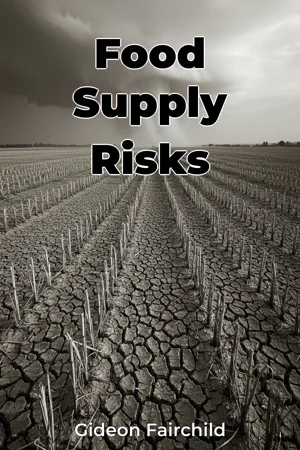
Can the world feed itself in the face of mounting environmental pressures and economic volatility? "Food Supply Risks" delves into the multifaceted challenges confronting global food production and security, a critical issue with far-reaching consequences for human well-being and international stability. This book tackles the pressing need to understand the intricate interplay of factors that threaten food systems worldwide. This book primarily addresses two key topics: the vulnerabilities inherent in current agricultural practices and the economic factors that amplify these vulnerabilities, leading to food insecurity. The security of our food supply is paramount because of the direct link to human survival, and the stability of societies and economies. Disruptions in food production can trigger social unrest, economic downturns, and geopolitical instability. To understand these issues, we must examine the historical context of agricultural development, including the Green Revolution and its unintended consequences, as well as the evolution of global trade and its impact on local food systems. Readers should have a basic understanding of economic principles such as supply and demand, as well as an awareness of environmental challenges like climate change and resource depletion. The central argument of "Food Supply Risks" asserts that the convergence of environmental degradation, economic inequality, and unsustainable agricultural practices presents a systemic threat to global food security, demanding a fundamental rethinking of our approach to food production and distribution. The book demonstrates that isolated solutions are insufficient. The book is structured to systematically explore this complex issue. It begins by introducing the main concepts of food security, agricultural sustainability, and economic resilience. Then, it develops these ideas through three major sections. The first analyzes the environmental stresses on agriculture, including climate change impacts on crop yields, water scarcity, and soil degradation. The second examines the economic vulnerabilities within the food system, such as price volatility, trade imbalances, and the concentration of power in the hands of a few multinational corporations. The third part explores the intersection of these environmental and economic challenges, and examines how they exacerbate food insecurity in different regions of the world. The book culminates by proposing a framework for building more resilient and equitable food systems. It outlines policy recommendations and practical strategies for addressing the challenges discussed throughout the book. The analysis presented in this book is supported by a wide range of evidence, including agriculture data from the Food and Agriculture Organization of the United Nations (FAO), economic reports from the World Bank and the International Monetary Fund (IMF), and scientific studies on climate change and environmental degradation. The book also draws on case studies from various countries to illustrate the diverse challenges and potential solutions to food security. This book connects to several other fields, including environmental science, economics, and political science. By examining the environmental impacts of agriculture and the economic drivers of food insecurity, the book provides a holistic perspective on this complex issue. It also connects to political science by exploring the role of government policies and international cooperation in promoting food security. "Food Supply Risks" adopts a data-driven and analytical approach to explore the complexities of global food security. The book is written in a clear and accessible style, making it suitable for a broad audience. The target audience for this book includes policymakers, academics, researchers, and anyone interested in understanding the challenges and opportunities in the global food system. It is also suitable for students in fields such as agriculture, economics, and environmental studies. As a work of non-fiction in the economics and environment genres, "Food Supply Risks" adheres to standards of accuracy, objectivity, and evidence-based analysis. The book's scope encompasses the global food system, but it also acknowledges the diversity of regional challenges and opportunities. While it provides a broad overview of the key issues, it acknowledges that further research is needed to address the specific challenges in different regions. The information in this book can be applied practically by readers in a variety of ways. Policymakers can use the book's findings to inform the development of more effective food security policies. Businesses can use it to assess and mitigate the risks to their supply chains. Individuals can use it to make more informed choices about their food consumption. This book addresses several ongoing debates in the field of food security, including the role of technology in increasing agricultural productivity, the effectiveness of different approaches to reducing food waste, and the appropriate balance between local and global food systems. By presenting a balanced and evidence-based analysis of these issues, the book aims to contribute to a more informed and productive dialogue.
Can the world feed itself in the face of mounting environmental pressures and economic volatility? "Food Supply Risks" delves into the multifaceted challenges confronting global food production and security, a critical issue with far-reaching consequences for human well-being and international stability. This book tackles the pressing need to understand the intricate interplay of factors that threaten food systems worldwide. This book primarily addresses two key topics: the vulnerabilities inherent in current agricultural practices and the economic factors that amplify these vulnerabilities, leading to food insecurity. The security of our food supply is paramount because of the direct link to human survival, and the stability of societies and economies. Disruptions in food production can trigger social unrest, economic downturns, and geopolitical instability. To understand these issues, we must examine the historical context of agricultural development, including the Green Revolution and its unintended consequences, as well as the evolution of global trade and its impact on local food systems. Readers should have a basic understanding of economic principles such as supply and demand, as well as an awareness of environmental challenges like climate change and resource depletion. The central argument of "Food Supply Risks" asserts that the convergence of environmental degradation, economic inequality, and unsustainable agricultural practices presents a systemic threat to global food security, demanding a fundamental rethinking of our approach to food production and distribution. The book demonstrates that isolated solutions are insufficient. The book is structured to systematically explore this complex issue. It begins by introducing the main concepts of food security, agricultural sustainability, and economic resilience. Then, it develops these ideas through three major sections. The first analyzes the environmental stresses on agriculture, including climate change impacts on crop yields, water scarcity, and soil degradation. The second examines the economic vulnerabilities within the food system, such as price volatility, trade imbalances, and the concentration of power in the hands of a few multinational corporations. The third part explores the intersection of these environmental and economic challenges, and examines how they exacerbate food insecurity in different regions of the world. The book culminates by proposing a framework for building more resilient and equitable food systems. It outlines policy recommendations and practical strategies for addressing the challenges discussed throughout the book. The analysis presented in this book is supported by a wide range of evidence, including agriculture data from the Food and Agriculture Organization of the United Nations (FAO), economic reports from the World Bank and the International Monetary Fund (IMF), and scientific studies on climate change and environmental degradation. The book also draws on case studies from various countries to illustrate the diverse challenges and potential solutions to food security. This book connects to several other fields, including environmental science, economics, and political science. By examining the environmental impacts of agriculture and the economic drivers of food insecurity, the book provides a holistic perspective on this complex issue. It also connects to political science by exploring the role of government policies and international cooperation in promoting food security. "Food Supply Risks" adopts a data-driven and analytical approach to explore the complexities of global food security. The book is written in a clear and accessible style, making it suitable for a broad audience. The target audience for this book includes policymakers, academics, researchers, and anyone interested in understanding the challenges and opportunities in the global food system. It is also suitable for students in fields such as agriculture, economics, and environmental studies. As a work of non-fiction in the economics and environment genres, "Food Supply Risks" adheres to standards of accuracy, objectivity, and evidence-based analysis. The book's scope encompasses the global food system, but it also acknowledges the diversity of regional challenges and opportunities. While it provides a broad overview of the key issues, it acknowledges that further research is needed to address the specific challenges in different regions. The information in this book can be applied practically by readers in a variety of ways. Policymakers can use the book's findings to inform the development of more effective food security policies. Businesses can use it to assess and mitigate the risks to their supply chains. Individuals can use it to make more informed choices about their food consumption. This book addresses several ongoing debates in the field of food security, including the role of technology in increasing agricultural productivity, the effectiveness of different approaches to reducing food waste, and the appropriate balance between local and global food systems. By presenting a balanced and evidence-based analysis of these issues, the book aims to contribute to a more informed and productive dialogue.
"Food Supply Risks" examines the increasing threats to our global food system, emphasizing the interplay between environmental pressures and economic volatility. It clarifies how these factors converge to challenge food security, which is essential for human survival, societal stability, and economic resilience. Did you know that disruptions in food production can trigger social unrest and geopolitical instability? The book highlights the vulnerabilities in current agricultural practices, such as trade imbalances, and unsustainable methods, while also exploring the unintended consequences of initiatives like the Green Revolution. The book systematically progresses through key areas: environmental stressors like climate change impacting crop yields, economic vulnerabilities including price volatility, and how these challenges intersect to exacerbate food insecurity worldwide. Supported by agriculture data and case studies, the book adopts a data-driven approach to explore the complexities of global food security. Ultimately, "Food Supply Risks" proposes a framework for building more resilient and equitable food systems, offering policy recommendations and practical strategies for a sustainable future.
Book Details
ISBN
9788235211774
Publisher
Publifye AS
Your Licenses
You don't own any licenses for this book
Purchase a license below to unlock this book and download the EPUB.
Purchase License
Select a tier to unlock this book
Need bulk licensing?
Contact us for enterprise agreements.