
About This Book
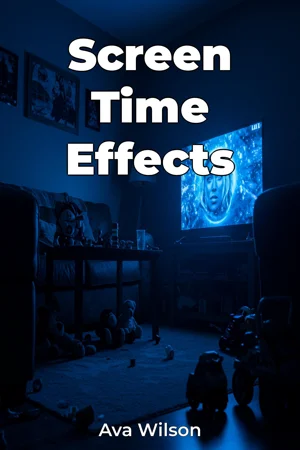
In an era defined by ubiquitous screens, are we truly connecting, or are digital devices subtly eroding the bonds that tie families together? "Screen Time Effects" delves into the pervasive influence of technology on the modern family, examining both the benefits and detriments of our increasingly digital lives. This book addresses the critical, often overlooked impact of screen time on family dynamics, child development, and individual well-being. We will explore two fundamental questions. First, how has the exponential growth of screen usage transformed the landscape of family interactions and relationships? Second, what are the psychological and developmental consequences for children growing up in a world saturated with digital stimuli? These questions are vital because the digital revolution has fundamentally reshaped how we communicate, learn, and form relationships, impacting the very core of familial structures. This book offers a comprehensive analysis that begins with an overview of the historical context of technology adoption in the home, tracing its evolution from the advent of television to the smartphone era. Understanding the societal shifts and the rapid pace of technological advancement provides a foundation for evaluating the corresponding changes within family units. The central argument of "Screen Time Effects" asserts that while technology offers unprecedented opportunities for education, connection, and entertainment; excessive or inappropriate screen use can lead to detrimental effects on communication, emotional development, and overall family cohesion. This argument is crucial because it challenges the uncritical embrace of technology and encourages mindful integration to safeguard the health and integrity of family relationships. The book is structured into three primary sections. Part one introduces the core concepts, including the varying types of screen time, usage statistics across different age groups, and the neurological impacts of digital media. Part two examines the impact on child development, drawing from extensive child development studies to analyze effects on cognitive skills, social-emotional learning, and physical health. This section will specifically address concerns, such as attention deficits, sleep disturbances, and the potential cultivation of addictive behaviors. Part three explores the broader implications for family relationships, focusing on communication patterns, conflict resolution strategies, and the erosion of shared experiences. The book culminates with practical guidance and strategies for families to establish healthy screen time habits, promoting balance and mindful technology use. Supporting this analysis is a wide array of evidence, including data from large-scale usage surveys, clinical data from child psychology studies, and observational research on family interactions. Unique insights are garnered from analyzing longitudinal studies that track the developmental trajectories of children exposed to varying levels of screen time. "Screen Time Effects" also connects several interdisciplinary fields. It bridges psychology and education by looking at how screen time affects learning processes and academic performance. It also links sociology and communication studies by exploring how technology alters family communication patterns and social interactions. Furthermore, the book touches on public health concerns by examining the correlations between screen time and physical health issues, like obesity and sedentary lifestyles. These connections enrich the book's argument by offering a comprehensive understanding of technology's pervasive influence. The book adopts a conversational yet informed tone, making complex research accessible to a broad audience. It avoids jargon and presents findings in a way that is both engaging and educational, fostering introspection and proactive change. This book is tailored for parents, educators, psychologists, and anyone concerned about the effects of technology on children and families. It offers practical insights for fostering healthier relationships in an increasingly digital world, and it will be valuable to those seeking evidence-based strategies for navigating the challenges of screen time management. As a work in the genres of psychology, family relationships, and relationships, "Screen Time Effects" seeks to provide actionable advice grounded in empirical research, aligning with the expectations of readers interested in these fields. While the book covers a wide range of effects, it primarily focuses on the nuclear family, acknowledging that cultural and socioeconomic factors can influence the specific manifestations of screen time impacts, scope considerations addressed further in the introduction. The insights offered in "Screen Time Effects" can be directly applied in homes, schools, and therapeutic settings. Parents can use the information to make informed decisions about screen time limits, educators can integrate digital literacy programs to teach responsible technology use, and therapists can employ the knowledge to address screen-related issues in family counseling. The book also addresses the ongoing debates surrounding the effects of screen time, acknowledging conflicting findings and methodological limitations in existing research. By acknowledging these controversies, "Screen Time Effects" strives to provide a balanced and nuanced perspective, promoting critical thinking and informed decision-making rather than dogmatic adherence to any single viewpoint.
In an era defined by ubiquitous screens, are we truly connecting, or are digital devices subtly eroding the bonds that tie families together? "Screen Time Effects" delves into the pervasive influence of technology on the modern family, examining both the benefits and detriments of our increasingly digital lives. This book addresses the critical, often overlooked impact of screen time on family dynamics, child development, and individual well-being. We will explore two fundamental questions. First, how has the exponential growth of screen usage transformed the landscape of family interactions and relationships? Second, what are the psychological and developmental consequences for children growing up in a world saturated with digital stimuli? These questions are vital because the digital revolution has fundamentally reshaped how we communicate, learn, and form relationships, impacting the very core of familial structures. This book offers a comprehensive analysis that begins with an overview of the historical context of technology adoption in the home, tracing its evolution from the advent of television to the smartphone era. Understanding the societal shifts and the rapid pace of technological advancement provides a foundation for evaluating the corresponding changes within family units. The central argument of "Screen Time Effects" asserts that while technology offers unprecedented opportunities for education, connection, and entertainment; excessive or inappropriate screen use can lead to detrimental effects on communication, emotional development, and overall family cohesion. This argument is crucial because it challenges the uncritical embrace of technology and encourages mindful integration to safeguard the health and integrity of family relationships. The book is structured into three primary sections. Part one introduces the core concepts, including the varying types of screen time, usage statistics across different age groups, and the neurological impacts of digital media. Part two examines the impact on child development, drawing from extensive child development studies to analyze effects on cognitive skills, social-emotional learning, and physical health. This section will specifically address concerns, such as attention deficits, sleep disturbances, and the potential cultivation of addictive behaviors. Part three explores the broader implications for family relationships, focusing on communication patterns, conflict resolution strategies, and the erosion of shared experiences. The book culminates with practical guidance and strategies for families to establish healthy screen time habits, promoting balance and mindful technology use. Supporting this analysis is a wide array of evidence, including data from large-scale usage surveys, clinical data from child psychology studies, and observational research on family interactions. Unique insights are garnered from analyzing longitudinal studies that track the developmental trajectories of children exposed to varying levels of screen time. "Screen Time Effects" also connects several interdisciplinary fields. It bridges psychology and education by looking at how screen time affects learning processes and academic performance. It also links sociology and communication studies by exploring how technology alters family communication patterns and social interactions. Furthermore, the book touches on public health concerns by examining the correlations between screen time and physical health issues, like obesity and sedentary lifestyles. These connections enrich the book's argument by offering a comprehensive understanding of technology's pervasive influence. The book adopts a conversational yet informed tone, making complex research accessible to a broad audience. It avoids jargon and presents findings in a way that is both engaging and educational, fostering introspection and proactive change. This book is tailored for parents, educators, psychologists, and anyone concerned about the effects of technology on children and families. It offers practical insights for fostering healthier relationships in an increasingly digital world, and it will be valuable to those seeking evidence-based strategies for navigating the challenges of screen time management. As a work in the genres of psychology, family relationships, and relationships, "Screen Time Effects" seeks to provide actionable advice grounded in empirical research, aligning with the expectations of readers interested in these fields. While the book covers a wide range of effects, it primarily focuses on the nuclear family, acknowledging that cultural and socioeconomic factors can influence the specific manifestations of screen time impacts, scope considerations addressed further in the introduction. The insights offered in "Screen Time Effects" can be directly applied in homes, schools, and therapeutic settings. Parents can use the information to make informed decisions about screen time limits, educators can integrate digital literacy programs to teach responsible technology use, and therapists can employ the knowledge to address screen-related issues in family counseling. The book also addresses the ongoing debates surrounding the effects of screen time, acknowledging conflicting findings and methodological limitations in existing research. By acknowledging these controversies, "Screen Time Effects" strives to provide a balanced and nuanced perspective, promoting critical thinking and informed decision-making rather than dogmatic adherence to any single viewpoint.
"Screen Time Effects" explores the profound influence of technology on modern family life, examining both its benefits and potential drawbacks. In today's digital age, the book addresses how screen usage transforms family interactions and impacts child development. It highlights that while technology offers educational and entertainment opportunities, excessive screen time can negatively affect communication, emotional development, and family unity. For example, studies show correlations between increased screen time and attention deficits in children, underscoring the need for mindful technology integration. The book adopts a conversational tone, making complex psychological research accessible to parents, educators, and anyone concerned about technology's effects. Beginning with a historical overview of technology adoption, it progresses through the neurological impacts of digital media to its effects on child development and family relationships. Unique to this analysis is the inclusion of longitudinal studies that track children's developmental trajectories under varying screen time levels. The concluding chapters offer practical strategies for establishing healthier screen time habits, promoting balanced technology use within the family and fostering stronger relationships.
Book Details
ISBN
9788235211422
Publisher
Publifye AS
Your Licenses
You don't own any licenses for this book
Purchase a license below to unlock this book and download the EPUB.
Purchase License
Select a tier to unlock this book
Need bulk licensing?
Contact us for enterprise agreements.