
About This Book
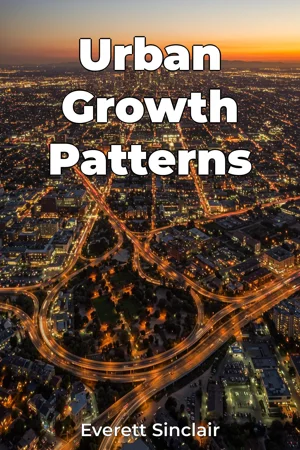
Why do cities grow the way they do, and what forces shape their ever-evolving landscapes? "Urban Growth Patterns" delves into the complex interplay of factors that drive city expansion throughout history, offering a comprehensive analysis relevant to anyone seeking to understand the urban environment. This book addresses two primary areas: the economic and social drivers of urban growth and the spatial patterns these drivers create. Understanding these dynamics is crucial for urban planners, policymakers, architects, and anyone interested in the sustainable and equitable development of urban areas. The book provides a necessary historical and social context, examining urban development from the pre-industrial era to the present day. It assumes a basic understanding of economic principles and an introductory grasp of social science concepts. The central argument of "Urban Growth Patterns" is that city expansion is not a random process but a direct result of interwoven economic forces, social changes, technological advancements, and policy decisions. The importance of this argument lies in its potential to inform better urban planning strategies, promote sustainable growth, and address inequalities in urban development. The book is structured to provide a clear and logical progression of ideas. It begins by introducing core concepts, such as economies of scale, agglomeration effects, and the role of transportation infrastructure. It then develops these ideas through several key chapters. One section examines the impact of industrialization and technological innovation on urban form. Another explores the influence of social factors, such as migration patterns, demographic shifts, and cultural preferences, on residential segregation and urban sprawl. A subsequent section analyzes policy interventions, including zoning regulations, transportation investments, and affordable housing initiatives, and their intended and unintended consequences on urban growth patterns. The book culminates with a discussion of sustainable urban development strategies for the 21st century, emphasizing the need for integrated planning approaches that consider environmental, social, and economic factors. The evidence and research presented in the book draw from a variety of sources, including historical census data, geographical information systems (GIS) analysis, econometric modeling, and case studies of urban development projects from around the world. The book incorporates data on population density, land use patterns, transportation networks, and housing prices to support its arguments. "Urban Growth Patterns" bridges several disciplines. It connects to economics through the study of land markets and agglomeration economies, to sociology through the examination of social inequality and residential segregation, and to environmental science through the analysis of urban sprawl and its ecological impacts. These interdisciplinary connections enhance the book's argument by providing a holistic perspective on urban growth. The book offers a distinctive approach by integrating economic, social, and spatial perspectives into a unified framework for analyzing urban growth patterns. This integrated framework allows for a more nuanced understanding of the complex forces shaping cities. The tone is academic yet accessible, making the book suitable for both students and professionals. While grounded in rigorous research, the writing style is clear and engaging, avoiding jargon and presenting complex ideas in an understandable manner. The target audience for "Urban Growth Patterns" includes students of urban planning, architecture, and social sciences, as well as practicing urban planners, policymakers, and real estate developers. Others who would find value in this book are engaged citizens interested in the forces that shape their communities and the future of cities. As a work of architecture and social science, the book adheres to the conventions of rigorous research, clear argumentation, and evidence-based analysis. It avoids speculative or unsubstantiated claims, instead relying on empirical data and established theoretical frameworks to support its conclusions. The scope of the book is broad, covering urban growth patterns in both developed and developing countries. However, it focuses primarily on the 20th and 21st centuries, with occasional references to earlier periods for historical context. It does not delve into the specific details of urban design or building construction, focusing instead on the larger-scale patterns of urban development. The information in "Urban Growth Patterns" can be applied in a variety of practical ways. Urban planners can use the book's insights to develop more effective zoning regulations, transportation plans, and affordable housing policies. Real estate developers can use the book to identify promising investment opportunities and understand the factors driving property values. Policymakers can use the book to inform decisions about infrastructure investments, economic development strategies, and social equity initiatives. The book addresses ongoing debates about the causes and consequences of urban sprawl, the role of government intervention in land markets, and the effectiveness of different urban planning approaches. By presenting a balanced and evidence-based analysis of these issues, the book aims to contribute to a more informed and productive discussion about the future of cities.
Why do cities grow the way they do, and what forces shape their ever-evolving landscapes? "Urban Growth Patterns" delves into the complex interplay of factors that drive city expansion throughout history, offering a comprehensive analysis relevant to anyone seeking to understand the urban environment. This book addresses two primary areas: the economic and social drivers of urban growth and the spatial patterns these drivers create. Understanding these dynamics is crucial for urban planners, policymakers, architects, and anyone interested in the sustainable and equitable development of urban areas. The book provides a necessary historical and social context, examining urban development from the pre-industrial era to the present day. It assumes a basic understanding of economic principles and an introductory grasp of social science concepts. The central argument of "Urban Growth Patterns" is that city expansion is not a random process but a direct result of interwoven economic forces, social changes, technological advancements, and policy decisions. The importance of this argument lies in its potential to inform better urban planning strategies, promote sustainable growth, and address inequalities in urban development. The book is structured to provide a clear and logical progression of ideas. It begins by introducing core concepts, such as economies of scale, agglomeration effects, and the role of transportation infrastructure. It then develops these ideas through several key chapters. One section examines the impact of industrialization and technological innovation on urban form. Another explores the influence of social factors, such as migration patterns, demographic shifts, and cultural preferences, on residential segregation and urban sprawl. A subsequent section analyzes policy interventions, including zoning regulations, transportation investments, and affordable housing initiatives, and their intended and unintended consequences on urban growth patterns. The book culminates with a discussion of sustainable urban development strategies for the 21st century, emphasizing the need for integrated planning approaches that consider environmental, social, and economic factors. The evidence and research presented in the book draw from a variety of sources, including historical census data, geographical information systems (GIS) analysis, econometric modeling, and case studies of urban development projects from around the world. The book incorporates data on population density, land use patterns, transportation networks, and housing prices to support its arguments. "Urban Growth Patterns" bridges several disciplines. It connects to economics through the study of land markets and agglomeration economies, to sociology through the examination of social inequality and residential segregation, and to environmental science through the analysis of urban sprawl and its ecological impacts. These interdisciplinary connections enhance the book's argument by providing a holistic perspective on urban growth. The book offers a distinctive approach by integrating economic, social, and spatial perspectives into a unified framework for analyzing urban growth patterns. This integrated framework allows for a more nuanced understanding of the complex forces shaping cities. The tone is academic yet accessible, making the book suitable for both students and professionals. While grounded in rigorous research, the writing style is clear and engaging, avoiding jargon and presenting complex ideas in an understandable manner. The target audience for "Urban Growth Patterns" includes students of urban planning, architecture, and social sciences, as well as practicing urban planners, policymakers, and real estate developers. Others who would find value in this book are engaged citizens interested in the forces that shape their communities and the future of cities. As a work of architecture and social science, the book adheres to the conventions of rigorous research, clear argumentation, and evidence-based analysis. It avoids speculative or unsubstantiated claims, instead relying on empirical data and established theoretical frameworks to support its conclusions. The scope of the book is broad, covering urban growth patterns in both developed and developing countries. However, it focuses primarily on the 20th and 21st centuries, with occasional references to earlier periods for historical context. It does not delve into the specific details of urban design or building construction, focusing instead on the larger-scale patterns of urban development. The information in "Urban Growth Patterns" can be applied in a variety of practical ways. Urban planners can use the book's insights to develop more effective zoning regulations, transportation plans, and affordable housing policies. Real estate developers can use the book to identify promising investment opportunities and understand the factors driving property values. Policymakers can use the book to inform decisions about infrastructure investments, economic development strategies, and social equity initiatives. The book addresses ongoing debates about the causes and consequences of urban sprawl, the role of government intervention in land markets, and the effectiveness of different urban planning approaches. By presenting a balanced and evidence-based analysis of these issues, the book aims to contribute to a more informed and productive discussion about the future of cities.
"Urban Growth Patterns" explores the multifaceted forces shaping city expansion, providing insights for urban planners, architects, and anyone interested in sustainable urban development. The book examines how economic, social, and technological factors intertwine to influence urban landscapes. For example, the book highlights how industrialization profoundly altered urban forms and how migration patterns contribute to residential segregation, illustrating the complex interplay of these elements. This book uniquely integrates economic, social, and spatial perspectives to analyze urban growth. Beginning with core concepts like economies of scale and agglomeration, it progresses through the impact of industrialization, social factors, and policy interventions, culminating in strategies for sustainable urban development. By drawing on diverse sources, including historical census data and GIS analysis, "Urban Growth Patterns" offers a holistic understanding of the dynamics driving urban change. This approach allows readers to grasp the intended and unintended consequences of urban planning decisions.
Book Details
ISBN
9788235210708
Publisher
Publifye AS
Your Licenses
You don't own any licenses for this book
Purchase a license below to unlock this book and download the EPUB.
Purchase License
Select a tier to unlock this book
Need bulk licensing?
Contact us for enterprise agreements.