
About This Book
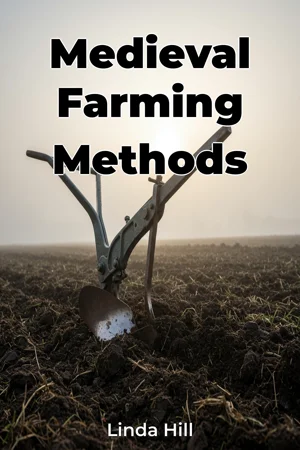
How did innovations developed centuries ago shape the world we live in today? *Medieval Farming Methods* explores the agricultural practices that sustained societies throughout the Middle Ages, revealing their lasting impact on global history, economics, and environmental landscapes. This book delves into the intricacies of medieval agriculture, examining its key technologies, social structures, and environmental consequences. The book focuses on three main topics: the evolution of agricultural technology, the organization of rural labor, and the environmental impact of medieval farming. Understanding these topics is crucial because they highlight how medieval societies adapted to the challenges of food production, influenced social hierarchies, and transformed the natural world. An understanding of basic historical context is helpful, but the book presents the information to be accessible to a variety of readers. The central argument is that medieval farming methods, while seemingly rudimentary by modern standards, were remarkably innovative and adaptive within their historical context. These practices not only provided sustenance for a growing population but also laid the foundation for subsequent agricultural developments. This argument is important because it challenges the common perception of the Middle Ages as a period of stagnation, revealing a dynamic era of agricultural innovation. The book is structured in three parts. Part I introduces core concepts like the open-field system, crop rotation, and the development of tools such as the heavy plow. Part II examines the social organization of agriculture, detailing the roles of serfs, free peasants, and manorial lords, along with the impact of feudalism on agricultural production. Part III explores the environmental consequences of medieval farming, including deforestation, soil erosion, and the adaptation strategies employed to mitigate these effects. The book culminates in a discussion of the legacy of medieval agriculture, tracing its influence on later periods and highlighting its relevance to contemporary issues of sustainable agriculture. The evidence presented draws from a range of historical texts, manorial records, archaeological findings, and early agricultural treatises. Unique data sources include digitized versions of medieval land surveys and analyses of pollen records to reconstruct past environmental conditions. These diverse sources provide a comprehensive and nuanced picture of medieval farming practices. This study connects to other fields such as environmental history, social history, and economic history. The connection to environmental history shows how farming methods shaped medieval landscapes. Its ties to social history reveal the social hierarchies and power structures inherent in medieval agricultural systems. The link to economic history highlights agriculture's role in supporting trade and urbanization. This book offers a detailed and well-supported analysis of medieval agriculture, filling a gap on this subject. It also provides an innovative perspective on how different farming methods were developed. The book provides a detailed but accessible overview of medieval agriculture. The tone is informative and analytical, avoiding jargon and focusing on clear explanations of complex topics. The target audience includes students and scholars of medieval history, agricultural history, and environmental history, as well as anyone interested in the evolution of farming practices This book would be valuable to them because it provides an in-depth examination of a crucial period in agricultural development, offering insights into the origins of modern farming techniques and their environmental consequences. As a work of history, the book adheres to the conventions of historical scholarship, including rigorous source citation, critical analysis of evidence, and a commitment to objectivity. The scope of the book is limited to agricultural practices in Western and Central Europe during the Middle Ages (roughly 500-1500 AD). While it acknowledges regional variations and the influence of other cultures, its primary focus is on the dominant agricultural systems of this region. The information presented in the book has real-world applications for understanding current debates about sustainable agriculture, food security, and land management. By examining how medieval societies adapted to environmental challenges and developed innovative farming methods, the book offers insights relevant to addressing contemporary agricultural issues. This book addresses some ongoing debates. One debate is whether the medieval period was an era of technological stagnation or innovation. Another is the extent to which medieval farming practices contributed to long-term environmental degradation. The book contributes to these debates by providing a deeper understanding of the complexities of medieval agriculture and its lasting effects on the environment and society.
How did innovations developed centuries ago shape the world we live in today? *Medieval Farming Methods* explores the agricultural practices that sustained societies throughout the Middle Ages, revealing their lasting impact on global history, economics, and environmental landscapes. This book delves into the intricacies of medieval agriculture, examining its key technologies, social structures, and environmental consequences. The book focuses on three main topics: the evolution of agricultural technology, the organization of rural labor, and the environmental impact of medieval farming. Understanding these topics is crucial because they highlight how medieval societies adapted to the challenges of food production, influenced social hierarchies, and transformed the natural world. An understanding of basic historical context is helpful, but the book presents the information to be accessible to a variety of readers. The central argument is that medieval farming methods, while seemingly rudimentary by modern standards, were remarkably innovative and adaptive within their historical context. These practices not only provided sustenance for a growing population but also laid the foundation for subsequent agricultural developments. This argument is important because it challenges the common perception of the Middle Ages as a period of stagnation, revealing a dynamic era of agricultural innovation. The book is structured in three parts. Part I introduces core concepts like the open-field system, crop rotation, and the development of tools such as the heavy plow. Part II examines the social organization of agriculture, detailing the roles of serfs, free peasants, and manorial lords, along with the impact of feudalism on agricultural production. Part III explores the environmental consequences of medieval farming, including deforestation, soil erosion, and the adaptation strategies employed to mitigate these effects. The book culminates in a discussion of the legacy of medieval agriculture, tracing its influence on later periods and highlighting its relevance to contemporary issues of sustainable agriculture. The evidence presented draws from a range of historical texts, manorial records, archaeological findings, and early agricultural treatises. Unique data sources include digitized versions of medieval land surveys and analyses of pollen records to reconstruct past environmental conditions. These diverse sources provide a comprehensive and nuanced picture of medieval farming practices. This study connects to other fields such as environmental history, social history, and economic history. The connection to environmental history shows how farming methods shaped medieval landscapes. Its ties to social history reveal the social hierarchies and power structures inherent in medieval agricultural systems. The link to economic history highlights agriculture's role in supporting trade and urbanization. This book offers a detailed and well-supported analysis of medieval agriculture, filling a gap on this subject. It also provides an innovative perspective on how different farming methods were developed. The book provides a detailed but accessible overview of medieval agriculture. The tone is informative and analytical, avoiding jargon and focusing on clear explanations of complex topics. The target audience includes students and scholars of medieval history, agricultural history, and environmental history, as well as anyone interested in the evolution of farming practices This book would be valuable to them because it provides an in-depth examination of a crucial period in agricultural development, offering insights into the origins of modern farming techniques and their environmental consequences. As a work of history, the book adheres to the conventions of historical scholarship, including rigorous source citation, critical analysis of evidence, and a commitment to objectivity. The scope of the book is limited to agricultural practices in Western and Central Europe during the Middle Ages (roughly 500-1500 AD). While it acknowledges regional variations and the influence of other cultures, its primary focus is on the dominant agricultural systems of this region. The information presented in the book has real-world applications for understanding current debates about sustainable agriculture, food security, and land management. By examining how medieval societies adapted to environmental challenges and developed innovative farming methods, the book offers insights relevant to addressing contemporary agricultural issues. This book addresses some ongoing debates. One debate is whether the medieval period was an era of technological stagnation or innovation. Another is the extent to which medieval farming practices contributed to long-term environmental degradation. The book contributes to these debates by providing a deeper understanding of the complexities of medieval agriculture and its lasting effects on the environment and society.
"Medieval Farming Methods" explores the innovative agricultural practices that sustained societies during the Middle Ages and their enduring impact on global history. The book argues that these methods, though seemingly rudimentary, were remarkably adaptive. For example, the open-field system allowed for communal farming and resource sharing, while crop rotation enhanced soil fertility without synthetic fertilizers. These practices were essential for supporting growing populations and laid the groundwork for future agricultural advancements. The book is structured in three parts, progressing from the evolution of technologies like the heavy plow to the social organization of rural labor, including the roles of serfs and manorial lords. It further examines the environmental consequences of medieval farming, such as deforestation and soil erosion, and how communities adapted. By drawing from historical texts, archaeological findings, and digitized land surveys, the book offers a comprehensive look at medieval agriculture. Understanding these historical farming techniques provides valuable insights into debates surrounding sustainable agriculture and food security today.
Book Details
ISBN
9788235210685
Publisher
Publifye AS
Your Licenses
You don't own any licenses for this book
Purchase a license below to unlock this book and download the EPUB.
Purchase License
Select a tier to unlock this book
Need bulk licensing?
Contact us for enterprise agreements.