
About This Book
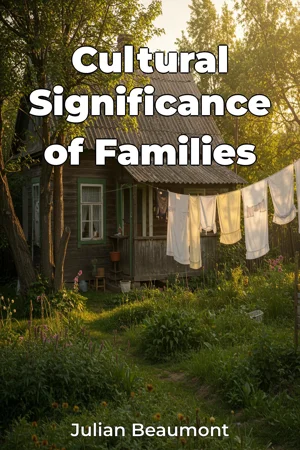
How has the seemingly simple structure of the nuclear family served as a cornerstone in shaping the diverse tapestry of global cultures? "Cultural Significance of Families" delves into the intricate relationship between family structures, particularly the nuclear family model, and the development of cultural norms, traditions, and societal values across different historical periods and geographical regions. This book explores how the nuclear family, typically defined as a household consisting of two parents and their children, has acted as a fundamental unit in various societies, influencing everything from economic systems to religious practices. The book examines three central themes: firstly, the historical evolution of the nuclear family and its prevalence in different cultures, investigating its roots and adaptations over time. Secondly, it analyzes the role of the nuclear family in transmitting cultural values and traditions across generations, highlighting its influence on child-rearing practices, education, and the preservation of cultural heritage. Thirdly, it explores the impact of modernization, globalization, and sociopolitical changes on the nuclear family structure, considering its resilience and transformations in the face of contemporary challenges. Understanding the cultural significance of families requires a multidisciplinary approach, drawing on historical records, anthropological studies, and sociological analyses. The book's central argument posits that the nuclear family, while not universally dominant, has played a critical and often underestimated role in shaping cultural identities and fostering social cohesion. Recognizing this influence is essential for comprehending the dynamics of cultural change and the complexities of human relationships across diverse societies. "Cultural Significance of Families" is structured to provide a comprehensive and accessible exploration of the topic. It begins by introducing the core concepts and defining the scope of the study, outlining the historical context and theoretical frameworks used in the analysis. The subsequent chapters delve into specific case studies, examining the prevalence and impact of nuclear families in various regions, such as Europe, Asia, and the Americas. These case studies explore how different cultures have adopted, adapted, or rejected the nuclear family model, and the consequences of these choices on their respective societies. The book culminates in a discussion of the future of the nuclear family in an increasingly globalized world, considering the challenges and opportunities it faces in the 21st century. The evidence presented in this book is drawn from a wide range of sources, including historical documents, ethnographic studies, demographic data, and sociological surveys. It incorporates both quantitative and qualitative research methods to provide a nuanced understanding of the complex relationship between family structures and cultural development. The book also makes connections to other fields of study, such as economics, political science, and religious studies. It explores how family structures influence economic productivity, political stability, and religious practices, demonstrating the interconnectedness of these domains. Unique to this book is its comparative analysis of the nuclear family across diverse cultural contexts. By examining both the similarities and differences in the ways that nuclear families operate in different societies, it offers fresh insights into the underlying factors that shape cultural norms and values. Written in a clear and accessible style, "Cultural Significance of Families" is intended for a broad audience, including students, scholars, policymakers, and anyone interested in understanding the complexities of family relationships and cultural dynamics. It provides valuable insights for those working in fields such as sociology, anthropology, history, and family studies. The scope of the book is limited to the examination of the nuclear family and its influence on cultural development. While it acknowledges the existence and importance of other family structures, such as extended families and single-parent households, its primary focus is on the nuclear family model. The information presented in the book can be applied in various practical ways, such as informing family policies, promoting cultural understanding, and fostering stronger family relationships. By understanding the cultural significance of families, readers can gain a deeper appreciation for the diversity of human experience and the importance of preserving cultural heritage. The book acknowledges ongoing debates regarding the ideal family structure and the impact of modernization on traditional family values, presenting a balanced perspective on these controversial issues.
How has the seemingly simple structure of the nuclear family served as a cornerstone in shaping the diverse tapestry of global cultures? "Cultural Significance of Families" delves into the intricate relationship between family structures, particularly the nuclear family model, and the development of cultural norms, traditions, and societal values across different historical periods and geographical regions. This book explores how the nuclear family, typically defined as a household consisting of two parents and their children, has acted as a fundamental unit in various societies, influencing everything from economic systems to religious practices. The book examines three central themes: firstly, the historical evolution of the nuclear family and its prevalence in different cultures, investigating its roots and adaptations over time. Secondly, it analyzes the role of the nuclear family in transmitting cultural values and traditions across generations, highlighting its influence on child-rearing practices, education, and the preservation of cultural heritage. Thirdly, it explores the impact of modernization, globalization, and sociopolitical changes on the nuclear family structure, considering its resilience and transformations in the face of contemporary challenges. Understanding the cultural significance of families requires a multidisciplinary approach, drawing on historical records, anthropological studies, and sociological analyses. The book's central argument posits that the nuclear family, while not universally dominant, has played a critical and often underestimated role in shaping cultural identities and fostering social cohesion. Recognizing this influence is essential for comprehending the dynamics of cultural change and the complexities of human relationships across diverse societies. "Cultural Significance of Families" is structured to provide a comprehensive and accessible exploration of the topic. It begins by introducing the core concepts and defining the scope of the study, outlining the historical context and theoretical frameworks used in the analysis. The subsequent chapters delve into specific case studies, examining the prevalence and impact of nuclear families in various regions, such as Europe, Asia, and the Americas. These case studies explore how different cultures have adopted, adapted, or rejected the nuclear family model, and the consequences of these choices on their respective societies. The book culminates in a discussion of the future of the nuclear family in an increasingly globalized world, considering the challenges and opportunities it faces in the 21st century. The evidence presented in this book is drawn from a wide range of sources, including historical documents, ethnographic studies, demographic data, and sociological surveys. It incorporates both quantitative and qualitative research methods to provide a nuanced understanding of the complex relationship between family structures and cultural development. The book also makes connections to other fields of study, such as economics, political science, and religious studies. It explores how family structures influence economic productivity, political stability, and religious practices, demonstrating the interconnectedness of these domains. Unique to this book is its comparative analysis of the nuclear family across diverse cultural contexts. By examining both the similarities and differences in the ways that nuclear families operate in different societies, it offers fresh insights into the underlying factors that shape cultural norms and values. Written in a clear and accessible style, "Cultural Significance of Families" is intended for a broad audience, including students, scholars, policymakers, and anyone interested in understanding the complexities of family relationships and cultural dynamics. It provides valuable insights for those working in fields such as sociology, anthropology, history, and family studies. The scope of the book is limited to the examination of the nuclear family and its influence on cultural development. While it acknowledges the existence and importance of other family structures, such as extended families and single-parent households, its primary focus is on the nuclear family model. The information presented in the book can be applied in various practical ways, such as informing family policies, promoting cultural understanding, and fostering stronger family relationships. By understanding the cultural significance of families, readers can gain a deeper appreciation for the diversity of human experience and the importance of preserving cultural heritage. The book acknowledges ongoing debates regarding the ideal family structure and the impact of modernization on traditional family values, presenting a balanced perspective on these controversial issues.
"Cultural Significance of Families" explores the pivotal role of family structures, particularly the nuclear family, in shaping cultural norms and societal values across history. The book investigates how this family model, typically two parents with children, influences economic systems and even religious practices in diverse cultures. It adopts a multidisciplinary approach, drawing from historical, anthropological, and sociological studies to understand the multifaceted relationship between family and culture. The book examines the historical evolution of the nuclear family, its role in transmitting cultural values across generations, and the impact of modernization on its structure. Did you know that the nuclear family, while not universally dominant, has significantly shaped cultural identities and fostered social cohesion? Or that its influence extends to child-rearing practices and the preservation of cultural heritage? Through case studies across Europe, Asia, and the Americas, it illustrates how different cultures have embraced, adapted, or rejected this model. Concluding with a discussion on the future of the nuclear family in our globalized world, the book progresses systematically across chapters, offering fresh insights into the factors shaping cultural norms. Its unique comparative analysis provides a valuable perspective for anyone interested in family relationships, cultural dynamics, and the ongoing debates surrounding family structures.
Book Details
ISBN
9788235210494
Publisher
Publifye AS
Your Licenses
You don't own any licenses for this book
Purchase a license below to unlock this book and download the EPUB.
Purchase License
Select a tier to unlock this book
Need bulk licensing?
Contact us for enterprise agreements.