
About This Book
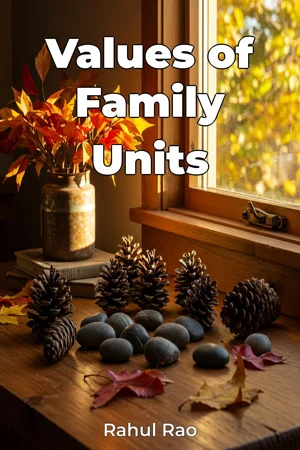
How do the intimate dynamics of family life ripple outwards, shaping the values and behaviors of society at large? "Values of Family Units" delves into the profound influence that nuclear families exert on the broader social and cultural environment, exploring how the principles and beliefs cultivated within these units contribute to the collective identity of a community. The book examines the transmission of values across generations, the impact of family structures on individual development, and the role of families in perpetuating or challenging societal norms. We address topics central to understanding the complex interplay between family life and social order. This book argues that nuclear families are not simply isolated units but rather vital building blocks of society, acting as primary agents in shaping the values, beliefs, and attitudes of their members. We demonstrate how these internalized values subsequently influence individual behaviors and interactions within the broader social sphere. The central thesis posits that an understanding of the values promoted within nuclear families is essential for comprehending the dynamics of social cohesion, cultural transmission, and societal change. "Values of Family Units" is structured to provide a comprehensive exploration of this complex topic. The book begins by laying a theoretical foundation, defining key concepts such as "values," "nuclear family," and "cultural environment". It then examines the historical evolution of family structures and values, tracing their transformations across different eras and cultural contexts. The following chapters delve into specific values commonly promoted within nuclear families, such as respect, responsibility, empathy, and achievement, analyzing how these values are transmitted and reinforced through parenting styles, family rituals, and communication patterns. We also explore potential conflicts that may arise when family values clash with those of the wider society. Later sections of the book focus on the impact of family values on various aspects of social life, including education, work, civic engagement, and intergroup relations. The concluding chapter synthesizes the findings, offering insights into the implications for social policy and individual action, arguing that understanding the values of family units can inform efforts to promote social well-being and address societal challenges. The analysis presented in this book draws upon a diverse range of evidence, including sociological surveys, ethnographic studies, psychological research, and historical analyses. We incorporate data from multiple cultural contexts to provide a nuanced and globally relevant perspective. This book makes connections to the fields of sociology, psychology, and history. Sociological theories of socialisation and cultural transmission provide a framework for understanding how values are passed down through generations. Psychological research on child development and family dynamics sheds light on the impact of parenting styles and family relationships on individual behavior. Historical analyses reveal how family structures and values have evolved over time in response to social, economic, and political changes. "Values of Family Units" offers a timely and relevant examination of the enduring influence of nuclear families on society. It is written in an accessible style, making it suitable for a broad audience, including students, researchers, policymakers, and anyone interested in understanding the dynamics of family life and its social implications. While the book focuses primarily on nuclear families, it acknowledges the increasing diversity of family structures in contemporary society, recognizing that single-parent households, blended families, and same-sex parent families also play significant roles in shaping social values. The information presented in this book can be applied to improve parenting practices, strengthen family relationships, and promote positive social change. By understanding the values that are being transmitted within families, individuals and communities can work to cultivate a more just, equitable, and compassionate society. This book acknowledges the debates surrounding the "traditional" family and its role, addressing questions about evolving family norms and their impact. It provides a lens through which to view these discussions, encouraging readers to consider the values at the heart of all family structures.
How do the intimate dynamics of family life ripple outwards, shaping the values and behaviors of society at large? "Values of Family Units" delves into the profound influence that nuclear families exert on the broader social and cultural environment, exploring how the principles and beliefs cultivated within these units contribute to the collective identity of a community. The book examines the transmission of values across generations, the impact of family structures on individual development, and the role of families in perpetuating or challenging societal norms. We address topics central to understanding the complex interplay between family life and social order. This book argues that nuclear families are not simply isolated units but rather vital building blocks of society, acting as primary agents in shaping the values, beliefs, and attitudes of their members. We demonstrate how these internalized values subsequently influence individual behaviors and interactions within the broader social sphere. The central thesis posits that an understanding of the values promoted within nuclear families is essential for comprehending the dynamics of social cohesion, cultural transmission, and societal change. "Values of Family Units" is structured to provide a comprehensive exploration of this complex topic. The book begins by laying a theoretical foundation, defining key concepts such as "values," "nuclear family," and "cultural environment". It then examines the historical evolution of family structures and values, tracing their transformations across different eras and cultural contexts. The following chapters delve into specific values commonly promoted within nuclear families, such as respect, responsibility, empathy, and achievement, analyzing how these values are transmitted and reinforced through parenting styles, family rituals, and communication patterns. We also explore potential conflicts that may arise when family values clash with those of the wider society. Later sections of the book focus on the impact of family values on various aspects of social life, including education, work, civic engagement, and intergroup relations. The concluding chapter synthesizes the findings, offering insights into the implications for social policy and individual action, arguing that understanding the values of family units can inform efforts to promote social well-being and address societal challenges. The analysis presented in this book draws upon a diverse range of evidence, including sociological surveys, ethnographic studies, psychological research, and historical analyses. We incorporate data from multiple cultural contexts to provide a nuanced and globally relevant perspective. This book makes connections to the fields of sociology, psychology, and history. Sociological theories of socialisation and cultural transmission provide a framework for understanding how values are passed down through generations. Psychological research on child development and family dynamics sheds light on the impact of parenting styles and family relationships on individual behavior. Historical analyses reveal how family structures and values have evolved over time in response to social, economic, and political changes. "Values of Family Units" offers a timely and relevant examination of the enduring influence of nuclear families on society. It is written in an accessible style, making it suitable for a broad audience, including students, researchers, policymakers, and anyone interested in understanding the dynamics of family life and its social implications. While the book focuses primarily on nuclear families, it acknowledges the increasing diversity of family structures in contemporary society, recognizing that single-parent households, blended families, and same-sex parent families also play significant roles in shaping social values. The information presented in this book can be applied to improve parenting practices, strengthen family relationships, and promote positive social change. By understanding the values that are being transmitted within families, individuals and communities can work to cultivate a more just, equitable, and compassionate society. This book acknowledges the debates surrounding the "traditional" family and its role, addressing questions about evolving family norms and their impact. It provides a lens through which to view these discussions, encouraging readers to consider the values at the heart of all family structures.
"Values of Family Units" explores the crucial role nuclear families play in shaping societal values and behaviors. It argues that families are fundamental building blocks, influencing social cohesion and cultural transmission by instilling values like respect, responsibility, and empathy. The book highlights how these internalized values impact individual actions and broader social interactions, demonstrating that understanding family values is essential for comprehending societal dynamics. The book examines how values are passed down through generations via parenting styles, family rituals, and communication, and how these values can sometimes clash with wider social norms. It also traces the historical changes in family structures and values across different eras and cultures. Drawing upon sociological surveys, psychological research, and historical analyses, the book investigates the impact of family values on education, work, civic engagement, and intergroup relations. The book progresses from establishing a theoretical foundation to exploring specific values and their transmission, and finally, to analyzing their societal impact. It offers insights for social policy and individual action, emphasizing that understanding family values can promote social well-being and address societal challenges. "Values of Family Units" provides a comprehensive, accessible examination of family relationships and their profound influence on the social landscape.
Book Details
ISBN
9788235210470
Publisher
Publifye AS
Your Licenses
You don't own any licenses for this book
Purchase a license below to unlock this book and download the EPUB.
Purchase License
Select a tier to unlock this book
Need bulk licensing?
Contact us for enterprise agreements.