
About This Book
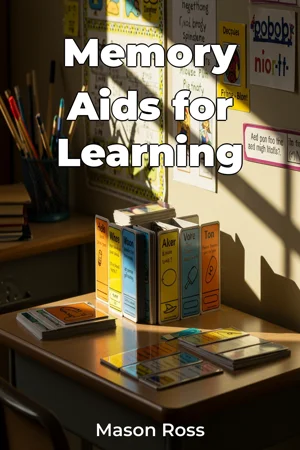
Can effective memory aids truly unlock the learning potential of students struggling with memory-related disabilities? This question lies at the heart of "Memory Aids for Learning," a comprehensive exploration grounded in cognitive science, revealing the practical strategies that can transform academic outcomes. The book focuses primarily on two key areas: the scientific understanding of memory deficits in learning disabilities, and evidence-based memory techniques that can be readily implemented in educational settings. These topics are critical because, despite increasing awareness of learning differences, effective interventions directly addressing memory challenges remain underdeveloped and underutilized in many classrooms. Within the broader context of educational psychology, this book delves into the specific cognitive mechanisms that contribute to memory difficulties common among students diagnosed with learning disabilities such as dyslexia, ADHD, and nonverbal learning disability. Understanding these mechanisms is crucial for designing targeted interventions rather than relying on generic teaching strategies. "Memory Aids for Learning" argues that by leveraging the principles of cognitive psychology, educators can significantly improve the academic performance and self-confidence of students with memory-related learning challenges. The argument rests on the premise that memory is not a fixed capacity but a skill that can be developed and enhanced through specific techniques and strategies. The structure of "Memory Aids for Learning" is deliberately designed to guide the reader from foundational knowledge to practical application. We begin by introducing core concepts of memory, learning disabilities, and relevant cognitive theories. We explore working memory, long-term memory, and executive function, all vital for academic success. The book then proceeds to detail a range of memory aids and techniques, including mnemonic strategies, visual aids, organizational tools, and assistive technologies. Each technique is thoroughly explained, accompanied by examples of its application across various subject areas. Chapter highlights include the use of spaced repetition for long-term retention, the power of elaborative encoding, and the effectiveness of visual imagery in enhancing memory. The book culminates in a discussion of how to implement these strategies in the classroom, addressing challenges related to individual learning styles, curriculum demands, and assessment methods. The evidence presented in "Memory Aids for Learning" derives from a synthesis of empirical research from cognitive psychology, educational studies, and clinical interventions. We draw upon controlled experiments, case studies, and meta-analyses to demonstrate the effectiveness of each memory aid. A unique feature is the inclusion of practical guidelines and lesson plans directly adaptable by teachers and parents. "Memory Aids for Learning" inherently bridges several disciplines. Firstly, cognitive psychology provides the theoretical foundation for understanding memory processes. Secondly, educational psychology informs the application of memory aids within instructional contexts. Thirdly, special education offers insights into the specific needs of students with learning disabilities. These interdisciplinary connections amplify the book's impact by ensuring that the proposed strategies are both theoretically sound and practically viable. This book takes a strengths-based approach, accentuating what students *can* do with the appropriate support, rather than focusing on their deficits. The writing style is accessible to a broad audience, avoiding jargon and prioritizing clarity and practical utility. The book is primarily aimed at educators (teachers, special education specialists, and school psychologists), parents of children with learning disabilities, and undergraduate/graduate students in education and psychology. It provides valuable insights and tools for anyone seeking to support students in overcoming memory-related learning challenges. The book's scope is confined to memory aids specifically relevant to academic learning, excluding interventions aimed at memory impairments caused by neurological conditions or traumatic brain injuries. While acknowledging the broader spectrum of memory difficulties, "Memory Aids for Learning" concentrates on strategies directly applicable to enhancing learning outcomes in educational settings. The book explores how to design effective instructional materials that incorporate memory-enhancing techniques and how to adapt these techniques to meet the diverse needs of all learners. The book also addresses the ongoing debate regarding the effectiveness of memory training programs versus strategy-based interventions. While acknowledging the potential benefits of both approaches, "Memory Aids for Learning" advocates for a balanced approach that combines explicit memory strategies with implicit learning techniques to maximize long-term retention and generalization.
Can effective memory aids truly unlock the learning potential of students struggling with memory-related disabilities? This question lies at the heart of "Memory Aids for Learning," a comprehensive exploration grounded in cognitive science, revealing the practical strategies that can transform academic outcomes. The book focuses primarily on two key areas: the scientific understanding of memory deficits in learning disabilities, and evidence-based memory techniques that can be readily implemented in educational settings. These topics are critical because, despite increasing awareness of learning differences, effective interventions directly addressing memory challenges remain underdeveloped and underutilized in many classrooms. Within the broader context of educational psychology, this book delves into the specific cognitive mechanisms that contribute to memory difficulties common among students diagnosed with learning disabilities such as dyslexia, ADHD, and nonverbal learning disability. Understanding these mechanisms is crucial for designing targeted interventions rather than relying on generic teaching strategies. "Memory Aids for Learning" argues that by leveraging the principles of cognitive psychology, educators can significantly improve the academic performance and self-confidence of students with memory-related learning challenges. The argument rests on the premise that memory is not a fixed capacity but a skill that can be developed and enhanced through specific techniques and strategies. The structure of "Memory Aids for Learning" is deliberately designed to guide the reader from foundational knowledge to practical application. We begin by introducing core concepts of memory, learning disabilities, and relevant cognitive theories. We explore working memory, long-term memory, and executive function, all vital for academic success. The book then proceeds to detail a range of memory aids and techniques, including mnemonic strategies, visual aids, organizational tools, and assistive technologies. Each technique is thoroughly explained, accompanied by examples of its application across various subject areas. Chapter highlights include the use of spaced repetition for long-term retention, the power of elaborative encoding, and the effectiveness of visual imagery in enhancing memory. The book culminates in a discussion of how to implement these strategies in the classroom, addressing challenges related to individual learning styles, curriculum demands, and assessment methods. The evidence presented in "Memory Aids for Learning" derives from a synthesis of empirical research from cognitive psychology, educational studies, and clinical interventions. We draw upon controlled experiments, case studies, and meta-analyses to demonstrate the effectiveness of each memory aid. A unique feature is the inclusion of practical guidelines and lesson plans directly adaptable by teachers and parents. "Memory Aids for Learning" inherently bridges several disciplines. Firstly, cognitive psychology provides the theoretical foundation for understanding memory processes. Secondly, educational psychology informs the application of memory aids within instructional contexts. Thirdly, special education offers insights into the specific needs of students with learning disabilities. These interdisciplinary connections amplify the book's impact by ensuring that the proposed strategies are both theoretically sound and practically viable. This book takes a strengths-based approach, accentuating what students *can* do with the appropriate support, rather than focusing on their deficits. The writing style is accessible to a broad audience, avoiding jargon and prioritizing clarity and practical utility. The book is primarily aimed at educators (teachers, special education specialists, and school psychologists), parents of children with learning disabilities, and undergraduate/graduate students in education and psychology. It provides valuable insights and tools for anyone seeking to support students in overcoming memory-related learning challenges. The book's scope is confined to memory aids specifically relevant to academic learning, excluding interventions aimed at memory impairments caused by neurological conditions or traumatic brain injuries. While acknowledging the broader spectrum of memory difficulties, "Memory Aids for Learning" concentrates on strategies directly applicable to enhancing learning outcomes in educational settings. The book explores how to design effective instructional materials that incorporate memory-enhancing techniques and how to adapt these techniques to meet the diverse needs of all learners. The book also addresses the ongoing debate regarding the effectiveness of memory training programs versus strategy-based interventions. While acknowledging the potential benefits of both approaches, "Memory Aids for Learning" advocates for a balanced approach that combines explicit memory strategies with implicit learning techniques to maximize long-term retention and generalization.
"Memory Aids for Learning" explores how targeted memory techniques can significantly improve academic outcomes for students with learning disabilities. Grounded in cognitive science and educational psychology, the book highlights the importance of understanding memory deficits, such as those impacting working memory, long-term memory, and executive function, common in students with dyslexia or ADHD. It emphasizes that memory is a skill that can be developed, not a fixed capacity, showcasing how mnemonic strategies and visual aids can transform learning. The book presents evidence-based memory techniques ready for educational settings, including spaced repetition and elaborative encoding, to enhance retention. A key insight is the power of visual imagery in boosting memory. It guides readers from foundational knowledge of memory and learning disabilities to practical applications of memory aids, detailing their use across various subjects. Finally, the book champions a strengths-based approach, focusing on what students can achieve with the right support. It provides practical guidelines and lesson plans adaptable for teachers and parents, addressing individual learning styles and curriculum demands. The content progresses logically, beginning with core concepts and culminating in implementation strategies, making it a valuable resource for educators, parents, and students seeking to support learners facing memory-related challenges.
Book Details
ISBN
9788235210364
Publisher
Publifye AS
Your Licenses
You don't own any licenses for this book
Purchase a license below to unlock this book and download the EPUB.
Purchase License
Select a tier to unlock this book
Need bulk licensing?
Contact us for enterprise agreements.