
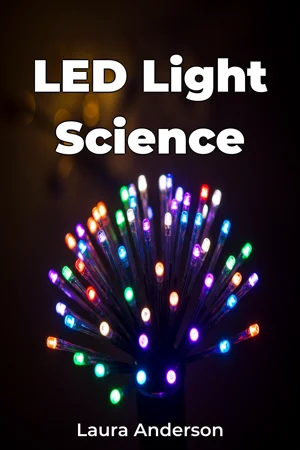
About This Book
Are you aware of the profound impact the light around you has on your health, well-being, and productivity? "LED Light Science" delves into the science behind light-emitting diode (LED) technology and its multifaceted influence on human health and efficiency. This book unravels the complex relationship between LED lighting, our circadian rhythms, and our overall performance, highlighting how this ubiquitous technology can either enhance or hinder our lives. The core of this exploration revolves around three central topics: the science of light and its interaction with the human body, the specific characteristics of LED lighting compared to traditional sources, and the practical applications of this knowledge in optimizing health and efficiency. Understanding the spectral output of LEDs, their flicker rate, and their intensity is crucial in mitigating potential adverse effects and harnessing their benefits. This book provides a necessary context by exploring the history of artificial lighting, from incandescent bulbs to fluorescent lamps, leading to the LED revolution. It considers the societal shift towards increased screen time and artificial light exposure and introduces readers to key concepts in photobiology and chronobiology, enabling a deeper understanding of how light affects our physiology. Although some basic scientific literacy is helpful, the book aims to explain complex topics in an accessible manner. The central argument of "LED Light Science" is that informed choices about LED lighting are essential for safeguarding health and maximizing human potential. By understanding the science behind LED technology, individuals and organizations can make evidence-based decisions that promote well-being and optimize performance in various settings, the book seeks to empower readers to make informed choices about the LEDs in their lives. The book begins by introducing the fundamental properties of light and the biological mechanisms through which light affects the body. It explores the science of circadian rhythms, sleep-wake cycles, and the role of light in regulating these processes. Major sections then delve into the specific characteristics of LED lighting, comparing them to traditional sources concerning spectrum, intensity, and flicker, and investigates how these factors influence health effects, covering topics such as sleep disruption, eye strain, and potential impacts on mood and cognition. It culminates in practical guidance for optimizing LED lighting in homes, offices, and public spaces, and also explores applications in therapeutic settings. The arguments presented are supported by a comprehensive review of scientific literature, including studies from the fields of photobiology, chronobiology, and environmental health. Data from governmental and independent research organizations are analyzed to provide a balanced and evidence-based perspective, providing an overview of existing research while also discussing the limitations and areas needing more study. "LED Light Science" connects to fields such as medicine, architecture, and engineering. The integration of medical findings provides insight into the health implications of different lighting strategies. Connections to architecture provide insights into how lighting design impacts occupants; and engineering provides the technical underpinning for understanding LED technology. This book takes a pragmatic, science-based approach, cutting through the marketing hype and offering a clear, unbiased assessment of LED lighting and its effects. It offers a unique combination of scientific rigor and practical advice, making it a valuable resource for anyone seeking to understand and optimize their light environment. Written in a clear and accessible style, "LED Light Science" is designed for a broad audience, including health professionals, building managers, architects, and individuals interested in optimizing their health and well-being. It serves as a valuable resource for those seeking practical advice on creating healthier and more efficient environments. As a work within the Health & Fitness and Science genres, this book provides scientifically sound information and actionable advice for readers to improve their lives. It acknowledges the limitations of current research and the complexities of light-body interactions. While focusing on LED lighting, the book acknowledges the broader context of environmental factors that influence health and efficiency. The information presented can be applied practically in home and office settings to improve sleep quality, reduce eye strain, and enhance productivity. It also provides guidance for selecting appropriate LED lighting for specific tasks and environments. Finally, the book addresses the ongoing debates surrounding the potential risks and benefits of LED lighting, acknowledging the complexities and uncertainties in the field. It discusses the variations in findings across different studies and promotes a balanced approach to evaluating the evidence.
Are you aware of the profound impact the light around you has on your health, well-being, and productivity? "LED Light Science" delves into the science behind light-emitting diode (LED) technology and its multifaceted influence on human health and efficiency. This book unravels the complex relationship between LED lighting, our circadian rhythms, and our overall performance, highlighting how this ubiquitous technology can either enhance or hinder our lives. The core of this exploration revolves around three central topics: the science of light and its interaction with the human body, the specific characteristics of LED lighting compared to traditional sources, and the practical applications of this knowledge in optimizing health and efficiency. Understanding the spectral output of LEDs, their flicker rate, and their intensity is crucial in mitigating potential adverse effects and harnessing their benefits. This book provides a necessary context by exploring the history of artificial lighting, from incandescent bulbs to fluorescent lamps, leading to the LED revolution. It considers the societal shift towards increased screen time and artificial light exposure and introduces readers to key concepts in photobiology and chronobiology, enabling a deeper understanding of how light affects our physiology. Although some basic scientific literacy is helpful, the book aims to explain complex topics in an accessible manner. The central argument of "LED Light Science" is that informed choices about LED lighting are essential for safeguarding health and maximizing human potential. By understanding the science behind LED technology, individuals and organizations can make evidence-based decisions that promote well-being and optimize performance in various settings, the book seeks to empower readers to make informed choices about the LEDs in their lives. The book begins by introducing the fundamental properties of light and the biological mechanisms through which light affects the body. It explores the science of circadian rhythms, sleep-wake cycles, and the role of light in regulating these processes. Major sections then delve into the specific characteristics of LED lighting, comparing them to traditional sources concerning spectrum, intensity, and flicker, and investigates how these factors influence health effects, covering topics such as sleep disruption, eye strain, and potential impacts on mood and cognition. It culminates in practical guidance for optimizing LED lighting in homes, offices, and public spaces, and also explores applications in therapeutic settings. The arguments presented are supported by a comprehensive review of scientific literature, including studies from the fields of photobiology, chronobiology, and environmental health. Data from governmental and independent research organizations are analyzed to provide a balanced and evidence-based perspective, providing an overview of existing research while also discussing the limitations and areas needing more study. "LED Light Science" connects to fields such as medicine, architecture, and engineering. The integration of medical findings provides insight into the health implications of different lighting strategies. Connections to architecture provide insights into how lighting design impacts occupants; and engineering provides the technical underpinning for understanding LED technology. This book takes a pragmatic, science-based approach, cutting through the marketing hype and offering a clear, unbiased assessment of LED lighting and its effects. It offers a unique combination of scientific rigor and practical advice, making it a valuable resource for anyone seeking to understand and optimize their light environment. Written in a clear and accessible style, "LED Light Science" is designed for a broad audience, including health professionals, building managers, architects, and individuals interested in optimizing their health and well-being. It serves as a valuable resource for those seeking practical advice on creating healthier and more efficient environments. As a work within the Health & Fitness and Science genres, this book provides scientifically sound information and actionable advice for readers to improve their lives. It acknowledges the limitations of current research and the complexities of light-body interactions. While focusing on LED lighting, the book acknowledges the broader context of environmental factors that influence health and efficiency. The information presented can be applied practically in home and office settings to improve sleep quality, reduce eye strain, and enhance productivity. It also provides guidance for selecting appropriate LED lighting for specific tasks and environments. Finally, the book addresses the ongoing debates surrounding the potential risks and benefits of LED lighting, acknowledging the complexities and uncertainties in the field. It discusses the variations in findings across different studies and promotes a balanced approach to evaluating the evidence.
"LED Light Science" explores the impact of LED lighting on our health, well-being, and productivity. It examines how LED technology, while offering energy efficiency, can significantly influence our circadian rhythms, sleep patterns, and overall performance. Understanding the nuances of LED spectral output and intensity is crucial, as these factors can lead to both positive outcomes, like enhanced productivity, or negative effects, such as sleep disruption and eye strain. The book delves into the science of light and its interaction with the human body, comparing LEDs to traditional lighting sources. It navigates through the history of artificial light, highlighting the shift towards increased screen time and artificial light exposure. "LED Light Science" then offers practical guidance on optimizing LED lighting in various settings, from homes to offices, to promote health and efficiency. The book progresses from fundamental light properties to specific LED characteristics, concluding with applications in therapeutic settings and lighting design.
Book Details
ISBN
9788235209870
Publisher
Publifye AS
Your Licenses
You don't own any licenses for this book
Purchase a license below to unlock this book and download the EPUB.
Purchase License
Select a tier to unlock this book
Need bulk licensing?
Contact us for enterprise agreements.