
About This Book
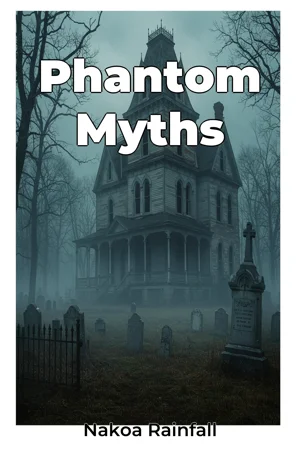
Are the spectral figures that haunt our stories merely figments of imagination, or do they reflect something deeper about the human experience? "Phantom Myths" delves into the world of ghostly legends, haunted locations, and supernatural entities that permeate folklore, literature, and spiritual beliefs across diverse cultures. We will examine how these narratives have shaped our understanding of life, death, and the spaces in between. This book tackles two central topics: firstly, the historical evolution of ghost stories and their role in reflecting societal anxieties and cultural values. Secondly, it investigates the psychological underpinnings of belief in ghosts, exploring how cognitive biases, emotional needs, and suggestibility contribute to perceived supernatural experiences. These topics are crucial because they offer a unique lens through which to understand the cultural and psychological dimensions of human belief systems. To fully appreciate the narratives and phenomena discussed, we will provide historical context on spiritualism, folklore traditions, and the development of parapsychology. We'll also touch on basic psychological principles related to perception, memory, and belief formation. The central argument of "Phantom Myths" is that ghost stories, regardless of their veracity, serve as potent cultural artifacts that reveal deep-seated human fears, hopes, and the ongoing struggle to comprehend existence. They act as a symbolic language, expressing anxieties about death, unresolved trauma, societal change, and the unknown. Understanding these narratives is essential for grasping the collective psyche of different cultures. The book will unfold as follows: we begin by introducing core concepts such as the varied manifestations of ghosts across cultures, the historical context of spiritualism and ghost hunting, and the relevant psychological frameworks. We will then explore distinct categories of phantom myths. The first major section examines historical hauntings and their cultural impact using case studies of famous haunted locations and the legends associated with them. We will connect these stories with the historical and social events that likely inspired them. The second key section investigates the psychological factors influencing ghost beliefs, including discussions of cognitive biases such as pareidolia, confirmation bias, and the role of suggestibility in shaping perceived experiences. Finally, we will analyze the function of ghost stories in literature and film, exploring how these narratives reflect and shape cultural attitudes towards death, loss, and the supernatural. The evidence presented will draw from a wide array of sources, including historical documents, folklore archives, anthropological studies, psychological research, and literary analysis. We will also analyze first-hand accounts of alleged paranormal encounters, carefully evaluating them through a critical lens. Where accessible, original language sources will be consulted to provide the most nuanced and accurate interpretation. "Phantom Myths" intersects with several academic fields, including history (tracing the evolution of ghost beliefs across time), psychology (examining the cognitive and emotional underpinnings of belief), and literature (analyzing the use of ghosts as symbolic figures). These interdisciplinary connections enrich the analysis and allow for a more comprehensive understanding of the subject matter. One unique aspect of this book is its integration of historical analysis with psychological insights. Rather than dismissing ghost stories as mere superstition, it explores their deeper cultural and psychological significance. The approach is both scholarly and accessible, aiming to inform and engage a broad audience. The tone is professional, fact-based and analytical while remaining accessible to the general reader. The writing style aims for clarity and precision, avoiding sensationalism or unsupported claims. The intended audience includes readers interested in folklore, history, psychology, and the paranormal. It will be valuable to those seeking a deeper understanding of the cultural and psychological forces that shape our beliefs. As a work of non-fiction, "Phantom Myths" prioritizes accuracy and objectivity. While exploring subjective experiences, it maintains a critical perspective, differentiating between anecdotal evidence and scientifically validated findings. The scope of the book is broad, covering a wide range of ghost stories and cultural contexts. However, it is limited to a secular, analytical approach, focusing on the cultural and psychological significance of ghost beliefs rather than attempting to prove or disprove the existence of ghosts. While the book does not provide instructions for ghost hunting, the knowledge gained can be practically applied to understanding how beliefs form, how to critically analyze claims of the paranormal, and how to appreciate the cultural power of storytelling. "Phantom Myths" will address ongoing debates within parapsychology and skepticism, acknowledging the differing perspectives on the nature of paranormal phenomena and promoting informed discussion.
Are the spectral figures that haunt our stories merely figments of imagination, or do they reflect something deeper about the human experience? "Phantom Myths" delves into the world of ghostly legends, haunted locations, and supernatural entities that permeate folklore, literature, and spiritual beliefs across diverse cultures. We will examine how these narratives have shaped our understanding of life, death, and the spaces in between. This book tackles two central topics: firstly, the historical evolution of ghost stories and their role in reflecting societal anxieties and cultural values. Secondly, it investigates the psychological underpinnings of belief in ghosts, exploring how cognitive biases, emotional needs, and suggestibility contribute to perceived supernatural experiences. These topics are crucial because they offer a unique lens through which to understand the cultural and psychological dimensions of human belief systems. To fully appreciate the narratives and phenomena discussed, we will provide historical context on spiritualism, folklore traditions, and the development of parapsychology. We'll also touch on basic psychological principles related to perception, memory, and belief formation. The central argument of "Phantom Myths" is that ghost stories, regardless of their veracity, serve as potent cultural artifacts that reveal deep-seated human fears, hopes, and the ongoing struggle to comprehend existence. They act as a symbolic language, expressing anxieties about death, unresolved trauma, societal change, and the unknown. Understanding these narratives is essential for grasping the collective psyche of different cultures. The book will unfold as follows: we begin by introducing core concepts such as the varied manifestations of ghosts across cultures, the historical context of spiritualism and ghost hunting, and the relevant psychological frameworks. We will then explore distinct categories of phantom myths. The first major section examines historical hauntings and their cultural impact using case studies of famous haunted locations and the legends associated with them. We will connect these stories with the historical and social events that likely inspired them. The second key section investigates the psychological factors influencing ghost beliefs, including discussions of cognitive biases such as pareidolia, confirmation bias, and the role of suggestibility in shaping perceived experiences. Finally, we will analyze the function of ghost stories in literature and film, exploring how these narratives reflect and shape cultural attitudes towards death, loss, and the supernatural. The evidence presented will draw from a wide array of sources, including historical documents, folklore archives, anthropological studies, psychological research, and literary analysis. We will also analyze first-hand accounts of alleged paranormal encounters, carefully evaluating them through a critical lens. Where accessible, original language sources will be consulted to provide the most nuanced and accurate interpretation. "Phantom Myths" intersects with several academic fields, including history (tracing the evolution of ghost beliefs across time), psychology (examining the cognitive and emotional underpinnings of belief), and literature (analyzing the use of ghosts as symbolic figures). These interdisciplinary connections enrich the analysis and allow for a more comprehensive understanding of the subject matter. One unique aspect of this book is its integration of historical analysis with psychological insights. Rather than dismissing ghost stories as mere superstition, it explores their deeper cultural and psychological significance. The approach is both scholarly and accessible, aiming to inform and engage a broad audience. The tone is professional, fact-based and analytical while remaining accessible to the general reader. The writing style aims for clarity and precision, avoiding sensationalism or unsupported claims. The intended audience includes readers interested in folklore, history, psychology, and the paranormal. It will be valuable to those seeking a deeper understanding of the cultural and psychological forces that shape our beliefs. As a work of non-fiction, "Phantom Myths" prioritizes accuracy and objectivity. While exploring subjective experiences, it maintains a critical perspective, differentiating between anecdotal evidence and scientifically validated findings. The scope of the book is broad, covering a wide range of ghost stories and cultural contexts. However, it is limited to a secular, analytical approach, focusing on the cultural and psychological significance of ghost beliefs rather than attempting to prove or disprove the existence of ghosts. While the book does not provide instructions for ghost hunting, the knowledge gained can be practically applied to understanding how beliefs form, how to critically analyze claims of the paranormal, and how to appreciate the cultural power of storytelling. "Phantom Myths" will address ongoing debates within parapsychology and skepticism, acknowledging the differing perspectives on the nature of paranormal phenomena and promoting informed discussion.
"Phantom Myths" explores the captivating realm of ghost stories, examining their profound impact on culture and psychology. This exploration reveals how tales of haunted locations and supernatural entities mirror societal anxieties and shape belief systems. For instance, the book highlights how ghost stories, far from being mere entertainment, often reflect deep-seated fears about death and the unknown, acting as symbolic expressions of unresolved trauma or societal change. The book's approach blends historical analysis with psychological insights, moving through core concepts, historical hauntings, and the psychological factors influencing ghost beliefs. By investigating cognitive biases like pareidolia and confirmation bias, "Phantom Myths" offers a unique lens through which to understand why people perceive supernatural experiences. It shows that these beliefs are not simply irrational but are influenced by the way our brains process information. The book progresses from an introduction of core concepts to case studies of famous haunted locations and their cultural impact, and concludes with an analysis of how ghost stories function in literature and film. This journey offers readers a deeper understanding of the cultural and psychological forces that shape our beliefs, making it valuable for anyone interested in folklore, history, or the paranormal.
Book Details
ISBN
9788235209726
Publisher
Publifye AS
Your Licenses
You don't own any licenses for this book
Purchase a license below to unlock this book and download the EPUB.
Purchase License
Select a tier to unlock this book
Need bulk licensing?
Contact us for enterprise agreements.