
About This Book
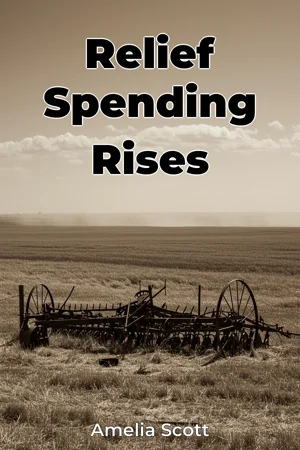
Did the New Deal truly represent a radical departure in U.S. fiscal policy, or was it merely an acceleration of existing trends? "Relief Spending Rises" delves into the intricacies of U.S. government expenditures during the early years of the Great Depression, focusing specifically on the pivotal increase in federal aid by 1935. This book examines the evolution of federal relief programs, dissecting congressional budget records to reveal the scope and nature of this unprecedented fiscal expansion. Understanding this period is crucial for contextualizing modern debates about government intervention, social safety nets, and the role of federal spending in economic crises. This book centers on two key concepts: the exponential growth of federal relief spending and the evolving political ideologies that both fueled and resisted this growth. The book meticulously traces the origins of early relief efforts, demonstrating how the limited interventions of the Hoover administration paved the way for the more expansive programs of the Roosevelt era. The reader will gain a clear understanding of the shift from localized, private charity to large-scale federal assistance, and the book provides an essential framework for assessing the long-term impacts of such policies. To fully appreciate the magnitude of the changes documented, the book provides background on the economic conditions of the Great Depression, detailing the widespread unemployment, poverty, and social unrest that necessitated government action. It also explores the prevailing political philosophies of the time, contrasting the laissez-faire approach favored by some conservatives with the more interventionist stance adopted by New Deal proponents. No prior expertise in economics or political science is necessary, as concepts are explained clearly within the historical narrative. The central argument of "Relief Spending Rises" posits that the dramatic increase in federal relief spending by 1935 was not simply an ad hoc response to the Depression, but rather a watershed moment that fundamentally reshaped the relationship between the government and its citizens. This shift established a precedent for ongoing federal responsibility in providing a safety net, and the book argues that a close analysis of this formative period is essential for understanding contemporary debates about the appropriate role of government in addressing social and economic challenges. The book is structured as follows: The introduction establishes the historical context and introduces the core arguments. The following chapters then dissect specific expenditure categories within the federal budget, tracing the growth of programs like the Federal Emergency Relief Administration (FERA) and the Public Works Administration (PWA). The book analyzes the debates surrounding these programs, examining congressional records and contemporary accounts to reveal the political and ideological battles that shaped the New Deal. The concluding chapters synthesize the findings, assessing the long-term consequences of the increased federal role in relief and offering insights into contemporary policy debates. The book utilizes a blend of quantitative and qualitative evidence. It relies heavily on digitized records of the U.S. federal budget, spanning from the Hoover years through the first term of Franklin D. Roosevelt. This data is supplemented by analysis of congressional debates, presidential speeches, and contemporary newspaper articles, providing a nuanced understanding of the political and social forces that shaped the New Deal. "Relief Spending Rises" engages with several related fields. First, economic history: by detailing the specific spending programs, the book provides a valuable contribution to understanding the economic impact of the New Deal. Second, political science: the book explores the changing ideologies and political dynamics that underpinned the expansion of federal power. Third, social welfare studies: by examining the development of the social safety net, the book sheds light on the long-term evolution of government assistance programs. The book's unique viewpoint lies in its detailed analysis of budgetary data, offering a quantifiable assessment of the New Deal's impact. Unlike studies that focus solely on policy rhetoric or individual programs, this book provides a comprehensive overview of the financial dimensions of the New Deal, revealing the true scope of the federal government's expanded commitment to relief. The overall writing style is academic but accessible, aiming to inform both specialists and general readers interested in the history of the New Deal. The target audience includes students and scholars of American history, political science, and economics, as well as anyone interested in learning more about the New Deal and the evolution of the social safety net. The book’s detailed analysis of budget records provides a valuable resource for researchers, while its clear and engaging prose makes it accessible to a broader audience. As a work of political and economic history, the book adheres to the conventions of scholarly research, including rigorous sourcing, detailed analysis, and a balanced presentation of evidence. However, the book also strives to be relevant to contemporary debates about the role of government, making it more than just an academic exercise. The book focuses specifically on the increase in federal relief spending through 1935, acknowledging that the New Deal continued to evolve in subsequent years. While it touches upon the impact of these spending programs, its primary goal is to document and analyze the initial expansion of federal aid during this critical period. Understanding the scale and scope of relief between 1930 and 1935 provides critical insight into current government programs. Discussions about the efficacy of unemployment benefits, government job programs, and federal disaster relief are often based on assumptions about their historical precedents. By examining the origins of these programs during the New Deal, the book provides a more informed basis for evaluating contemporary policies. The book addresses the ongoing debate about the effectiveness and appropriateness of New Deal programs. While some argue that these programs were essential for alleviating suffering and stimulating the economy, others contend that they were wasteful, inefficient, and ultimately prolonged the Depression. "Relief Spending Rises" provides a nuanced perspective on this debate, offering a detailed analysis of the budgetary data while acknowledging the complex and contested nature of the New Deal legacy.
Did the New Deal truly represent a radical departure in U.S. fiscal policy, or was it merely an acceleration of existing trends? "Relief Spending Rises" delves into the intricacies of U.S. government expenditures during the early years of the Great Depression, focusing specifically on the pivotal increase in federal aid by 1935. This book examines the evolution of federal relief programs, dissecting congressional budget records to reveal the scope and nature of this unprecedented fiscal expansion. Understanding this period is crucial for contextualizing modern debates about government intervention, social safety nets, and the role of federal spending in economic crises. This book centers on two key concepts: the exponential growth of federal relief spending and the evolving political ideologies that both fueled and resisted this growth. The book meticulously traces the origins of early relief efforts, demonstrating how the limited interventions of the Hoover administration paved the way for the more expansive programs of the Roosevelt era. The reader will gain a clear understanding of the shift from localized, private charity to large-scale federal assistance, and the book provides an essential framework for assessing the long-term impacts of such policies. To fully appreciate the magnitude of the changes documented, the book provides background on the economic conditions of the Great Depression, detailing the widespread unemployment, poverty, and social unrest that necessitated government action. It also explores the prevailing political philosophies of the time, contrasting the laissez-faire approach favored by some conservatives with the more interventionist stance adopted by New Deal proponents. No prior expertise in economics or political science is necessary, as concepts are explained clearly within the historical narrative. The central argument of "Relief Spending Rises" posits that the dramatic increase in federal relief spending by 1935 was not simply an ad hoc response to the Depression, but rather a watershed moment that fundamentally reshaped the relationship between the government and its citizens. This shift established a precedent for ongoing federal responsibility in providing a safety net, and the book argues that a close analysis of this formative period is essential for understanding contemporary debates about the appropriate role of government in addressing social and economic challenges. The book is structured as follows: The introduction establishes the historical context and introduces the core arguments. The following chapters then dissect specific expenditure categories within the federal budget, tracing the growth of programs like the Federal Emergency Relief Administration (FERA) and the Public Works Administration (PWA). The book analyzes the debates surrounding these programs, examining congressional records and contemporary accounts to reveal the political and ideological battles that shaped the New Deal. The concluding chapters synthesize the findings, assessing the long-term consequences of the increased federal role in relief and offering insights into contemporary policy debates. The book utilizes a blend of quantitative and qualitative evidence. It relies heavily on digitized records of the U.S. federal budget, spanning from the Hoover years through the first term of Franklin D. Roosevelt. This data is supplemented by analysis of congressional debates, presidential speeches, and contemporary newspaper articles, providing a nuanced understanding of the political and social forces that shaped the New Deal. "Relief Spending Rises" engages with several related fields. First, economic history: by detailing the specific spending programs, the book provides a valuable contribution to understanding the economic impact of the New Deal. Second, political science: the book explores the changing ideologies and political dynamics that underpinned the expansion of federal power. Third, social welfare studies: by examining the development of the social safety net, the book sheds light on the long-term evolution of government assistance programs. The book's unique viewpoint lies in its detailed analysis of budgetary data, offering a quantifiable assessment of the New Deal's impact. Unlike studies that focus solely on policy rhetoric or individual programs, this book provides a comprehensive overview of the financial dimensions of the New Deal, revealing the true scope of the federal government's expanded commitment to relief. The overall writing style is academic but accessible, aiming to inform both specialists and general readers interested in the history of the New Deal. The target audience includes students and scholars of American history, political science, and economics, as well as anyone interested in learning more about the New Deal and the evolution of the social safety net. The book’s detailed analysis of budget records provides a valuable resource for researchers, while its clear and engaging prose makes it accessible to a broader audience. As a work of political and economic history, the book adheres to the conventions of scholarly research, including rigorous sourcing, detailed analysis, and a balanced presentation of evidence. However, the book also strives to be relevant to contemporary debates about the role of government, making it more than just an academic exercise. The book focuses specifically on the increase in federal relief spending through 1935, acknowledging that the New Deal continued to evolve in subsequent years. While it touches upon the impact of these spending programs, its primary goal is to document and analyze the initial expansion of federal aid during this critical period. Understanding the scale and scope of relief between 1930 and 1935 provides critical insight into current government programs. Discussions about the efficacy of unemployment benefits, government job programs, and federal disaster relief are often based on assumptions about their historical precedents. By examining the origins of these programs during the New Deal, the book provides a more informed basis for evaluating contemporary policies. The book addresses the ongoing debate about the effectiveness and appropriateness of New Deal programs. While some argue that these programs were essential for alleviating suffering and stimulating the economy, others contend that they were wasteful, inefficient, and ultimately prolonged the Depression. "Relief Spending Rises" provides a nuanced perspective on this debate, offering a detailed analysis of the budgetary data while acknowledging the complex and contested nature of the New Deal legacy.
"Relief Spending Rises" examines the surge in U.S. federal relief spending during the Great Depression, particularly up to 1935, offering a crucial perspective on the New Deal era and its implications for modern U.S. fiscal policy. The book meticulously analyzes congressional budget records to quantify this unprecedented fiscal expansion. One intriguing insight is how the Hoover administration's initial, limited interventions inadvertently paved the way for Roosevelt's more expansive social safety nets. Understanding this transition illuminates current debates about government intervention in economic crises and the role of federal aid. The book adopts a balanced quantitative and qualitative approach, dissecting specific expenditure categories and tracing the growth of programs like FERA and PWA across chapters. It explores the evolving political ideologies that shaped the New Deal, contrasting conservative laissez-faire approaches with interventionist stances. By analyzing digitized budget records alongside congressional debates and contemporary accounts, "Relief Spending Rises" argues that the dramatic increase in federal relief spending fundamentally reshaped the relationship between the government and its citizens, establishing a precedent for ongoing federal responsibility in providing a safety net.
Book Details
ISBN
9788235209634
Publisher
Publifye AS
Your Licenses
You don't own any licenses for this book
Purchase a license below to unlock this book and download the EPUB.
Purchase License
Select a tier to unlock this book
Need bulk licensing?
Contact us for enterprise agreements.