
About This Book
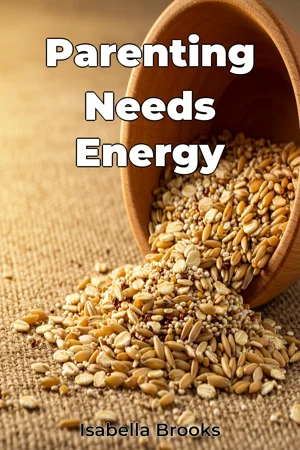
Are you running on empty as a parent, struggling to keep up with the demands of family life? "Parenting Needs Energy" explores a crucial, often overlooked, component of effective parenting: personal energy levels, specifically focusing on the impact of dietary choices on sustained energy. This book, falling under the genres of Health & Fitness, Health Fitness, and Parenting, argues that optimizing one's diet, particularly through the strategic incorporation of whole grains, is not merely beneficial for general well-being, but is a fundamental pillar for successful and engaged parenting. The book addresses three key areas: the science of sustained energy, the specific role of whole grains in energy management, and practical strategies for incorporating these dietary changes into a busy family's life. These topics are significant because parental burnout is a growing concern, and improving nutrition offers a tangible, actionable step towards mitigating its effects. Understanding how our bodies convert food into energy, and how different foods uniquely contribute to stable energy levels, is crucial for parents seeking to enhance their daily performance and overall well-being. Drawing on data from various family health studies, "Parenting Needs Energy" examines the impact of refined versus unrefined carbohydrates on energy levels, mood, and cognitive function. It considers the historical context of the modern diet, highlighting the shift towards processed foods and its impact on public health. The reader should have a basic understanding of nutritional concepts, such as macronutrients and micronutrients, but complex scientific jargon is explained clearly throughout the text. The central argument of this book posits that consistent, stable energy levels are a prerequisite for effective parenting. It is difficult to be patient, present, and proactive when one is constantly battling fatigue and energy crashes. The book supports this argument by demonstrating that a diet rich in whole grains provides a sustained release of energy, preventing the peaks and valleys associated with refined sugars and processed foods. "Parenting Needs Energy" begins by laying the groundwork with an accessible introduction to the science of energy production within the human body. It then delves into the specific benefits of whole grains, detailing their nutritional composition and their impact on blood sugar regulation. The book follows a three-part structure: first, an examination of family health studies and dietary patterns; second, an analysis of the physiological effects of whole grains versus processed foods; and third, a practical guide to incorporating whole grains into family meals. The conclusion reinforces the central argument, emphasizing the long-term benefits of dietary change for both parents and children. The evidence presented throughout the book relies on rigorous scientific research, including nutritional studies, epidemiological data, and clinical trials. It also includes analysis of family health studies that specifically track dietary habits and their correlation with energy levels, mood, and overall well-being within families. This approach provides a multi-faceted understanding of the relationship between food and parental performance. This book intersects with several other fields, including psychology (specifically, the impact of nutrition on mental health and mood regulation), economics (the affordability and accessibility of whole grains), and sociology (the influence of cultural norms on dietary choices). These interdisciplinary connections enrich the book's argument, highlighting the complex factors that influence parental energy levels. "Parenting Needs Energy" offers a uniquely practical and actionable approach to addressing parental burnout. Rather than focusing solely on mental health strategies or time management techniques, it highlights the importance of nutrition as a foundational element of sustainable energy and engaged parenting. The tone is informative and encouraging, aiming to empower parents with the knowledge and tools they need to make positive change. The target audience is parents of all ages and backgrounds who are seeking practical strategies to improve their energy levels and overall well-being. It appeals to individuals who are interested in health and fitness, but also to those who are simply looking for ways to better manage the demands of family life. As a health and fitness guide within the parenting genre, "Parenting Needs Energy" provides scientifically-backed advice in an accessible format. While the book focuses primarily on the role of whole grains, it acknowledges the importance of a balanced diet and healthy lifestyle. Although the scope is intentionally limited to the dietary aspects of parental energy, it recognizes that other factors, such as sleep and stress management, also play a significant role. The information presented in this book has numerous real-world applications. Parents can use the recipes and meal planning suggestions to incorporate more whole grains into their family's diet. They can also use the information to make informed choices about the food they purchase and consume, both for themselves and for their children. While the benefits of whole grains are widely recognized, there are ongoing debates about the optimal dietary ratios of carbohydrates, proteins, and fats. "Parenting Needs Energy" acknowledges these debates, presenting a balanced perspective and encouraging readers to consult with healthcare professionals to determine the best dietary approach for their individual needs.
Are you running on empty as a parent, struggling to keep up with the demands of family life? "Parenting Needs Energy" explores a crucial, often overlooked, component of effective parenting: personal energy levels, specifically focusing on the impact of dietary choices on sustained energy. This book, falling under the genres of Health & Fitness, Health Fitness, and Parenting, argues that optimizing one's diet, particularly through the strategic incorporation of whole grains, is not merely beneficial for general well-being, but is a fundamental pillar for successful and engaged parenting. The book addresses three key areas: the science of sustained energy, the specific role of whole grains in energy management, and practical strategies for incorporating these dietary changes into a busy family's life. These topics are significant because parental burnout is a growing concern, and improving nutrition offers a tangible, actionable step towards mitigating its effects. Understanding how our bodies convert food into energy, and how different foods uniquely contribute to stable energy levels, is crucial for parents seeking to enhance their daily performance and overall well-being. Drawing on data from various family health studies, "Parenting Needs Energy" examines the impact of refined versus unrefined carbohydrates on energy levels, mood, and cognitive function. It considers the historical context of the modern diet, highlighting the shift towards processed foods and its impact on public health. The reader should have a basic understanding of nutritional concepts, such as macronutrients and micronutrients, but complex scientific jargon is explained clearly throughout the text. The central argument of this book posits that consistent, stable energy levels are a prerequisite for effective parenting. It is difficult to be patient, present, and proactive when one is constantly battling fatigue and energy crashes. The book supports this argument by demonstrating that a diet rich in whole grains provides a sustained release of energy, preventing the peaks and valleys associated with refined sugars and processed foods. "Parenting Needs Energy" begins by laying the groundwork with an accessible introduction to the science of energy production within the human body. It then delves into the specific benefits of whole grains, detailing their nutritional composition and their impact on blood sugar regulation. The book follows a three-part structure: first, an examination of family health studies and dietary patterns; second, an analysis of the physiological effects of whole grains versus processed foods; and third, a practical guide to incorporating whole grains into family meals. The conclusion reinforces the central argument, emphasizing the long-term benefits of dietary change for both parents and children. The evidence presented throughout the book relies on rigorous scientific research, including nutritional studies, epidemiological data, and clinical trials. It also includes analysis of family health studies that specifically track dietary habits and their correlation with energy levels, mood, and overall well-being within families. This approach provides a multi-faceted understanding of the relationship between food and parental performance. This book intersects with several other fields, including psychology (specifically, the impact of nutrition on mental health and mood regulation), economics (the affordability and accessibility of whole grains), and sociology (the influence of cultural norms on dietary choices). These interdisciplinary connections enrich the book's argument, highlighting the complex factors that influence parental energy levels. "Parenting Needs Energy" offers a uniquely practical and actionable approach to addressing parental burnout. Rather than focusing solely on mental health strategies or time management techniques, it highlights the importance of nutrition as a foundational element of sustainable energy and engaged parenting. The tone is informative and encouraging, aiming to empower parents with the knowledge and tools they need to make positive change. The target audience is parents of all ages and backgrounds who are seeking practical strategies to improve their energy levels and overall well-being. It appeals to individuals who are interested in health and fitness, but also to those who are simply looking for ways to better manage the demands of family life. As a health and fitness guide within the parenting genre, "Parenting Needs Energy" provides scientifically-backed advice in an accessible format. While the book focuses primarily on the role of whole grains, it acknowledges the importance of a balanced diet and healthy lifestyle. Although the scope is intentionally limited to the dietary aspects of parental energy, it recognizes that other factors, such as sleep and stress management, also play a significant role. The information presented in this book has numerous real-world applications. Parents can use the recipes and meal planning suggestions to incorporate more whole grains into their family's diet. They can also use the information to make informed choices about the food they purchase and consume, both for themselves and for their children. While the benefits of whole grains are widely recognized, there are ongoing debates about the optimal dietary ratios of carbohydrates, proteins, and fats. "Parenting Needs Energy" acknowledges these debates, presenting a balanced perspective and encouraging readers to consult with healthcare professionals to determine the best dietary approach for their individual needs.
"Parenting Needs Energy" highlights the crucial link between a parent's diet and their energy levels, arguing that sustained energy is fundamental for effective parenting. It explores how incorporating whole grains can combat parental burnout by providing a steady release of energy, unlike the energy spikes and crashes associated with refined carbohydrates and processed foods. Family health studies reveal the significant impact of dietary choices on mood, cognitive function, and overall well-being. The book takes a practical approach, beginning with the science of energy production and then detailing the specific benefits of whole grains. It stresses the importance of understanding how different foods affect energy levels, enabling parents to make informed choices for themselves and their families. By understanding the role of nutrition, parents can take actionable steps towards improving their daily performance and family health. "Parenting Needs Energy" progresses through three key sections: examining family health studies and dietary patterns, analyzing the physiological effects of whole grains versus processed foods, and providing a practical guide to incorporating whole grains into family meals. This structure empowers parents with the knowledge and tools to make positive, sustainable dietary changes, emphasizing long-term benefits for both parents and children.
Book Details
ISBN
9788235209474
Publisher
Publifye AS
Your Licenses
You don't own any licenses for this book
Purchase a license below to unlock this book and download the EPUB.
Purchase License
Select a tier to unlock this book
Need bulk licensing?
Contact us for enterprise agreements.