
About This Book
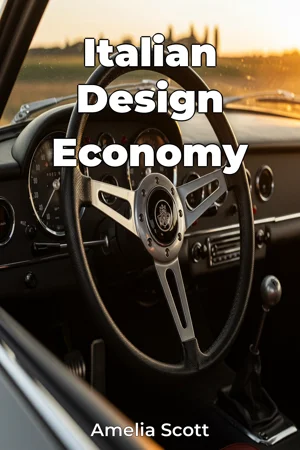
Why is "Made in Italy" still synonymous with quality and desirability in the 21st century? This book, *Italian Design Economy*, investigates how Italy cultivated globally competitive export sectors in fashion, furniture, and automotive design, transforming inherent challenges into distinct advantages within the global marketplace. It examines the evolution of these industries, revealing the strategic blend of creativity, craftsmanship, and entrepreneurial spirit that propelled Italy to the forefront of design innovation. The book delves into three core interconnected themes. First, it explores the historical context behind the regional industrial clusters that enabled specialization and fostered competitive intensity. It reviews how centuries of artisan traditions transformed into modern manufacturing ecosystems. Second, the book analyzes the impact of family-owned businesses, highlighting their role in preserving skills, maintaining quality control, and adapting to market changes. Finally, this work examines the function of design thinking and aesthetic sensibility as vital components of Italian industry, differentiating Italian products through style, innovation, and cultural relevance. These elements are important because they illustrate how an economy can leverage its cultural heritage to achieve global success. The central argument is that Italy's design economy thrives because of a unique interplay between historical legacy, entrepreneurial structure, and a deep-seated commitment to aesthetic excellence. This argument challenges conventional economic models that primarily emphasize cost competitiveness and economies of scale, and instead positions design as a strategic asset. *Italian Design Economy* is structured around three primary sections. The first section introduces the concept of the "Italian Design Ecosystem" and its historical roots, from the artisan workshops of the Renaissance to the industrial districts of the 20th century. The second part covers the development of specific sectors—fashion, furniture, and automobiles—analyzing the success stories of iconic brands such as Gucci, Ferrari, Poltrona Frau and their contributions to Italy's export economy. Each chapter will look at the history of success, the business models, the design principles, and the marketing strategies adopted by each brand. The third part concentrates on the future, discussing the challenges posed by globalization, sustainability, and digital transformation, and looking at how Italian design can adapt to these forces. The conclusion synthesizes these findings, offering insights for policymakers and entrepreneurs seeking to emulate Italy's success in integrating design into their economic strategies. The book draws upon a range of research methodologies, including case studies of prominent Italian companies, statistical analyses of export data, and qualitative interviews with designers, entrepreneurs, and industry experts. It also utilizes archival research to trace the evolution of design practices and business strategies over time. This study intersects with several fields, including economic geography (analyzing the role of regional clusters), cultural studies (examining the impact of cultural heritage on economic activity), and management science (studying the strategies of family-owned businesses). These connections enrich the analysis by providing a more comprehensive understanding of the complex factors shaping Italy's design economy. This work distinguishes itself through its holistic approach, integrating economic analysis with design theory and cultural history. It offers fresh insights into how design can be a driver of economic growth and societal value, moving beyond traditional perspectives that view design as merely an aesthetic add-on. Written in a clear and accessible style, *Italian Design Economy* is aimed at a broad audience, including students and scholars of economics, design, and business, as well as policymakers, entrepreneurs, and anyone interested in understanding the dynamics of the global design industry. It will offer a framework to understand the story behind "Made in Italy" and the lessons that this success story offers for businesses and policymakers around the world. The scope of the book focuses primarily on the post-war period to the present day. While acknowledging the historical roots in earlier eras, the concentration resides in understanding the factors that shaped contemporary Italian design. The information in this book is highly applicable to professionals in various fields. For example, business leaders can learn strategies for leveraging design to create competitive advantages. Policymakers can use the insights to develop policies that support innovation and creativity. Designers can gain a deeper understanding of the economic context in which they operate. The book also addresses ongoing debates about the future of manufacturing in developed economies, the role of heritage in innovation, and the challenges of balancing tradition with modernity in the face of global competition.
Why is "Made in Italy" still synonymous with quality and desirability in the 21st century? This book, *Italian Design Economy*, investigates how Italy cultivated globally competitive export sectors in fashion, furniture, and automotive design, transforming inherent challenges into distinct advantages within the global marketplace. It examines the evolution of these industries, revealing the strategic blend of creativity, craftsmanship, and entrepreneurial spirit that propelled Italy to the forefront of design innovation. The book delves into three core interconnected themes. First, it explores the historical context behind the regional industrial clusters that enabled specialization and fostered competitive intensity. It reviews how centuries of artisan traditions transformed into modern manufacturing ecosystems. Second, the book analyzes the impact of family-owned businesses, highlighting their role in preserving skills, maintaining quality control, and adapting to market changes. Finally, this work examines the function of design thinking and aesthetic sensibility as vital components of Italian industry, differentiating Italian products through style, innovation, and cultural relevance. These elements are important because they illustrate how an economy can leverage its cultural heritage to achieve global success. The central argument is that Italy's design economy thrives because of a unique interplay between historical legacy, entrepreneurial structure, and a deep-seated commitment to aesthetic excellence. This argument challenges conventional economic models that primarily emphasize cost competitiveness and economies of scale, and instead positions design as a strategic asset. *Italian Design Economy* is structured around three primary sections. The first section introduces the concept of the "Italian Design Ecosystem" and its historical roots, from the artisan workshops of the Renaissance to the industrial districts of the 20th century. The second part covers the development of specific sectors—fashion, furniture, and automobiles—analyzing the success stories of iconic brands such as Gucci, Ferrari, Poltrona Frau and their contributions to Italy's export economy. Each chapter will look at the history of success, the business models, the design principles, and the marketing strategies adopted by each brand. The third part concentrates on the future, discussing the challenges posed by globalization, sustainability, and digital transformation, and looking at how Italian design can adapt to these forces. The conclusion synthesizes these findings, offering insights for policymakers and entrepreneurs seeking to emulate Italy's success in integrating design into their economic strategies. The book draws upon a range of research methodologies, including case studies of prominent Italian companies, statistical analyses of export data, and qualitative interviews with designers, entrepreneurs, and industry experts. It also utilizes archival research to trace the evolution of design practices and business strategies over time. This study intersects with several fields, including economic geography (analyzing the role of regional clusters), cultural studies (examining the impact of cultural heritage on economic activity), and management science (studying the strategies of family-owned businesses). These connections enrich the analysis by providing a more comprehensive understanding of the complex factors shaping Italy's design economy. This work distinguishes itself through its holistic approach, integrating economic analysis with design theory and cultural history. It offers fresh insights into how design can be a driver of economic growth and societal value, moving beyond traditional perspectives that view design as merely an aesthetic add-on. Written in a clear and accessible style, *Italian Design Economy* is aimed at a broad audience, including students and scholars of economics, design, and business, as well as policymakers, entrepreneurs, and anyone interested in understanding the dynamics of the global design industry. It will offer a framework to understand the story behind "Made in Italy" and the lessons that this success story offers for businesses and policymakers around the world. The scope of the book focuses primarily on the post-war period to the present day. While acknowledging the historical roots in earlier eras, the concentration resides in understanding the factors that shaped contemporary Italian design. The information in this book is highly applicable to professionals in various fields. For example, business leaders can learn strategies for leveraging design to create competitive advantages. Policymakers can use the insights to develop policies that support innovation and creativity. Designers can gain a deeper understanding of the economic context in which they operate. The book also addresses ongoing debates about the future of manufacturing in developed economies, the role of heritage in innovation, and the challenges of balancing tradition with modernity in the face of global competition.
*Italian Design Economy* explores the enduring allure of "Made in Italy," dissecting how Italy transformed inherent limitations into advantages, fostering globally competitive export sectors in fashion, furniture, and automotive design. It examines the vital role of regional industrial clusters, which enabled specialization and competitive intensity, tracing their evolution from artisan workshops to modern manufacturing ecosystems. Furthermore, the book analyzes the impact of family-owned businesses, highlighting their critical function in preserving skills and adapting to market changes. The book argues that Italy’s success stems from blending historical legacy, entrepreneurial structure, and aesthetic sensibility. The book’s approach integrates economic analysis with design theory and cultural history, providing a holistic perspective. It challenges conventional economic models by positioning design as a strategic asset rather than just an aesthetic addition. The book progresses from introducing the "Italian Design Ecosystem" and its historical roots, to covering the development of specific sectors with success stories of iconic Italian brands, and then concentrates on the future, discussing the challenges of globalization and digital transformation. Ultimately, it offers valuable insights for policymakers and entrepreneurs aiming to emulate Italy's design-driven economic success.
Book Details
ISBN
9788235209269
Publisher
Publifye AS
Your Licenses
You don't own any licenses for this book
Purchase a license below to unlock this book and download the EPUB.
Purchase License
Select a tier to unlock this book
Need bulk licensing?
Contact us for enterprise agreements.