
About This Book
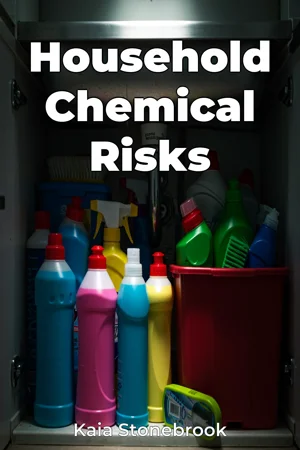
Are the cleaning products under your sink, the air fresheners in your living room, and even the seemingly innocuous plastics in your kitchen silently jeopardizing your health? "Household Chemical Risks" delves into the pervasive presence of chemicals in our homes and their potential impact on our well-being. This book addresses two critical areas: identifying common household chemicals and understanding the documented health risks associated with their use and exposure. We will explore the science behind how these substances interact with our bodies, and why awareness is the first step towards proactive prevention. The significance of understanding these risks cannot be overstated. Many household products contain volatile organic compounds (VOCs), endocrine disruptors, and carcinogens linked to various health issues, ranging from allergies and asthma to developmental problems and increased cancer risk. Children and the elderly are often more vulnerable to these effects. We begin by establishing a foundational understanding of basic chemistry and toxicology, presented in an accessible manner for readers without a scientific background. This includes a discussion of dose-response relationships, exposure pathways (inhalation, ingestion, dermal absorption), and the concept of cumulative exposure, all essential for evaluating chemical hazards. Our central argument is that informed consumers can significantly reduce their risk of chemical exposure by understanding the ingredients in household products, adopting safer alternatives, and implementing preventative measures. This book provides the knowledge necessary to make these informed choices. The book is structured in three parts. Part One introduces the main categories of household chemicals, examining their sources and common uses. Part Two focuses on specific health risks, organizing information by chemical type and affected organ system. This section reviews the scientific evidence linking specific chemicals to adverse health outcomes, drawing from epidemiological studies, toxicological research, and regulatory agency reports. Part Three culminates in a practical guide to risk reduction, offering strategies for selecting safer products, improving ventilation, minimizing chemical use, and advocating for stronger regulations. The evidence presented throughout the book is based on peer-reviewed scientific literature, government reports from agencies like the EPA and NIH, and data from independent research institutions. We critically evaluate these sources, acknowledging limitations and highlighting areas of ongoing research. "Household Chemical Risks" connects to several disciplines, including public health, environmental science, and consumer science. It informs public health initiatives by identifying preventable risk factors. It contributes to environmental science by highlighting the impact of household chemicals on indoor air and water quality. It empowers consumer science by providing the knowledge needed to make informed purchasing decisions. This book distinguishes itself by taking a holistic approach to the topic, not only identifying risks but also providing concrete solutions. It is written in an accessible style, avoiding jargon and technical language wherever possible. The target audience includes health-conscious individuals, parents concerned about their children's health, and anyone seeking to create a healthier home environment. It serves as a valuable resource for those actively seeking to reduce their chemical exposures. As a work of non-fiction in the health and science genres, this book prioritizes accuracy, clarity, and objectivity. It aims to provide a balanced perspective, acknowledging uncertainties when they exist. The scope of the book is limited to chemicals commonly found in the home environment, focusing on those with the most well-documented health risks. It does not cover industrial chemicals or occupational exposures in detail. Ultimately, "Household Chemical Risks" equips readers with the knowledge and tools they need to create safer, healthier homes for themselves and their families.
Are the cleaning products under your sink, the air fresheners in your living room, and even the seemingly innocuous plastics in your kitchen silently jeopardizing your health? "Household Chemical Risks" delves into the pervasive presence of chemicals in our homes and their potential impact on our well-being. This book addresses two critical areas: identifying common household chemicals and understanding the documented health risks associated with their use and exposure. We will explore the science behind how these substances interact with our bodies, and why awareness is the first step towards proactive prevention. The significance of understanding these risks cannot be overstated. Many household products contain volatile organic compounds (VOCs), endocrine disruptors, and carcinogens linked to various health issues, ranging from allergies and asthma to developmental problems and increased cancer risk. Children and the elderly are often more vulnerable to these effects. We begin by establishing a foundational understanding of basic chemistry and toxicology, presented in an accessible manner for readers without a scientific background. This includes a discussion of dose-response relationships, exposure pathways (inhalation, ingestion, dermal absorption), and the concept of cumulative exposure, all essential for evaluating chemical hazards. Our central argument is that informed consumers can significantly reduce their risk of chemical exposure by understanding the ingredients in household products, adopting safer alternatives, and implementing preventative measures. This book provides the knowledge necessary to make these informed choices. The book is structured in three parts. Part One introduces the main categories of household chemicals, examining their sources and common uses. Part Two focuses on specific health risks, organizing information by chemical type and affected organ system. This section reviews the scientific evidence linking specific chemicals to adverse health outcomes, drawing from epidemiological studies, toxicological research, and regulatory agency reports. Part Three culminates in a practical guide to risk reduction, offering strategies for selecting safer products, improving ventilation, minimizing chemical use, and advocating for stronger regulations. The evidence presented throughout the book is based on peer-reviewed scientific literature, government reports from agencies like the EPA and NIH, and data from independent research institutions. We critically evaluate these sources, acknowledging limitations and highlighting areas of ongoing research. "Household Chemical Risks" connects to several disciplines, including public health, environmental science, and consumer science. It informs public health initiatives by identifying preventable risk factors. It contributes to environmental science by highlighting the impact of household chemicals on indoor air and water quality. It empowers consumer science by providing the knowledge needed to make informed purchasing decisions. This book distinguishes itself by taking a holistic approach to the topic, not only identifying risks but also providing concrete solutions. It is written in an accessible style, avoiding jargon and technical language wherever possible. The target audience includes health-conscious individuals, parents concerned about their children's health, and anyone seeking to create a healthier home environment. It serves as a valuable resource for those actively seeking to reduce their chemical exposures. As a work of non-fiction in the health and science genres, this book prioritizes accuracy, clarity, and objectivity. It aims to provide a balanced perspective, acknowledging uncertainties when they exist. The scope of the book is limited to chemicals commonly found in the home environment, focusing on those with the most well-documented health risks. It does not cover industrial chemicals or occupational exposures in detail. Ultimately, "Household Chemical Risks" equips readers with the knowledge and tools they need to create safer, healthier homes for themselves and their families.
"Household Chemical Risks" explores the often-overlooked dangers lurking within our homes, focusing on the impact of everyday chemicals on our health. It reveals how seemingly harmless products, from cleaning supplies to air fresheners, can expose us to volatile organic compounds (VOCs), endocrine disruptors, and even carcinogens. Understanding exposure pathways, such as inhalation and skin absorption, is crucial, as is recognizing that children and the elderly are particularly vulnerable. The book uniquely bridges the gap between scientific research and practical application, empowering readers to make informed choices for a healthier home. The book progresses systematically, starting with an accessible introduction to basic chemistry and toxicology. It then identifies common household chemicals, examines their sources, and details associated health risks, drawing from scientific studies and regulatory reports. Finally, the book provides a practical guide to risk reduction, offering strategies for selecting safer alternatives, improving indoor air quality, and minimizing chemical use. This comprehensive approach equips readers with the knowledge and tools to create a safer, healthier home environment, reducing their exposure to potentially harmful household chemicals and promoting overall health and fitness.
Book Details
ISBN
9788235209221
Publisher
Publifye AS
Your Licenses
You don't own any licenses for this book
Purchase a license below to unlock this book and download the EPUB.
Purchase License
Select a tier to unlock this book
Need bulk licensing?
Contact us for enterprise agreements.