
About This Book
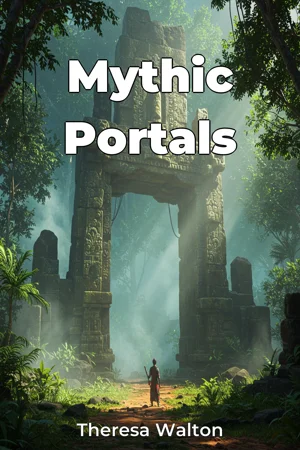
Have humans always dreamed of traversing the boundaries of reality? "Mythic Portals: Uncovering Legends of Hidden Gateways Between Worlds" delves into the captivating history and pervasive religious significance of portals—conceived as physical or metaphysical pathways connecting our world to other realms. This book is important because it illuminates humanity's enduring fascination with the unknown and our persistent attempts to understand the universe and our place within it. We will embark on a journey through time and across cultures, exploring the myriad ways in which different societies have imagined and conceptualized these liminal spaces. This exploration requires understanding the historical context in which these myths and beliefs arose, as well as an appreciation for the diverse religious interpretations that imbue them with meaning. We will examine specific historical periods, such as ancient Mesopotamia, classical Greece, and medieval Europe, noting how prevailing cosmological views shaped the understanding of portals. The central argument of "Mythic Portals" is that the concept of interdimensional gateways reveals fundamental aspects of human psychology, spirituality, and our quest for knowledge about existence. This argument matters because understanding the cultural and psychological roots of these beliefs can provide a deeper insight into human consciousness and our relationship with the intangible. "Mythic Portals" is structured to explore how these beliefs have acted as a catalyst for, and been interwoven with, cultural and spiritual values. The book begins by introducing the core concept of "mythic portals" and exploring their foundational role in ancient mythologies and religious traditions. We then develop this idea through three key sections. The first section examines the historical evolution of portal narratives, tracing their development from ancient creation myths to more recent folklore. Specific examples, such as the Gates of Ishtar in Babylonian mythology, or the various descriptions of entrances to the underworld in Greek mythology, will be presented and analyzed. The second section focuses on the religious significance of portals, examining their role in rituals, shamanic practices, and spiritual ascensions across diverse faith traditions. This section explores how portals are viewed as pathways to divine knowledge or transformative experiences. The third section investigates literary depictions of portals in modern fantasy, focusing on their psychological and philosophical implications, and explores how these narratives reflect contemporary anxieties and aspirations. This culminates in a discussion of the enduring power of portal myths and their potential to inspire new ways of thinking about reality and human potential. The evidence presented in "Mythic Portals" draws from a wide range of sources, including original translations of ancient texts, archaeological findings, ethnographic studies of contemporary religious practices, and literary analysis of modern fantasy works. This interdisciplinary approach allows for a nuanced understanding of the complexities of portal beliefs. This book connects to other fields such as comparative mythology, religious studies, anthropology, and literary criticism. These connections enrich the analysis by providing different lenses through which to examine the phenomenon of mythic portals. "Mythic Portals" offers a unique perspective by examining the psychological underpinnings of portal myths, proposing that these narratives reflect a fundamental human need to transcend limitations and explore the boundaries of consciousness. The tone is academic yet accessible, aiming to engage both scholars and general readers interested in mythology, religion, and fantasy literature. The writing style is clear and engaging, avoiding jargon and technical terms where possible. The target audience includes students and scholars of mythology, religion, and literature, as well as general readers with an interest in these topics. It will be valuable because it offers a comprehensive and interdisciplinary exploration of a fascinating and enduring theme in human culture. As a work of non-fiction, "Mythic Portals" adheres to scholarly standards of evidence and argumentation, providing accurate and well-documented information. The scope is broad, encompassing a wide range of cultures and historical periods, but intentionally limited to the study of mythic and symbolic portals, rather than physical or scientific theories of interdimensional travel. The information can be applied to understanding the cultural significance of various myths and beliefs, interpreting symbolism in literature and art, and appreciating the psychological power of narrative. While the book will not explicitly engage in debates about the existence of literal portals, it acknowledges the ongoing discussions about the relationship between myth, metaphor, and reality.
Have humans always dreamed of traversing the boundaries of reality? "Mythic Portals: Uncovering Legends of Hidden Gateways Between Worlds" delves into the captivating history and pervasive religious significance of portals—conceived as physical or metaphysical pathways connecting our world to other realms. This book is important because it illuminates humanity's enduring fascination with the unknown and our persistent attempts to understand the universe and our place within it. We will embark on a journey through time and across cultures, exploring the myriad ways in which different societies have imagined and conceptualized these liminal spaces. This exploration requires understanding the historical context in which these myths and beliefs arose, as well as an appreciation for the diverse religious interpretations that imbue them with meaning. We will examine specific historical periods, such as ancient Mesopotamia, classical Greece, and medieval Europe, noting how prevailing cosmological views shaped the understanding of portals. The central argument of "Mythic Portals" is that the concept of interdimensional gateways reveals fundamental aspects of human psychology, spirituality, and our quest for knowledge about existence. This argument matters because understanding the cultural and psychological roots of these beliefs can provide a deeper insight into human consciousness and our relationship with the intangible. "Mythic Portals" is structured to explore how these beliefs have acted as a catalyst for, and been interwoven with, cultural and spiritual values. The book begins by introducing the core concept of "mythic portals" and exploring their foundational role in ancient mythologies and religious traditions. We then develop this idea through three key sections. The first section examines the historical evolution of portal narratives, tracing their development from ancient creation myths to more recent folklore. Specific examples, such as the Gates of Ishtar in Babylonian mythology, or the various descriptions of entrances to the underworld in Greek mythology, will be presented and analyzed. The second section focuses on the religious significance of portals, examining their role in rituals, shamanic practices, and spiritual ascensions across diverse faith traditions. This section explores how portals are viewed as pathways to divine knowledge or transformative experiences. The third section investigates literary depictions of portals in modern fantasy, focusing on their psychological and philosophical implications, and explores how these narratives reflect contemporary anxieties and aspirations. This culminates in a discussion of the enduring power of portal myths and their potential to inspire new ways of thinking about reality and human potential. The evidence presented in "Mythic Portals" draws from a wide range of sources, including original translations of ancient texts, archaeological findings, ethnographic studies of contemporary religious practices, and literary analysis of modern fantasy works. This interdisciplinary approach allows for a nuanced understanding of the complexities of portal beliefs. This book connects to other fields such as comparative mythology, religious studies, anthropology, and literary criticism. These connections enrich the analysis by providing different lenses through which to examine the phenomenon of mythic portals. "Mythic Portals" offers a unique perspective by examining the psychological underpinnings of portal myths, proposing that these narratives reflect a fundamental human need to transcend limitations and explore the boundaries of consciousness. The tone is academic yet accessible, aiming to engage both scholars and general readers interested in mythology, religion, and fantasy literature. The writing style is clear and engaging, avoiding jargon and technical terms where possible. The target audience includes students and scholars of mythology, religion, and literature, as well as general readers with an interest in these topics. It will be valuable because it offers a comprehensive and interdisciplinary exploration of a fascinating and enduring theme in human culture. As a work of non-fiction, "Mythic Portals" adheres to scholarly standards of evidence and argumentation, providing accurate and well-documented information. The scope is broad, encompassing a wide range of cultures and historical periods, but intentionally limited to the study of mythic and symbolic portals, rather than physical or scientific theories of interdimensional travel. The information can be applied to understanding the cultural significance of various myths and beliefs, interpreting symbolism in literature and art, and appreciating the psychological power of narrative. While the book will not explicitly engage in debates about the existence of literal portals, it acknowledges the ongoing discussions about the relationship between myth, metaphor, and reality.
"Mythic Portals: Uncovering Legends of Hidden Gateways Between Worlds" explores humanity's long-held fascination with portals—gateways between our world and other realms. From ancient myths to modern fantasy, the concept of these interdimensional gateways reveals fundamental aspects of human psychology and spirituality. Consider the Gates of Ishtar in Babylonian mythology, seen as a literal and symbolic entrance to the city, or the various pathways to the underworld in Greek stories, each reflecting cultural anxieties and hopes. The book examines the historical evolution of portal narratives, tracing their development across cultures and religions. Beginning with foundational myths, the study progresses through historical periods and diverse faith traditions, analyzing the role of portals in rituals, spiritual ascensions, and literature. The approach blends comparative mythology, religious studies, and literary criticism to offer a nuanced understanding. "Mythic Portals" culminates in a discussion of the enduring power of these myths, suggesting they reflect our need to transcend limitations and explore the boundaries of consciousness. By examining ancient texts, archaeological findings, and modern fantasy, the book provides a comprehensive view of how portal beliefs have shaped cultural and spiritual values.
Book Details
ISBN
9788235209016
Publisher
Publifye AS
Your Licenses
You don't own any licenses for this book
Purchase a license below to unlock this book and download the EPUB.
Purchase License
Select a tier to unlock this book
Need bulk licensing?
Contact us for enterprise agreements.