
About This Book
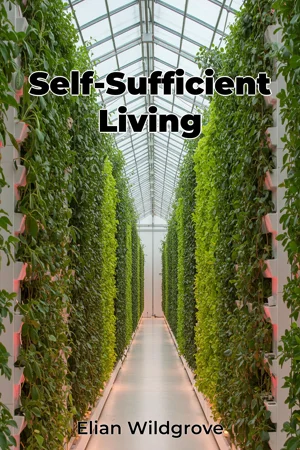
Have you ever wondered how attainable true self-sufficiency can be in our modern, interconnected world? "Self-Sufficient Living" examines the practical methods and underlying principles of producing your own food and energy, offering a comprehensive guide to achieving greater independence from traditional supply chains. This book delves into the technology and natural processes that empower individuals and communities to live more sustainably. Two key topics explored are sustainable agriculture and renewable energy generation. Sustainable agriculture encompasses methods of food production that minimize environmental impact while maximizing yields. Renewable energy generation focuses on harnessing natural resources like solar, wind, and water to create electricity and heat. These topics are vital because they offer tangible solutions to pressing challenges: diminishing resources, climate change, and the increasing cost of living. By understanding and implementing these practices, readers can reduce their carbon footprint, enhance their resilience to external shocks, and gain greater control over their essential needs. The pursuit of self-sufficiency is not new; throughout history, communities have relied on local resources for survival. However, modern technology offers unprecedented opportunities to enhance efficiency and productivity. Our book builds upon this historical foundation by integrating contemporary innovations in areas such as hydroponics, vertical farming, solar panel technology, and small-scale wind turbines. Prior knowledge of basic scientific principles is helpful, but not required, as we provide clear explanations and practical guidance for readers of all backgrounds. The central argument of "Self-Sufficient Living" is that achieving a significant degree of self-reliance is within reach for many individuals and communities, regardless of their geographic location or prior experience. This argument is important because it challenges the notion that we are solely dependent on centralized systems for our basic needs, and it empowers readers to take proactive steps toward a more sustainable and secure future. The book is structured to guide readers through a progressive learning experience. First, we introduce the fundamental concepts of sustainable agriculture and renewable energy, clarifying key terms and debunking common misconceptions. Second, we delve into specific techniques and technologies, such as soil management, crop rotation, solar panel installation, and battery storage. Each chapter builds upon the previous one, providing detailed instructions, case studies, and troubleshooting tips. Third, we address the practical challenges of implementing these systems, including permitting requirements, financial considerations, and community collaboration. Finally, we culminate with real-world examples of individuals and communities that have successfully embraced self-sufficient living, highlighting the benefits and lessons learned. Our analysis relies on a combination of scientific research, empirical data from existing self-sufficient communities, and hands-on experience from practitioners in the field. We draw upon data from government agencies, academic institutions, and non-profit organizations to provide a balanced and evidence-based perspective. We specifically highlight innovative sources and methodologies from the field of environmental science. "Self-Sufficient Living" connects to several other fields of study, including economics (analyzing the cost-effectiveness of self-sufficiency), sociology (examining the social dynamics of self-reliant communities), and environmental science (assessing the ecological impact of different technologies). These interdisciplinary connections enrich the book's argument by providing a broader and more nuanced understanding of the challenges and opportunities associated with self-sufficient living. What sets this book apart is its practical, hands-on approach. We go beyond theoretical discussions and provide readers with the tools and knowledge they need to implement these systems in their own lives. We emphasize the importance of experimentation, adaptation, and community collaboration. The tone of the book is informative and accessible, designed to engage readers without overwhelming them with technical jargon. We strive to provide a balanced perspective, acknowledging both the benefits and limitations of different approaches. The target audience includes homeowners, gardeners, preppers, homesteaders, educators, and anyone interested in sustainable living. This book is valuable because it offers a comprehensive and practical guide to achieving greater self-reliance, reducing environmental impact, and enhancing resilience to external shocks. In line with the conventions of Technology and Nature genres, we provide detailed explanations of scientific principles, technical specifications, and practical applications, alongside case studies and examples of natural systems. The scope of the book is broad, covering a wide range of topics related to food and energy production. However, we intentionally limit our focus to technologies and practices that are accessible and affordable for individuals and small communities. The concepts discussed can be applied in a variety of settings, from urban apartments to rural homesteads. Readers will learn how to grow their own food, generate their own electricity, conserve water, and reduce waste. While the concept of self-sufficiency is widely appealing, there are ongoing debates about the extent to which it is truly possible or desirable. We address these controversies by presenting different perspectives and encouraging readers to draw their own conclusions.
Have you ever wondered how attainable true self-sufficiency can be in our modern, interconnected world? "Self-Sufficient Living" examines the practical methods and underlying principles of producing your own food and energy, offering a comprehensive guide to achieving greater independence from traditional supply chains. This book delves into the technology and natural processes that empower individuals and communities to live more sustainably. Two key topics explored are sustainable agriculture and renewable energy generation. Sustainable agriculture encompasses methods of food production that minimize environmental impact while maximizing yields. Renewable energy generation focuses on harnessing natural resources like solar, wind, and water to create electricity and heat. These topics are vital because they offer tangible solutions to pressing challenges: diminishing resources, climate change, and the increasing cost of living. By understanding and implementing these practices, readers can reduce their carbon footprint, enhance their resilience to external shocks, and gain greater control over their essential needs. The pursuit of self-sufficiency is not new; throughout history, communities have relied on local resources for survival. However, modern technology offers unprecedented opportunities to enhance efficiency and productivity. Our book builds upon this historical foundation by integrating contemporary innovations in areas such as hydroponics, vertical farming, solar panel technology, and small-scale wind turbines. Prior knowledge of basic scientific principles is helpful, but not required, as we provide clear explanations and practical guidance for readers of all backgrounds. The central argument of "Self-Sufficient Living" is that achieving a significant degree of self-reliance is within reach for many individuals and communities, regardless of their geographic location or prior experience. This argument is important because it challenges the notion that we are solely dependent on centralized systems for our basic needs, and it empowers readers to take proactive steps toward a more sustainable and secure future. The book is structured to guide readers through a progressive learning experience. First, we introduce the fundamental concepts of sustainable agriculture and renewable energy, clarifying key terms and debunking common misconceptions. Second, we delve into specific techniques and technologies, such as soil management, crop rotation, solar panel installation, and battery storage. Each chapter builds upon the previous one, providing detailed instructions, case studies, and troubleshooting tips. Third, we address the practical challenges of implementing these systems, including permitting requirements, financial considerations, and community collaboration. Finally, we culminate with real-world examples of individuals and communities that have successfully embraced self-sufficient living, highlighting the benefits and lessons learned. Our analysis relies on a combination of scientific research, empirical data from existing self-sufficient communities, and hands-on experience from practitioners in the field. We draw upon data from government agencies, academic institutions, and non-profit organizations to provide a balanced and evidence-based perspective. We specifically highlight innovative sources and methodologies from the field of environmental science. "Self-Sufficient Living" connects to several other fields of study, including economics (analyzing the cost-effectiveness of self-sufficiency), sociology (examining the social dynamics of self-reliant communities), and environmental science (assessing the ecological impact of different technologies). These interdisciplinary connections enrich the book's argument by providing a broader and more nuanced understanding of the challenges and opportunities associated with self-sufficient living. What sets this book apart is its practical, hands-on approach. We go beyond theoretical discussions and provide readers with the tools and knowledge they need to implement these systems in their own lives. We emphasize the importance of experimentation, adaptation, and community collaboration. The tone of the book is informative and accessible, designed to engage readers without overwhelming them with technical jargon. We strive to provide a balanced perspective, acknowledging both the benefits and limitations of different approaches. The target audience includes homeowners, gardeners, preppers, homesteaders, educators, and anyone interested in sustainable living. This book is valuable because it offers a comprehensive and practical guide to achieving greater self-reliance, reducing environmental impact, and enhancing resilience to external shocks. In line with the conventions of Technology and Nature genres, we provide detailed explanations of scientific principles, technical specifications, and practical applications, alongside case studies and examples of natural systems. The scope of the book is broad, covering a wide range of topics related to food and energy production. However, we intentionally limit our focus to technologies and practices that are accessible and affordable for individuals and small communities. The concepts discussed can be applied in a variety of settings, from urban apartments to rural homesteads. Readers will learn how to grow their own food, generate their own electricity, conserve water, and reduce waste. While the concept of self-sufficiency is widely appealing, there are ongoing debates about the extent to which it is truly possible or desirable. We address these controversies by presenting different perspectives and encouraging readers to draw their own conclusions.
"Self-Sufficient Living" dives into the practicalities of creating a more independent and sustainable lifestyle through producing your own food and energy. It explores how modern technology, such as hydroponics and solar panels, combined with age-old practices can empower individuals to reduce their reliance on conventional supply chains. Discover tangible solutions to diminishing resources and climate change by understanding sustainable agriculture, which minimizes environmental impact while maximizing yields, and renewable energy generation, harnessing natural resources for electricity and heat. The book progresses logically, first introducing fundamental concepts and debunking misconceptions, then delving into specific techniques like soil management and solar panel installation. It culminates with real-world examples of self-sufficient communities, highlighting benefits and lessons learned. What sets this book apart is its hands-on approach, providing readers with the knowledge to implement these systems, emphasizing experimentation and adaptation, and encouraging collaboration. Ultimately, "Self-Sufficient Living" demonstrates that achieving a significant degree of self-reliance is within reach for many, regardless of location or prior experience. It challenges the notion of complete dependence on centralized systems and empowers readers to take proactive steps toward a more sustainable and secure future through homesteading, food production, and energy production.
Book Details
ISBN
9788235208859
Publisher
Publifye AS
Your Licenses
You don't own any licenses for this book
Purchase a license below to unlock this book and download the EPUB.
Purchase License
Select a tier to unlock this book
Need bulk licensing?
Contact us for enterprise agreements.