
About This Book
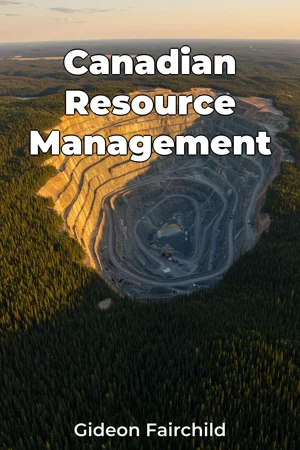
Can Canada effectively balance resource extraction with long-term environmental and economic stability, especially considering its close integration with the U.S. market? Canadian Resource Management' delves into this crucial question, exploring the intricate interplay between sustainable development approaches, the dynamics of North American market integration, and the policies aimed at fostering economic resilience in a resource-dependent nation. These topics are vital as Canada navigates the challenges of resource management in an era of increasing global environmental awareness and fluctuating commodity prices. Understanding the historical context of resource exploitation in Canada is paramount. From the fur trade to the oil sands, Canada's economic development has been intrinsically linked to its natural resources. This legacy shapes current policy debates and influences the socio-economic landscape of resource-rich regions. Readers should have a basic understanding of Canadian political and economic systems to fully grasp the book's arguments. The central argument of this book is that a truly sustainable resource management strategy for Canada requires a multi-faceted approach that integrates environmental protection, economic diversification, and collaborative governance. It emphasizes that short-term economic gains from resource extraction should not come at the expense of long-term environmental degradation or social inequity. The book is structured into three main parts. First, it introduces the concept of sustainable development within the Canadian context, examining various theoretical frameworks and practical challenges. This section explores the triple bottom line (economic, social, and environmental) and its application to resource management. Second, it analyzes the impact of U.S. market integration on Canadian resource policies and practices. This involves a detailed examination of trade agreements, foreign investment, and the competitive pressures faced by Canadian resource industries. Specific case studies, such as the softwood lumber dispute and the Keystone XL pipeline debate, are used to illustrate the complexities of this relationship. Third, the book assesses the effectiveness of existing economic stability policies aimed at mitigating the boom-and-bust cycles associated with resource dependence. This section delves into fiscal policies, diversification strategies, and the role of innovation in promoting long-term economic resilience. The culmination of these arguments proposes a new framework for Canadian resource management that prioritizes sustainability, inclusivity, and adaptability. Practical implications of this framework are then explored, including policy recommendations for governments, business strategies for resource companies, and engagement strategies for local communities. The analysis is supported by a range of evidence, including statistical data on resource production, trade flows, and environmental indicators. Policy documents, legal frameworks, and case studies of specific resource projects are examined. Interviews with policymakers, industry representatives, and community stakeholders provide qualitative insights into the challenges and opportunities of resource management. This book connects to several other disciplines, including environmental science, political science, and sociology. The environmental science perspective provides insights into the ecological impacts of resource extraction. Political science offers a framework for understanding the policy-making process and the role of different actors in shaping resource management decisions. Sociology examines the social and cultural dimensions of resource dependence and the impacts on local communities. A unique feature of this book is its integrated approach, which combines economic analysis with environmental and social considerations. It moves beyond a purely economic focus to consider the broader implications of resource management decisions. It offers a nuanced perspective on the complexities of balancing competing interests and achieving sustainable development in a resource-rich nation. The tone is academic yet accessible, aiming to inform and engage a broad audience. It is written in a clear and concise style, avoiding jargon where possible. It is structured to be informative for students, researchers, policymakers, and anyone interested in Canadian resource management. This book would be valuable to students in environmental studies, economics, and political science, as well as policymakers working in resource management and industry professionals seeking a broader understanding of the challenges and opportunities facing the Canadian resource sector. As a non-fiction work in the genres of Environment and Economics, this book adheres to the standards of academic and professional rigor, with clear sourcing, logical argumentation, and evidence-based conclusions. The scope of this book is limited to the Canadian context, although it draws on international examples and experiences where relevant. It does not provide a comprehensive overview of all resource sectors in Canada but focuses on key industries such as forestry, mining, and energy. This book offers practical insights for policymakers seeking to design more effective resource management policies, businesses aiming to adopt more sustainable practices, and communities seeking to promote economic diversification. It highlights the need for collaborative governance, stakeholder engagement, and long-term planning to ensure that Canada's natural resources benefit current and future generations. The book addresses ongoing debates surrounding the environmental impacts of resource extraction, the fairness of resource revenues, and the role of Indigenous communities in resource management decisions. It provides a balanced and nuanced perspective on these controversial issues, acknowledging the complexities and trade-offs involved.
Can Canada effectively balance resource extraction with long-term environmental and economic stability, especially considering its close integration with the U.S. market? Canadian Resource Management' delves into this crucial question, exploring the intricate interplay between sustainable development approaches, the dynamics of North American market integration, and the policies aimed at fostering economic resilience in a resource-dependent nation. These topics are vital as Canada navigates the challenges of resource management in an era of increasing global environmental awareness and fluctuating commodity prices. Understanding the historical context of resource exploitation in Canada is paramount. From the fur trade to the oil sands, Canada's economic development has been intrinsically linked to its natural resources. This legacy shapes current policy debates and influences the socio-economic landscape of resource-rich regions. Readers should have a basic understanding of Canadian political and economic systems to fully grasp the book's arguments. The central argument of this book is that a truly sustainable resource management strategy for Canada requires a multi-faceted approach that integrates environmental protection, economic diversification, and collaborative governance. It emphasizes that short-term economic gains from resource extraction should not come at the expense of long-term environmental degradation or social inequity. The book is structured into three main parts. First, it introduces the concept of sustainable development within the Canadian context, examining various theoretical frameworks and practical challenges. This section explores the triple bottom line (economic, social, and environmental) and its application to resource management. Second, it analyzes the impact of U.S. market integration on Canadian resource policies and practices. This involves a detailed examination of trade agreements, foreign investment, and the competitive pressures faced by Canadian resource industries. Specific case studies, such as the softwood lumber dispute and the Keystone XL pipeline debate, are used to illustrate the complexities of this relationship. Third, the book assesses the effectiveness of existing economic stability policies aimed at mitigating the boom-and-bust cycles associated with resource dependence. This section delves into fiscal policies, diversification strategies, and the role of innovation in promoting long-term economic resilience. The culmination of these arguments proposes a new framework for Canadian resource management that prioritizes sustainability, inclusivity, and adaptability. Practical implications of this framework are then explored, including policy recommendations for governments, business strategies for resource companies, and engagement strategies for local communities. The analysis is supported by a range of evidence, including statistical data on resource production, trade flows, and environmental indicators. Policy documents, legal frameworks, and case studies of specific resource projects are examined. Interviews with policymakers, industry representatives, and community stakeholders provide qualitative insights into the challenges and opportunities of resource management. This book connects to several other disciplines, including environmental science, political science, and sociology. The environmental science perspective provides insights into the ecological impacts of resource extraction. Political science offers a framework for understanding the policy-making process and the role of different actors in shaping resource management decisions. Sociology examines the social and cultural dimensions of resource dependence and the impacts on local communities. A unique feature of this book is its integrated approach, which combines economic analysis with environmental and social considerations. It moves beyond a purely economic focus to consider the broader implications of resource management decisions. It offers a nuanced perspective on the complexities of balancing competing interests and achieving sustainable development in a resource-rich nation. The tone is academic yet accessible, aiming to inform and engage a broad audience. It is written in a clear and concise style, avoiding jargon where possible. It is structured to be informative for students, researchers, policymakers, and anyone interested in Canadian resource management. This book would be valuable to students in environmental studies, economics, and political science, as well as policymakers working in resource management and industry professionals seeking a broader understanding of the challenges and opportunities facing the Canadian resource sector. As a non-fiction work in the genres of Environment and Economics, this book adheres to the standards of academic and professional rigor, with clear sourcing, logical argumentation, and evidence-based conclusions. The scope of this book is limited to the Canadian context, although it draws on international examples and experiences where relevant. It does not provide a comprehensive overview of all resource sectors in Canada but focuses on key industries such as forestry, mining, and energy. This book offers practical insights for policymakers seeking to design more effective resource management policies, businesses aiming to adopt more sustainable practices, and communities seeking to promote economic diversification. It highlights the need for collaborative governance, stakeholder engagement, and long-term planning to ensure that Canada's natural resources benefit current and future generations. The book addresses ongoing debates surrounding the environmental impacts of resource extraction, the fairness of resource revenues, and the role of Indigenous communities in resource management decisions. It provides a balanced and nuanced perspective on these controversial issues, acknowledging the complexities and trade-offs involved.
"Canadian Resource Management" tackles the critical question of how Canada can balance resource extraction with long-term environmental and economic stability, especially given its close ties to the U.S. market. The book emphasizes sustainable development, analyzing how North American market integration and specific policies impact Canada's economic resilience. It highlights the historical significance of resource exploitation, from the fur trade to the oil sands, which has shaped Canada's economic development and continues to influence policy debates. The book argues for a multi-faceted approach to resource management, integrating environmental protection, economic diversification, and collaborative governance. It delves into how U.S. market integration affects Canadian resource policies, using case studies like the Keystone XL pipeline debate to illustrate complexities. Furthermore, it assesses the effectiveness of economic stability policies in mitigating boom-and-bust cycles, proposing a framework that prioritizes sustainability and inclusivity. Divided into three parts, the book first introduces sustainable development in Canada, then analyzes the impact of U.S. market integration, and finally assesses existing economic stability policies. It uses statistical data, policy documents, and interviews to support its analysis, offering insights for policymakers, businesses, and communities to promote collaborative governance and long-term planning.
Book Details
ISBN
9788235208781
Publisher
Publifye AS
Your Licenses
You don't own any licenses for this book
Purchase a license below to unlock this book and download the EPUB.
Purchase License
Select a tier to unlock this book
Need bulk licensing?
Contact us for enterprise agreements.