
About This Book
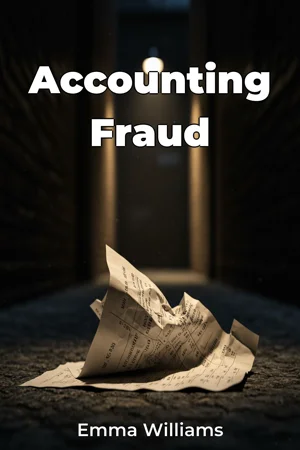
Could you identify a multi-million dollar fraud if it was hidden within a company's financial statements? "Accounting Fraud" delves into the intricate world of financial deception, forensic detection methods, and the crucial role accounting professionals play in preventing such schemes. This book is essential reading for anyone seeking to understand the pervasive threat of accounting fraud and the techniques used to uncover it. The book tackles three key areas: the various methods used to perpetrate accounting fraud, the forensic accounting techniques used to detect these schemes, and the preventative measures that accounting professionals can implement. Understanding these topics is crucial because accounting fraud erodes investor confidence, distorts market efficiency, and can lead to catastrophic financial losses for individuals and organizations. This book provides a comprehensive overview of accounting fraud, beginning with a historical context of major accounting scandals that have shaped regulatory responses such as Enron and WorldCom. This historical perspective demonstrates the evolving nature of fraud and the continuous need for vigilance. No specialized prior knowledge is needed, as the foundational principles of accounting are explained. The central argument is that a proactive and informed approach to fraud prevention, paired with robust detection mechanisms, is essential for maintaining financial integrity. This argument underscores the importance of ethical conduct and professional skepticism in the accounting profession. The content is structured to guide the reader through the complexities of accounting fraud. a) It begins by introducing common accounting fraud schemes, such as revenue recognition fraud, expense manipulation, and asset misappropriation. It explores the motivations behind these schemes. b) The book explains how forensic accountants investigate financial irregularities, including data analytics techniques, document examination, and interview strategies. It delves into case studies that illustrate how these techniques are applied in real-world investigations. Examples include Ponzi Schemes and shell corporations. c) It culminates in a discussion of fraud prevention strategies, including internal controls, ethical leadership, and whistleblower programs. It highlights the importance of a strong corporate governance framework. d) The book emphasizes the practical applications of forensic accounting techniques and strategies for professionals and offers insights into how investors, auditors, and regulators can better protect themselves. This book relies on a range of evidence, including case studies of actual fraud schemes, analysis of financial statements, and insights from industry experts. It also draws on academic research in accounting, finance, and criminology to provide a comprehensive and evidence-based analysis. "Accounting Fraud" connects to the fields of law, criminology, and ethics. Understanding the legal ramifications of accounting fraud is essential for both perpetrators and those seeking to uncover it. Criminological theories provide insights into the motivations and behaviors of fraudsters. Ethical considerations are paramount in guiding the conduct of accounting professionals and preventing fraud. This book distinguishes itself by offering a balanced perspective, examining both the methods of fraud and the strategies for detecting and preventing it. It offers practical tools and techniques that readers can apply in their own organizations or professional practices. The tone is professional, objective, and accessible, making complex financial concepts understandable to a broad audience. The writing style balances theoretical discussion with real-world examples. The target audience includes accounting professionals, auditors, internal controls specialists, fraud examiners, investors, and students of accounting and finance. It is also relevant to regulators and law enforcement officials involved in investigating financial crimes. This book would be valuable because it provides a comprehensive and practical guide to understanding, detecting, and preventing accounting fraud. As a true crime exploration in finance, this book presents compelling narratives of deception and betrayal, while maintaining a strong analytical focus. The scope of the book is limited to accounting fraud schemes and related forensic accounting techniques. It does not cover other types of fraud, such as cyber fraud or insurance fraud, in detail. The information in this book can be applied practically by readers to strengthen internal controls, to conduct forensic accounting investigations, and to make informed investment decisions. The book addresses ongoing debates in the field, such as the effectiveness of different fraud detection techniques and the role of regulation in preventing financial crime.
Could you identify a multi-million dollar fraud if it was hidden within a company's financial statements? "Accounting Fraud" delves into the intricate world of financial deception, forensic detection methods, and the crucial role accounting professionals play in preventing such schemes. This book is essential reading for anyone seeking to understand the pervasive threat of accounting fraud and the techniques used to uncover it. The book tackles three key areas: the various methods used to perpetrate accounting fraud, the forensic accounting techniques used to detect these schemes, and the preventative measures that accounting professionals can implement. Understanding these topics is crucial because accounting fraud erodes investor confidence, distorts market efficiency, and can lead to catastrophic financial losses for individuals and organizations. This book provides a comprehensive overview of accounting fraud, beginning with a historical context of major accounting scandals that have shaped regulatory responses such as Enron and WorldCom. This historical perspective demonstrates the evolving nature of fraud and the continuous need for vigilance. No specialized prior knowledge is needed, as the foundational principles of accounting are explained. The central argument is that a proactive and informed approach to fraud prevention, paired with robust detection mechanisms, is essential for maintaining financial integrity. This argument underscores the importance of ethical conduct and professional skepticism in the accounting profession. The content is structured to guide the reader through the complexities of accounting fraud. a) It begins by introducing common accounting fraud schemes, such as revenue recognition fraud, expense manipulation, and asset misappropriation. It explores the motivations behind these schemes. b) The book explains how forensic accountants investigate financial irregularities, including data analytics techniques, document examination, and interview strategies. It delves into case studies that illustrate how these techniques are applied in real-world investigations. Examples include Ponzi Schemes and shell corporations. c) It culminates in a discussion of fraud prevention strategies, including internal controls, ethical leadership, and whistleblower programs. It highlights the importance of a strong corporate governance framework. d) The book emphasizes the practical applications of forensic accounting techniques and strategies for professionals and offers insights into how investors, auditors, and regulators can better protect themselves. This book relies on a range of evidence, including case studies of actual fraud schemes, analysis of financial statements, and insights from industry experts. It also draws on academic research in accounting, finance, and criminology to provide a comprehensive and evidence-based analysis. "Accounting Fraud" connects to the fields of law, criminology, and ethics. Understanding the legal ramifications of accounting fraud is essential for both perpetrators and those seeking to uncover it. Criminological theories provide insights into the motivations and behaviors of fraudsters. Ethical considerations are paramount in guiding the conduct of accounting professionals and preventing fraud. This book distinguishes itself by offering a balanced perspective, examining both the methods of fraud and the strategies for detecting and preventing it. It offers practical tools and techniques that readers can apply in their own organizations or professional practices. The tone is professional, objective, and accessible, making complex financial concepts understandable to a broad audience. The writing style balances theoretical discussion with real-world examples. The target audience includes accounting professionals, auditors, internal controls specialists, fraud examiners, investors, and students of accounting and finance. It is also relevant to regulators and law enforcement officials involved in investigating financial crimes. This book would be valuable because it provides a comprehensive and practical guide to understanding, detecting, and preventing accounting fraud. As a true crime exploration in finance, this book presents compelling narratives of deception and betrayal, while maintaining a strong analytical focus. The scope of the book is limited to accounting fraud schemes and related forensic accounting techniques. It does not cover other types of fraud, such as cyber fraud or insurance fraud, in detail. The information in this book can be applied practically by readers to strengthen internal controls, to conduct forensic accounting investigations, and to make informed investment decisions. The book addresses ongoing debates in the field, such as the effectiveness of different fraud detection techniques and the role of regulation in preventing financial crime.
"Accounting Fraud" explores the world of financial deception, offering insights into fraud schemes and forensic accounting techniques. This book is essential for understanding how companies manipulate financial statements, examining methods like revenue recognition fraud and expense manipulation. A key takeaway is the critical role of accounting professionals in fraud prevention, emphasizing that ethical conduct and professional skepticism are vital in maintaining financial integrity. The book uniquely balances the methods of fraud with strategies for detection and prevention, using case studies and financial statement analysis to illustrate real-world examples. It begins by detailing common fraud schemes, progresses to forensic accounting investigation techniques such as data analytics and document examination, and culminates in a discussion of fraud prevention strategies like internal controls and whistleblower programs. Readers will gain practical knowledge applicable to strengthening internal controls and conducting forensic accounting investigations.
Book Details
ISBN
9788235208729
Publisher
Publifye AS
Your Licenses
You don't own any licenses for this book
Purchase a license below to unlock this book and download the EPUB.
Purchase License
Select a tier to unlock this book
Need bulk licensing?
Contact us for enterprise agreements.