
About This Book
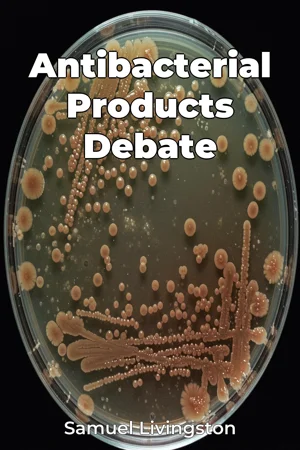
Are antibacterial household products truly our allies in the fight against germs, or do they pose a hidden threat to our health and the environment? This book, "Antibacterial Products Debate," delves into the complex and often misunderstood world of antibacterial agents found in everyday items, offering a balanced perspective on their benefits and potential drawbacks. This exploration is crucial because of the widespread use of these products. From hand soaps to kitchen cleaners and even textiles, antibacterials have become ubiquitous, raising vital questions about their long-term impact on human health and the delicate balance of our microbial ecosystems. This book addresses these questions, cutting through marketing hype and exploring the underlying science. Understanding the implications of antibacterial product use requires a foundation in microbiology, biology, and public health. We will explore the mechanisms by which antibacterial agents kill or inhibit the growth of bacteria and examine the ways bacteria can develop resistance to these agents. The historical context of antibacterial use, including the rise of antibiotic resistance in clinical settings, provides a crucial backdrop. The central argument of "Antibacterial Products Debate" is that while antibacterial products offer potential benefits in specific situations, their widespread and often indiscriminate use poses significant risks, including contributing to antibiotic resistance, disrupting beneficial microbial communities, and potentially harming human health. We will argue that a more informed and targeted approach to hygiene is necessary to protect both individual and public well-being. The book is structured to provide a comprehensive overview of the topic. Initially, we will define key terms and concepts, such as “antibacterial,” “antibiotic resistance,” and “microbiome.” Then, we examine the development of antibacterial products and their integration into various consumer goods. The core of the book is dedicated to assessing the evidence for and against the use of these products. We discuss the efficacy of antibacterial products in preventing illness, the potential for these products to contribute to antibiotic resistance, and their impact on the human microbiome, exploring how these shifts affect our health. Finally, we translate this understanding into practical recommendations, addressing the need for a balanced approach to hygiene and offering insights into the development of more sustainable and effective strategies for infection control. The research presented is based on a thorough review of scientific literature, including peer-reviewed studies, meta-analyses, and reports from public health organizations. We will examine data from laboratory experiments, clinical trials, and epidemiological studies to provide a comprehensive and evidence-based assessment of the risks and benefits of antibacterial products. The book draws connections between microbiology, public health, and environmental science. The rise of antibiotic resistance, driven in part by the overuse of antibacterial agents, has profound implications for public health. Furthermore, the environmental impact of these chemicals, including their potential to disrupt aquatic ecosystems and contribute to the development of antibiotic resistance in the environment, necessitates an interdisciplinary approach. A unique aspect of this book is its emphasis on translating complex scientific concepts into accessible language for a general audience. We avoid technical jargon and provide clear explanations of the underlying science, empowering readers to make informed decisions about their hygiene practices. The tone is informative and balanced, presenting the arguments for and against antibacterial product use fairly and objectively. The writing style is engaging and accessible, designed to capture the reader's attention and promote a deeper understanding of the topic. The target audience includes concerned consumers, educators, healthcare professionals, and policymakers interested in understanding the science behind antibacterial products and their impact on human health and the environment. This book is valuable to those seeking to make informed decisions about their personal hygiene practices and to contribute to a more sustainable and responsible approach to infection control. As a work of science writing, the book adheres to the standards of accuracy, objectivity, and evidence-based reasoning. We will clearly cite our sources and present the evidence in a transparent and unbiased manner. The scope of the book is limited to antibacterial agents found in household products and their impact on human health and the environment. We do not delve into the use of antibiotics in clinical settings or the development of new antibacterial drugs. Readers will gain practical knowledge about how to reduce their reliance on antibacterial products without compromising their health. This includes simple strategies for handwashing, cleaning, and food preparation that are effective in preventing the spread of infection. The book addresses ongoing debates about the safety and efficacy of antibacterial products. We will explore the conflicting opinions of scientists, industry representatives, and public health advocates, providing a nuanced understanding of the issues at stake.
Are antibacterial household products truly our allies in the fight against germs, or do they pose a hidden threat to our health and the environment? This book, "Antibacterial Products Debate," delves into the complex and often misunderstood world of antibacterial agents found in everyday items, offering a balanced perspective on their benefits and potential drawbacks. This exploration is crucial because of the widespread use of these products. From hand soaps to kitchen cleaners and even textiles, antibacterials have become ubiquitous, raising vital questions about their long-term impact on human health and the delicate balance of our microbial ecosystems. This book addresses these questions, cutting through marketing hype and exploring the underlying science. Understanding the implications of antibacterial product use requires a foundation in microbiology, biology, and public health. We will explore the mechanisms by which antibacterial agents kill or inhibit the growth of bacteria and examine the ways bacteria can develop resistance to these agents. The historical context of antibacterial use, including the rise of antibiotic resistance in clinical settings, provides a crucial backdrop. The central argument of "Antibacterial Products Debate" is that while antibacterial products offer potential benefits in specific situations, their widespread and often indiscriminate use poses significant risks, including contributing to antibiotic resistance, disrupting beneficial microbial communities, and potentially harming human health. We will argue that a more informed and targeted approach to hygiene is necessary to protect both individual and public well-being. The book is structured to provide a comprehensive overview of the topic. Initially, we will define key terms and concepts, such as “antibacterial,” “antibiotic resistance,” and “microbiome.” Then, we examine the development of antibacterial products and their integration into various consumer goods. The core of the book is dedicated to assessing the evidence for and against the use of these products. We discuss the efficacy of antibacterial products in preventing illness, the potential for these products to contribute to antibiotic resistance, and their impact on the human microbiome, exploring how these shifts affect our health. Finally, we translate this understanding into practical recommendations, addressing the need for a balanced approach to hygiene and offering insights into the development of more sustainable and effective strategies for infection control. The research presented is based on a thorough review of scientific literature, including peer-reviewed studies, meta-analyses, and reports from public health organizations. We will examine data from laboratory experiments, clinical trials, and epidemiological studies to provide a comprehensive and evidence-based assessment of the risks and benefits of antibacterial products. The book draws connections between microbiology, public health, and environmental science. The rise of antibiotic resistance, driven in part by the overuse of antibacterial agents, has profound implications for public health. Furthermore, the environmental impact of these chemicals, including their potential to disrupt aquatic ecosystems and contribute to the development of antibiotic resistance in the environment, necessitates an interdisciplinary approach. A unique aspect of this book is its emphasis on translating complex scientific concepts into accessible language for a general audience. We avoid technical jargon and provide clear explanations of the underlying science, empowering readers to make informed decisions about their hygiene practices. The tone is informative and balanced, presenting the arguments for and against antibacterial product use fairly and objectively. The writing style is engaging and accessible, designed to capture the reader's attention and promote a deeper understanding of the topic. The target audience includes concerned consumers, educators, healthcare professionals, and policymakers interested in understanding the science behind antibacterial products and their impact on human health and the environment. This book is valuable to those seeking to make informed decisions about their personal hygiene practices and to contribute to a more sustainable and responsible approach to infection control. As a work of science writing, the book adheres to the standards of accuracy, objectivity, and evidence-based reasoning. We will clearly cite our sources and present the evidence in a transparent and unbiased manner. The scope of the book is limited to antibacterial agents found in household products and their impact on human health and the environment. We do not delve into the use of antibiotics in clinical settings or the development of new antibacterial drugs. Readers will gain practical knowledge about how to reduce their reliance on antibacterial products without compromising their health. This includes simple strategies for handwashing, cleaning, and food preparation that are effective in preventing the spread of infection. The book addresses ongoing debates about the safety and efficacy of antibacterial products. We will explore the conflicting opinions of scientists, industry representatives, and public health advocates, providing a nuanced understanding of the issues at stake.
"Antibacterial Products Debate" explores the pervasive use of antibacterial agents in everyday household products and their broad implications for public health and the environment. It examines whether these products are truly beneficial or if their widespread use poses unforeseen risks. For instance, the book investigates how the overuse of antibacterials can contribute to antibiotic resistance, a growing threat that renders life-saving medications ineffective. It also delves into the impact these products have on our microbiome, the complex community of microorganisms essential for human health, revealing how altering this balance may have unintended consequences. The book progresses by first defining key concepts like "antibacterial" and "antibiotic resistance," before tracing the integration of these products into consumer goods. It then assesses the evidence both supporting and questioning their use, discussing their efficacy in preventing illness and their potential to disrupt beneficial microbial communities. Through accessible language and a balanced approach, the book empowers readers to understand the science behind antibacterial products and make informed decisions about hygiene, offering practical recommendations for a more sustainable approach to infection control.
Book Details
ISBN
9788235208651
Publisher
Publifye AS
Your Licenses
You don't own any licenses for this book
Purchase a license below to unlock this book and download the EPUB.
Purchase License
Select a tier to unlock this book
Need bulk licensing?
Contact us for enterprise agreements.