
About This Book
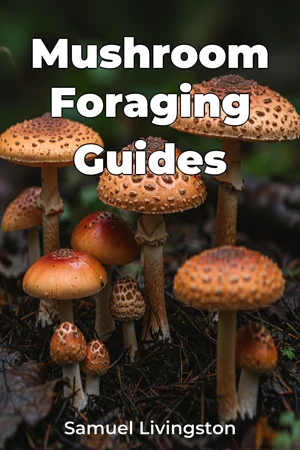
Can the secrets to safely foraging wild mushrooms be unlocked by blending traditional knowledge with modern science? This book, "Mushroom Foraging Guides," delves into the complex world of wild mushroom identification, bridging continents and knowledge systems to provide a comprehensive guide for both novice and experienced mycophiles. It will explore the critical interplay between traditional ecological knowledge (TEK), rigorously tested scientific methodologies, and the practical skills necessary to distinguish edible mushrooms from their poisonous counterparts. The book addresses three key topics: firstly, the global diversity of edible and poisonous mushrooms; secondly, the traditional methods employed by various cultures for identification, including sensory evaluation and habitat analysis; and thirdly, the application of modern scientific techniques, such as DNA barcoding and chemical analysis, to validate and refine traditional knowledge. These topics are crucial because accurate identification is paramount for safe consumption, and a deeper understanding of both traditional and scientific approaches enhances the forager's ability to make informed decisions. Historically, human societies have relied on intricate systems of knowledge passed down through generations to identify edible resources in their environments. This book will contextualize these traditional practices within their social and ecological settings, examining how cultural beliefs and environmental conditions shape foraging practices. It will also provide the relevant scientific background, including basic mycology, mushroom anatomy, and the chemical properties of toxins found in poisonous species. The central argument of "Mushroom Foraging Guides" is that a synergistic relationship exists between TEK and modern science, and incorporating both is superior to relying solely on either approach for safe and sustainable mushroom foraging. It will demonstrate that TEK provides valuable insights into mushroom ecology and seasonal patterns, while scientific methods offer objective verification and identification of previously unknown or misidentified species. This argument is vital because it promotes a more holistic and responsible approach to foraging, minimizing the risk of poisoning and promoting the long-term health of mushroom populations. The book's structure begins with an introduction to the importance of mushroom foraging and the inherent risks involved. It then systematically explores the main concepts, dedicating chapters to the traditional knowledge systems of various regions (e.g., Europe, Asia, and North America), detailing their identification techniques and cultural significance. Subsequent chapters will delve into the scientific aspects of mushroom identification, including microscopic analysis, spore printing, and molecular methods. The book culminates in a practical guide for field identification, integrating both traditional and scientific knowledge, along with ethical considerations for sustainable harvesting. To support its arguments, the book draws upon a wide range of evidence, including ethnographic studies of foraging practices, mycological research papers, and toxicological reports. It will also incorporate images and descriptions of key mushroom species, both edible and poisonous, to aid in visual identification. For unique data, it will consider recent citizen science initiatives which are generating vast datasets on mushroom distribution and phenology. "Mushroom Foraging Guides" connects to several other fields, including ethnobotany (the study of traditional plant knowledge), ecology (the study of organism-environment interactions), and toxicology (the study of poisons). These connections enhance the book's argument by providing a broader understanding of the cultural, environmental, and health implications of mushroom foraging. A unique aspect of this book is its emphasis on integrating TEK with scientific validation, rather than treating them as separate and potentially conflicting sources of information. This approach acknowledges the value of traditional knowledge while ensuring that foraging practices are grounded in scientific accuracy. The tone of the book is authoritative yet accessible, striving to present complex information in a clear and engaging manner. It is written for a broad audience, including amateur mycologists, nature enthusiasts, chefs, and anyone interested in learning more about the fascinating world of mushrooms. This book will be valuable to them by providing the knowledge and tools necessary to safely and responsibly forage wild mushrooms. As a non-fiction guide, it includes detailed descriptions, illustrations, and cautionary notes, reflecting the gravity of the subject matter. The scope of the book focuses on commonly encountered edible and poisonous mushrooms in various regions, with intentional limitations to ensure clarity and manageability. The information in this book can be applied practically by readers through guided foraging walks, personal experimentation with identification techniques, and a greater appreciation for the ecological and cultural significance of mushrooms. The book also addresses the ongoing debate surrounding the best methods for mushroom identification, acknowledging the limitations of relying solely on visual cues and advocating for a multi-faceted approach that incorporates both traditional and scientific knowledge.
Can the secrets to safely foraging wild mushrooms be unlocked by blending traditional knowledge with modern science? This book, "Mushroom Foraging Guides," delves into the complex world of wild mushroom identification, bridging continents and knowledge systems to provide a comprehensive guide for both novice and experienced mycophiles. It will explore the critical interplay between traditional ecological knowledge (TEK), rigorously tested scientific methodologies, and the practical skills necessary to distinguish edible mushrooms from their poisonous counterparts. The book addresses three key topics: firstly, the global diversity of edible and poisonous mushrooms; secondly, the traditional methods employed by various cultures for identification, including sensory evaluation and habitat analysis; and thirdly, the application of modern scientific techniques, such as DNA barcoding and chemical analysis, to validate and refine traditional knowledge. These topics are crucial because accurate identification is paramount for safe consumption, and a deeper understanding of both traditional and scientific approaches enhances the forager's ability to make informed decisions. Historically, human societies have relied on intricate systems of knowledge passed down through generations to identify edible resources in their environments. This book will contextualize these traditional practices within their social and ecological settings, examining how cultural beliefs and environmental conditions shape foraging practices. It will also provide the relevant scientific background, including basic mycology, mushroom anatomy, and the chemical properties of toxins found in poisonous species. The central argument of "Mushroom Foraging Guides" is that a synergistic relationship exists between TEK and modern science, and incorporating both is superior to relying solely on either approach for safe and sustainable mushroom foraging. It will demonstrate that TEK provides valuable insights into mushroom ecology and seasonal patterns, while scientific methods offer objective verification and identification of previously unknown or misidentified species. This argument is vital because it promotes a more holistic and responsible approach to foraging, minimizing the risk of poisoning and promoting the long-term health of mushroom populations. The book's structure begins with an introduction to the importance of mushroom foraging and the inherent risks involved. It then systematically explores the main concepts, dedicating chapters to the traditional knowledge systems of various regions (e.g., Europe, Asia, and North America), detailing their identification techniques and cultural significance. Subsequent chapters will delve into the scientific aspects of mushroom identification, including microscopic analysis, spore printing, and molecular methods. The book culminates in a practical guide for field identification, integrating both traditional and scientific knowledge, along with ethical considerations for sustainable harvesting. To support its arguments, the book draws upon a wide range of evidence, including ethnographic studies of foraging practices, mycological research papers, and toxicological reports. It will also incorporate images and descriptions of key mushroom species, both edible and poisonous, to aid in visual identification. For unique data, it will consider recent citizen science initiatives which are generating vast datasets on mushroom distribution and phenology. "Mushroom Foraging Guides" connects to several other fields, including ethnobotany (the study of traditional plant knowledge), ecology (the study of organism-environment interactions), and toxicology (the study of poisons). These connections enhance the book's argument by providing a broader understanding of the cultural, environmental, and health implications of mushroom foraging. A unique aspect of this book is its emphasis on integrating TEK with scientific validation, rather than treating them as separate and potentially conflicting sources of information. This approach acknowledges the value of traditional knowledge while ensuring that foraging practices are grounded in scientific accuracy. The tone of the book is authoritative yet accessible, striving to present complex information in a clear and engaging manner. It is written for a broad audience, including amateur mycologists, nature enthusiasts, chefs, and anyone interested in learning more about the fascinating world of mushrooms. This book will be valuable to them by providing the knowledge and tools necessary to safely and responsibly forage wild mushrooms. As a non-fiction guide, it includes detailed descriptions, illustrations, and cautionary notes, reflecting the gravity of the subject matter. The scope of the book focuses on commonly encountered edible and poisonous mushrooms in various regions, with intentional limitations to ensure clarity and manageability. The information in this book can be applied practically by readers through guided foraging walks, personal experimentation with identification techniques, and a greater appreciation for the ecological and cultural significance of mushrooms. The book also addresses the ongoing debate surrounding the best methods for mushroom identification, acknowledging the limitations of relying solely on visual cues and advocating for a multi-faceted approach that incorporates both traditional and scientific knowledge.
"Mushroom Foraging Guides" explores the fascinating intersection of traditional ecological knowledge (TEK) and modern science in the safe and sustainable foraging of wild mushrooms. It emphasizes the critical need for accurate mushroom identification, as some species are delicious edibles while others are dangerously poisonous. Did you know that cultures worldwide have developed intricate systems, passed down through generations, to identify edible resources based on sensory evaluation and habitat analysis? The book uniquely integrates this TEK with scientific methodologies like DNA barcoding and chemical analysis, providing a holistic approach to foraging. The book argues that combining TEK with scientific validation offers a superior method for identifying mushrooms than relying on either approach alone. It begins by highlighting the importance and risks of mushroom foraging, then systematically examines traditional knowledge systems across different regions, detailing their identification techniques and cultural significance. Subsequent chapters delve into the scientific aspects of mushroom identification, from microscopic analysis to molecular methods. Ultimately, it presents a practical field guide, integrating both traditional wisdom and scientific rigor, along with ethical considerations for responsible harvesting.
Book Details
ISBN
9788235208415
Publisher
Publifye AS
Your Licenses
You don't own any licenses for this book
Purchase a license below to unlock this book and download the EPUB.
Purchase License
Select a tier to unlock this book
Need bulk licensing?
Contact us for enterprise agreements.