
About This Book
Have you ever wondered about the secrets held within the walls of traditional kitchens, where flavors were coaxed from simple ingredients using tools crafted from the earth itself? 'Clay Pot Crafting' delves into the fascinating world of handmade pottery techniques employed for cooking in traditional households, exploring the methods, materials, and cultural significance of these age-old practices. This book focuses on two key areas: the practical skills of crafting clay pots suitable for cooking and the understanding of their role in shaping culinary traditions. We explore the science behind why certain clays are suitable for cooking, their thermal properties, and how these properties affect the taste and texture of food. Understanding these topics is important because it connects us to a rich history of resourcefulness and allows for a deeper appreciation of the interplay between craft, cuisine, and culture. The book provides historical context, examining the origins of clay pot cooking techniques across different cultures and time periods. We trace the evolution of these methods, considering the social and economic factors that contributed to their development and persistence. No prior knowledge of pottery or culinary arts is required; the book is designed to be accessible to beginners while still offering fresh insights for experienced crafters and cooks. The central argument of 'Clay Pot Crafting' is that handmade clay pots are more than just cooking vessels; they are cultural artifacts that embody generations of accumulated knowledge about local materials, sustainable practices, and the art of flavoring food. This argument is crucial because it challenges the modern tendency to view cooking solely through a lens of convenience and efficiency, urging us to reconsider the value of slow, deliberate, and environmentally conscious approaches. The book is structured in three parts. First, we introduce the fundamental concepts of clay types, sourcing, and preparation which gives an overview of the tools and techniques necessary for crafting durable cooking pots. This includes detailed instructions on hand-building methods like coiling, pinching, and slab construction, as well as guidance on firing techniques suitable for home crafters. Second, the core, which will cover specific regional variations in clay pot design and usage, from the tagine pots of North Africa to Latin American ollas. Each chapter in this section will explore the unique characteristics of these pots, the foods traditionally cooked in them, and the cultural narratives associated with them. Third, we culminate with practical applications, providing recipes adapted for clay pot cooking and guidance on how to integrate these techniques into modern kitchens. We conclude by discussing the environmental benefits of using locally sourced clay and promoting sustainable crafting practices. The evidence presented in the book is based on a combination of archaeological research, ethnographic studies, and hands-on experimentation. We draw on historical texts, interviews with traditional potters, and our own experiences in crafting and cooking with clay pots. Unique data sources include detailed analyses of clay samples from different regions and comparative studies of cooking techniques across cultures. 'Clay Pot Crafting' intersects with several other fields, including anthropology, archaeology, and environmental studies. By considering the cultural significance of clay pot cooking, we gain insights into the social structures and belief systems of different societies. By examining the archaeological record, we can trace the history of human innovation and adaptation. And by promoting sustainable crafting practices, we contribute to a more environmentally responsible approach to cooking and consumption. This book offers a unique perspective by combining practical crafting instructions with in-depth cultural and historical analysis. It bridges the gap between academic research and hands-on experience, offering readers a holistic understanding of clay pot cooking. The tone is informative and engaging, combining clear explanations with captivating stories and vivid imagery. The target audience includes cooking enthusiasts, craft hobbyists, history buffs, and anyone interested in sustainable living. This book would be valuable because it provides a practical guide to a traditional craft, a cultural exploration of diverse culinary practices, and a philosophical reflection on the relationship between humans, food, and the environment. As a "Cooking, Crafts & Hobbies" book, it is expected to have clear, step-by-step instructions, beautiful photographs, and a focus on practical applications. The scope of the book is intentionally limited to handmade clay pots used for direct cooking over a heat source, excluding mass-produced ceramic ware and decorative pottery. The information in 'Clay Pot Crafting' can be applied practically by readers to revive traditional cooking methods, create unique and flavorful dishes, and connect with a rich cultural heritage. While clay pot cooking is generally considered a safe practice, the book addresses potential controversies surrounding lead content in certain clays and emphasizes the importance of using properly sourced and prepared materials.
Have you ever wondered about the secrets held within the walls of traditional kitchens, where flavors were coaxed from simple ingredients using tools crafted from the earth itself? 'Clay Pot Crafting' delves into the fascinating world of handmade pottery techniques employed for cooking in traditional households, exploring the methods, materials, and cultural significance of these age-old practices. This book focuses on two key areas: the practical skills of crafting clay pots suitable for cooking and the understanding of their role in shaping culinary traditions. We explore the science behind why certain clays are suitable for cooking, their thermal properties, and how these properties affect the taste and texture of food. Understanding these topics is important because it connects us to a rich history of resourcefulness and allows for a deeper appreciation of the interplay between craft, cuisine, and culture. The book provides historical context, examining the origins of clay pot cooking techniques across different cultures and time periods. We trace the evolution of these methods, considering the social and economic factors that contributed to their development and persistence. No prior knowledge of pottery or culinary arts is required; the book is designed to be accessible to beginners while still offering fresh insights for experienced crafters and cooks. The central argument of 'Clay Pot Crafting' is that handmade clay pots are more than just cooking vessels; they are cultural artifacts that embody generations of accumulated knowledge about local materials, sustainable practices, and the art of flavoring food. This argument is crucial because it challenges the modern tendency to view cooking solely through a lens of convenience and efficiency, urging us to reconsider the value of slow, deliberate, and environmentally conscious approaches. The book is structured in three parts. First, we introduce the fundamental concepts of clay types, sourcing, and preparation which gives an overview of the tools and techniques necessary for crafting durable cooking pots. This includes detailed instructions on hand-building methods like coiling, pinching, and slab construction, as well as guidance on firing techniques suitable for home crafters. Second, the core, which will cover specific regional variations in clay pot design and usage, from the tagine pots of North Africa to Latin American ollas. Each chapter in this section will explore the unique characteristics of these pots, the foods traditionally cooked in them, and the cultural narratives associated with them. Third, we culminate with practical applications, providing recipes adapted for clay pot cooking and guidance on how to integrate these techniques into modern kitchens. We conclude by discussing the environmental benefits of using locally sourced clay and promoting sustainable crafting practices. The evidence presented in the book is based on a combination of archaeological research, ethnographic studies, and hands-on experimentation. We draw on historical texts, interviews with traditional potters, and our own experiences in crafting and cooking with clay pots. Unique data sources include detailed analyses of clay samples from different regions and comparative studies of cooking techniques across cultures. 'Clay Pot Crafting' intersects with several other fields, including anthropology, archaeology, and environmental studies. By considering the cultural significance of clay pot cooking, we gain insights into the social structures and belief systems of different societies. By examining the archaeological record, we can trace the history of human innovation and adaptation. And by promoting sustainable crafting practices, we contribute to a more environmentally responsible approach to cooking and consumption. This book offers a unique perspective by combining practical crafting instructions with in-depth cultural and historical analysis. It bridges the gap between academic research and hands-on experience, offering readers a holistic understanding of clay pot cooking. The tone is informative and engaging, combining clear explanations with captivating stories and vivid imagery. The target audience includes cooking enthusiasts, craft hobbyists, history buffs, and anyone interested in sustainable living. This book would be valuable because it provides a practical guide to a traditional craft, a cultural exploration of diverse culinary practices, and a philosophical reflection on the relationship between humans, food, and the environment. As a "Cooking, Crafts & Hobbies" book, it is expected to have clear, step-by-step instructions, beautiful photographs, and a focus on practical applications. The scope of the book is intentionally limited to handmade clay pots used for direct cooking over a heat source, excluding mass-produced ceramic ware and decorative pottery. The information in 'Clay Pot Crafting' can be applied practically by readers to revive traditional cooking methods, create unique and flavorful dishes, and connect with a rich cultural heritage. While clay pot cooking is generally considered a safe practice, the book addresses potential controversies surrounding lead content in certain clays and emphasizes the importance of using properly sourced and prepared materials.
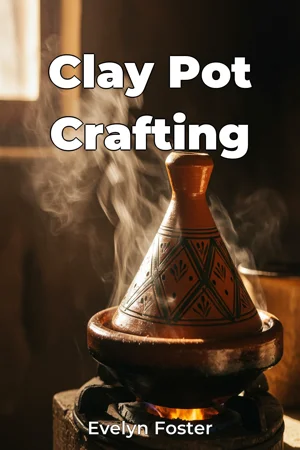
"Clay Pot Crafting" explores the age-old tradition of cooking with handmade pottery, revealing the secrets of crafting and cooking using natural materials. This book delves into why specific clays are ideal for cooking, examining their unique thermal properties and how they impact the flavors and textures of food. Discover the cultural significance behind these practices, tracing their origins across various time periods and regions, highlighting how clay pots are more than just cooking vessels—they're cultural artifacts embodying generations of knowledge about sustainability and culinary art. The book progresses systematically, starting with fundamental concepts like clay sourcing and preparation, guiding readers through hand-building techniques such as coiling and pinching. It then explores regional variations, from the tagine pots of North Africa to Latin American ollas, detailing traditional recipes adapted for clay pot cooking. By combining historical context with practical crafting instructions, "Clay Pot Crafting" offers a unique perspective, bridging the gap between academic research and hands-on experience, making it a valuable resource for cooking enthusiasts and craft hobbyists alike.
Book Details
ISBN
9788235208262
Publisher
Publifye AS
Your Licenses
You don't own any licenses for this book
Purchase a license below to unlock this book and download the EPUB.
Purchase License
Select a tier to unlock this book
Need bulk licensing?
Contact us for enterprise agreements.