
About This Book
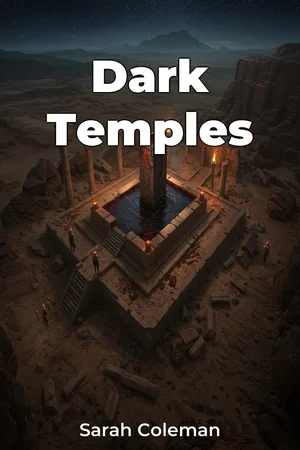
What secrets lie hidden within the stones of ancient temples? "Dark Temples" delves into the shadowy corners of history and religion, exploring sites forever linked to forbidden rituals, mysterious cults, and secret practices that have shaped the course of human belief and behavior. This book examines how certain temples, intended as places of worship and enlightenment, became associated with acts considered transgressive, dangerous, or simply beyond the pale of mainstream religious acceptance. Two central themes are explored. Firstly, the concept of ritual transgression: how and why certain temples became stages for practices that deliberately inverted or violated established religious norms. This includes exploring the motivations behind such acts, whether they stemmed from genuine spiritual seeking, social rebellion, or darker impulses of power and manipulation. The second pivotal topic is the evolution of cults and secret societies that appropriated or repurposed existing temple spaces for their own esoteric purposes. The book traces the historical trajectory of these groups, examining their beliefs, practices, and impact on the broader social and political landscape. Understanding these "dark temples" requires considering the historical contexts in which they emerged. This means delving into the social, political, and religious forces that shaped their construction, use, and eventual descent into infamy. Background knowledge of comparative religion, ancient history, and social anthropology will enhance the reader's understanding, though the book is written to be accessible to a general educated audience. The central argument of "Dark Temples" is that these sites, often dismissed as aberrations or marginal phenomena, provide crucial insights into the complex and often contradictory nature of human spirituality. By examining the rituals, beliefs, and social structures associated with these temples, we can gain a deeper appreciation for the diverse ways in which humans have sought meaning, power, and connection with the divine – or the demonic. The book begins by defining "dark temples" and establishing a framework for analyzing their historical and religious significance. It then proceeds through thematic chapters, each focusing on specific types of temples and the practices associated with them. One section explores temples linked to human sacrifice, examining archaeological evidence and historical accounts to understand the motivations and rituals involved. Another section investigates temples associated with esoteric cults, tracing their beliefs and practices through surviving texts and artifacts. A final section looks at temples linked to political intrigue, examining how religious spaces were used as centers of power, rebellion, and clandestine activity. The book culminates in a discussion of the enduring fascination with "dark temples" and their continued relevance in contemporary culture. The arguments presented are supported by a range of evidence, including archaeological findings, historical texts, religious scriptures, and anthropological studies. Unique data sources, such as previously untranslated temple inscriptions and recently discovered ritual artifacts, provide fresh perspectives on these enigmatic sites. "Dark Temples" connects to various disciplines, enriching its argument. Firstly, it intersects with archaeology, using material evidence to reconstruct the physical spaces and ritual practices of these temples. Secondly, it aligns with anthropology, examining the social and cultural contexts that gave rise to these practices. Finally, it connects to religious studies, exploring the theological and philosophical underpinnings of the beliefs and rituals associated with these temples. This book distinguishes itself by taking a non-sensationalist approach to a topic often shrouded in myth and speculation. It offers a balanced and objective examination of the evidence, avoiding sensational claims and focusing on historical and cultural analysis. Written in a clear and accessible style, "Dark Temples" is aimed at readers interested in history, religion, archaeology, and the darker aspects of human culture. It will appeal to those seeking a deeper understanding of the complex relationship between belief, power, and transgression. Acknowledging the vastness of religious history, the book focuses on specific examples of "dark temples" from various cultures and time periods, recognizing that a comprehensive survey of all such sites is beyond the scope of a single volume. While sensationalism is avoided the book directly addresses controversial historical elements. Ultimately, "Dark Temples" offers a compelling journey into the heart of human spirituality, exploring the hidden dimensions of religious experience and revealing the enduring power of these enigmatic and often misunderstood sites.
What secrets lie hidden within the stones of ancient temples? "Dark Temples" delves into the shadowy corners of history and religion, exploring sites forever linked to forbidden rituals, mysterious cults, and secret practices that have shaped the course of human belief and behavior. This book examines how certain temples, intended as places of worship and enlightenment, became associated with acts considered transgressive, dangerous, or simply beyond the pale of mainstream religious acceptance. Two central themes are explored. Firstly, the concept of ritual transgression: how and why certain temples became stages for practices that deliberately inverted or violated established religious norms. This includes exploring the motivations behind such acts, whether they stemmed from genuine spiritual seeking, social rebellion, or darker impulses of power and manipulation. The second pivotal topic is the evolution of cults and secret societies that appropriated or repurposed existing temple spaces for their own esoteric purposes. The book traces the historical trajectory of these groups, examining their beliefs, practices, and impact on the broader social and political landscape. Understanding these "dark temples" requires considering the historical contexts in which they emerged. This means delving into the social, political, and religious forces that shaped their construction, use, and eventual descent into infamy. Background knowledge of comparative religion, ancient history, and social anthropology will enhance the reader's understanding, though the book is written to be accessible to a general educated audience. The central argument of "Dark Temples" is that these sites, often dismissed as aberrations or marginal phenomena, provide crucial insights into the complex and often contradictory nature of human spirituality. By examining the rituals, beliefs, and social structures associated with these temples, we can gain a deeper appreciation for the diverse ways in which humans have sought meaning, power, and connection with the divine – or the demonic. The book begins by defining "dark temples" and establishing a framework for analyzing their historical and religious significance. It then proceeds through thematic chapters, each focusing on specific types of temples and the practices associated with them. One section explores temples linked to human sacrifice, examining archaeological evidence and historical accounts to understand the motivations and rituals involved. Another section investigates temples associated with esoteric cults, tracing their beliefs and practices through surviving texts and artifacts. A final section looks at temples linked to political intrigue, examining how religious spaces were used as centers of power, rebellion, and clandestine activity. The book culminates in a discussion of the enduring fascination with "dark temples" and their continued relevance in contemporary culture. The arguments presented are supported by a range of evidence, including archaeological findings, historical texts, religious scriptures, and anthropological studies. Unique data sources, such as previously untranslated temple inscriptions and recently discovered ritual artifacts, provide fresh perspectives on these enigmatic sites. "Dark Temples" connects to various disciplines, enriching its argument. Firstly, it intersects with archaeology, using material evidence to reconstruct the physical spaces and ritual practices of these temples. Secondly, it aligns with anthropology, examining the social and cultural contexts that gave rise to these practices. Finally, it connects to religious studies, exploring the theological and philosophical underpinnings of the beliefs and rituals associated with these temples. This book distinguishes itself by taking a non-sensationalist approach to a topic often shrouded in myth and speculation. It offers a balanced and objective examination of the evidence, avoiding sensational claims and focusing on historical and cultural analysis. Written in a clear and accessible style, "Dark Temples" is aimed at readers interested in history, religion, archaeology, and the darker aspects of human culture. It will appeal to those seeking a deeper understanding of the complex relationship between belief, power, and transgression. Acknowledging the vastness of religious history, the book focuses on specific examples of "dark temples" from various cultures and time periods, recognizing that a comprehensive survey of all such sites is beyond the scope of a single volume. While sensationalism is avoided the book directly addresses controversial historical elements. Ultimately, "Dark Temples" offers a compelling journey into the heart of human spirituality, exploring the hidden dimensions of religious experience and revealing the enduring power of these enigmatic and often misunderstood sites.
"Dark Temples" explores the intriguing and often unsettling history of religious sites associated with forbidden rituals and mysterious cults. Examining locations where practices deviated from established religious norms, the book sheds light on the motivations behind such transgressions, ranging from genuine spiritual seeking to social rebellion. Temples, intended for worship, sometimes became centers for secret societies, whose beliefs and actions significantly impacted the socio-political landscape. The book delves into the historical context of these "dark temples," analyzing the social, political, and religious forces that shaped their evolution and eventual infamy. For instance, temples linked to human sacrifice reveal the complex motivations and rituals involved. By presenting archaeological findings, historical texts, and anthropological studies, the book avoids sensationalism, offering a balanced perspective on these enigmatic sites. Beginning with a definition of "dark temples," the chapters progress thematically, exploring specific temple types and their associated practices, such as those linked to esoteric cults or political intrigue. This approach provides a deeper understanding of the diverse ways humans have sought meaning and power, revealing the enduring fascination with these misunderstood sites.
Book Details
ISBN
9788235208019
Publisher
Publifye AS
Your Licenses
You don't own any licenses for this book
Purchase a license below to unlock this book and download the EPUB.
Purchase License
Select a tier to unlock this book
Need bulk licensing?
Contact us for enterprise agreements.