
About This Book
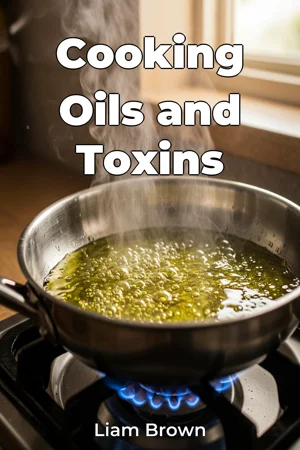
Are you unknowingly poisoning your food with the very oil you use to cook it? This book, "Cooking Oils and Toxins," delves into the often-overlooked dangers of oil oxidation during cooking and provides a comprehensive guide to selecting healthier alternatives. The core issues addressed are the chemical changes that occur in cooking oils when exposed to heat, the toxic compounds produced during this process, and the practical steps readers can take to minimize their exposure to these harmful substances. Understanding the science behind cooking oils and their behavior under heat is crucial because many common cooking practices inadvertently generate harmful byproducts. We will explore the historical context of cooking oil production and consumption, tracing the evolution from traditional fats to the refined, processed oils that dominate modern kitchens. No prior advanced scientific knowledge is required; we build from foundational concepts to more complex relationships. The central argument of this book is that informed choices about cooking oils and cooking methods can significantly impact one's health by reducing exposure to oxidation byproducts. This is important due to the established links between these byproducts and various health problems, including inflammation and increased risk of certain diseases. The book progresses systematically. It begins by introducing the basic chemistry of fats and oils, explaining the processes of oxidation, polymerization, and the formation of aldehydes and other volatile compounds. It then examines the stability of different cooking oils under various cooking conditions, such as frying, sautéing, and baking. Specific chapters are dedicated to detailed analyses of popular cooking oils, including olive oil, coconut oil, vegetable oils (soybean, corn, canola), and animal fats. The book culminates with practical recommendations for choosing the right oils, optimizing cooking techniques, and storing oils to minimize oxidation. The evidence presented will be grounded in scientific research, drawing from studies in chemistry, food science, and nutrition. We will analyze data from peer-reviewed publications and reports from regulatory agencies to support our claims. The book also incorporates relevant findings on the smoke points of various oils, but emphasizes that smoke point alone is not the only relevant factor for safety. This book connects to several interdisciplinary areas. Firstly, it relates directly to nutrition science by exploring how different fats impact human health. Secondly, it overlaps with toxicology by examining the harmful effects of specific oxidation byproducts. Thirdly, it touches upon chemical engineering by discussing the industrial processes used to refine and modify cooking oils. A unique aspect of “Cooking Oils and Toxins” is its balanced approach. Rather than demonizing certain oils or promoting others without sufficient evidence, it provides a nuanced, science-backed assessment of each oil's properties and potential risks. The book also moves beyond simply listing "good" and "bad" oils; it empowers readers to understand the underlying chemical reactions and make informed decisions based on their individual cooking needs and dietary preferences. The tone is informative and accessible, aiming to educate readers without overwhelming them with technical jargon. We adopt a conversational yet authoritative style, presenting complex information in a clear and engaging manner. The target audience includes health-conscious individuals, home cooks, culinary professionals, and anyone interested in understanding the impact of cooking practices on their health. The book is valuable to those seeking to reduce their exposure to potentially harmful compounds in their food. As a health and fitness book, this work provides practical guidelines and actionable advice that readers can implement immediately. We acknowledge that the field of lipid chemistry and nutrition is constantly evolving, and we address some of the ongoing debates surrounding fat consumption and the processing of oils. The scope covers a wide array of commonly used cooking oils and cooking methods, however, it does not delve into the specifics of industrial-scale food processing or the detailed regulatory frameworks governing oil production. The guidance offered has immediate real-world applications—from selecting the appropriate oil for high-heat cooking to adopting storage practices that extend an oil's shelf life and minimize oxidation. By understanding the principles outlined in the book, readers can create healthier and more flavorful meals.
Are you unknowingly poisoning your food with the very oil you use to cook it? This book, "Cooking Oils and Toxins," delves into the often-overlooked dangers of oil oxidation during cooking and provides a comprehensive guide to selecting healthier alternatives. The core issues addressed are the chemical changes that occur in cooking oils when exposed to heat, the toxic compounds produced during this process, and the practical steps readers can take to minimize their exposure to these harmful substances. Understanding the science behind cooking oils and their behavior under heat is crucial because many common cooking practices inadvertently generate harmful byproducts. We will explore the historical context of cooking oil production and consumption, tracing the evolution from traditional fats to the refined, processed oils that dominate modern kitchens. No prior advanced scientific knowledge is required; we build from foundational concepts to more complex relationships. The central argument of this book is that informed choices about cooking oils and cooking methods can significantly impact one's health by reducing exposure to oxidation byproducts. This is important due to the established links between these byproducts and various health problems, including inflammation and increased risk of certain diseases. The book progresses systematically. It begins by introducing the basic chemistry of fats and oils, explaining the processes of oxidation, polymerization, and the formation of aldehydes and other volatile compounds. It then examines the stability of different cooking oils under various cooking conditions, such as frying, sautéing, and baking. Specific chapters are dedicated to detailed analyses of popular cooking oils, including olive oil, coconut oil, vegetable oils (soybean, corn, canola), and animal fats. The book culminates with practical recommendations for choosing the right oils, optimizing cooking techniques, and storing oils to minimize oxidation. The evidence presented will be grounded in scientific research, drawing from studies in chemistry, food science, and nutrition. We will analyze data from peer-reviewed publications and reports from regulatory agencies to support our claims. The book also incorporates relevant findings on the smoke points of various oils, but emphasizes that smoke point alone is not the only relevant factor for safety. This book connects to several interdisciplinary areas. Firstly, it relates directly to nutrition science by exploring how different fats impact human health. Secondly, it overlaps with toxicology by examining the harmful effects of specific oxidation byproducts. Thirdly, it touches upon chemical engineering by discussing the industrial processes used to refine and modify cooking oils. A unique aspect of “Cooking Oils and Toxins” is its balanced approach. Rather than demonizing certain oils or promoting others without sufficient evidence, it provides a nuanced, science-backed assessment of each oil's properties and potential risks. The book also moves beyond simply listing "good" and "bad" oils; it empowers readers to understand the underlying chemical reactions and make informed decisions based on their individual cooking needs and dietary preferences. The tone is informative and accessible, aiming to educate readers without overwhelming them with technical jargon. We adopt a conversational yet authoritative style, presenting complex information in a clear and engaging manner. The target audience includes health-conscious individuals, home cooks, culinary professionals, and anyone interested in understanding the impact of cooking practices on their health. The book is valuable to those seeking to reduce their exposure to potentially harmful compounds in their food. As a health and fitness book, this work provides practical guidelines and actionable advice that readers can implement immediately. We acknowledge that the field of lipid chemistry and nutrition is constantly evolving, and we address some of the ongoing debates surrounding fat consumption and the processing of oils. The scope covers a wide array of commonly used cooking oils and cooking methods, however, it does not delve into the specifics of industrial-scale food processing or the detailed regulatory frameworks governing oil production. The guidance offered has immediate real-world applications—from selecting the appropriate oil for high-heat cooking to adopting storage practices that extend an oil's shelf life and minimize oxidation. By understanding the principles outlined in the book, readers can create healthier and more flavorful meals.
Are you unknowingly introducing toxins into your meals through your choice of cooking oil? "Cooking Oils and Toxins" explores the hidden dangers of oil oxidation, a process where cooking oils undergo chemical changes when heated, producing harmful byproducts. The book reveals how common cooking practices might inadvertently expose you to volatile compounds and oxidation byproducts linked to inflammation and other health issues. Understanding the science behind these changes empowers you to make informed decisions for healthier cooking. This book uniquely bridges food science and nutrition to offer a balanced assessment of various cooking oils, from olive and coconut oil to vegetable oils and animal fats. Rather than simply labeling oils as "good" or "bad," it highlights the importance of smoke point, oxidation stability, and other factors, enabling readers to choose the right oils and cooking methods. The book begins with the chemistry of fats and oils, progresses through analyses of specific oils, and culminates with practical recommendations for minimizing oxidation, providing actionable advice for healthier meals.
Book Details
ISBN
9788235207982
Publisher
Publifye AS
Your Licenses
You don't own any licenses for this book
Purchase a license below to unlock this book and download the EPUB.
Purchase License
Select a tier to unlock this book
Need bulk licensing?
Contact us for enterprise agreements.