
About This Book
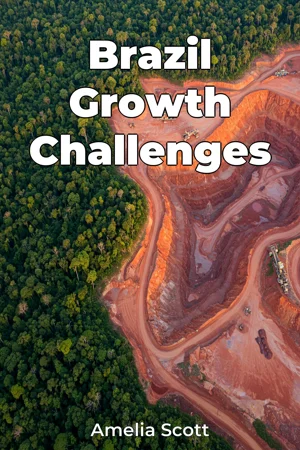
Why does Brazil, a nation blessed with abundant natural resources and a vibrant culture, repeatedly face economic setbacks and persistent inequality? "Brazil Growth Challenges" delves into the complex interplay of economic development periods, commodity export dependence, and the destabilizing impact of inequality on Brazil's trajectory. This book is crucial for understanding not only Brazil's economic history, but also the broader challenges faced by developing nations grappling with similar issues. The book examines Brazil's economic evolution through distinct phases such as the colonial era's reliance on sugar and gold, the coffee-dominated period of the late 19th and early 20th centuries, the import substitution industrialization (ISI) era, and the more recent commodity boom. Each phase is analyzed to reveal how dependence on primary product exports has shaped Brazil's economic structure, often leading to boom-and-bust cycles and hindering diversification into higher value-added industries. A central argument is that Brazil's historical dependence on commodity exports, coupled with deeply entrenched social inequality, has created a volatile and unsustainable economic model. This model perpetuates cycles of growth and recession, undermining long-term stability and inclusive development. "Brazil Growth Challenges" unfolds sequentially, starting with an overview of Brazil's historical economic trajectory. The book then dedicates specific sections to analyzing each major economic phase, highlighting the key policies, actors, and global economic conditions that influenced Brazil's development. It examines the role of land ownership patterns, labor market dynamics, and social policies in perpetuating inequality and limiting social mobility. The analysis culminates in a discussion of contemporary challenges and potential pathways for Brazil to achieve more sustainable and equitable growth. The book draws upon a wide range of economic data, historical records, and policy analysis to support its arguments. It incorporates statistical data on GDP growth, trade patterns, income distribution, and social indicators. It also references historical accounts and case studies to illustrate the social and political consequences of economic policies. The analysis is informed by economic theories of development, dependency theory, and institutional economics, providing a rigorous and nuanced understanding of Brazil's economic challenges. This book bridges the fields of world history, economics, and Latin American studies. It connects Brazil's economic trajectory to broader debates about global trade, development economics, and the political economy of inequality. A unique aspect of "Brazil Growth Challenges" is its comprehensive approach, which integrates economic analysis with historical context, social factors, and political considerations. It avoids simplistic explanations and instead offers a nuanced understanding of the complex forces that have shaped Brazil's economic development. The writing style is analytical and accessible, aiming to engage both academic researchers and informed readers interested in understanding Brazil's economic challenges. The book is targeted towards students of economics, history, and Latin American studies, as well as policymakers, business professionals, and anyone seeking a deeper understanding of Brazil. The scope is limited to Brazil, allowing for a focused and in-depth analysis. However, the insights gained from studying Brazil's experience can be applied to other developing countries facing similar challenges of commodity dependence and inequality. Understanding the cyclical nature of boom-and-bust economies tied to commodity exports allows for more informed investment decisions and policy formulation aimed at diversification. The book addresses ongoing debates about the role of government intervention, market liberalization, and social policies in promoting inclusive growth in Brazil.
Why does Brazil, a nation blessed with abundant natural resources and a vibrant culture, repeatedly face economic setbacks and persistent inequality? "Brazil Growth Challenges" delves into the complex interplay of economic development periods, commodity export dependence, and the destabilizing impact of inequality on Brazil's trajectory. This book is crucial for understanding not only Brazil's economic history, but also the broader challenges faced by developing nations grappling with similar issues. The book examines Brazil's economic evolution through distinct phases such as the colonial era's reliance on sugar and gold, the coffee-dominated period of the late 19th and early 20th centuries, the import substitution industrialization (ISI) era, and the more recent commodity boom. Each phase is analyzed to reveal how dependence on primary product exports has shaped Brazil's economic structure, often leading to boom-and-bust cycles and hindering diversification into higher value-added industries. A central argument is that Brazil's historical dependence on commodity exports, coupled with deeply entrenched social inequality, has created a volatile and unsustainable economic model. This model perpetuates cycles of growth and recession, undermining long-term stability and inclusive development. "Brazil Growth Challenges" unfolds sequentially, starting with an overview of Brazil's historical economic trajectory. The book then dedicates specific sections to analyzing each major economic phase, highlighting the key policies, actors, and global economic conditions that influenced Brazil's development. It examines the role of land ownership patterns, labor market dynamics, and social policies in perpetuating inequality and limiting social mobility. The analysis culminates in a discussion of contemporary challenges and potential pathways for Brazil to achieve more sustainable and equitable growth. The book draws upon a wide range of economic data, historical records, and policy analysis to support its arguments. It incorporates statistical data on GDP growth, trade patterns, income distribution, and social indicators. It also references historical accounts and case studies to illustrate the social and political consequences of economic policies. The analysis is informed by economic theories of development, dependency theory, and institutional economics, providing a rigorous and nuanced understanding of Brazil's economic challenges. This book bridges the fields of world history, economics, and Latin American studies. It connects Brazil's economic trajectory to broader debates about global trade, development economics, and the political economy of inequality. A unique aspect of "Brazil Growth Challenges" is its comprehensive approach, which integrates economic analysis with historical context, social factors, and political considerations. It avoids simplistic explanations and instead offers a nuanced understanding of the complex forces that have shaped Brazil's economic development. The writing style is analytical and accessible, aiming to engage both academic researchers and informed readers interested in understanding Brazil's economic challenges. The book is targeted towards students of economics, history, and Latin American studies, as well as policymakers, business professionals, and anyone seeking a deeper understanding of Brazil. The scope is limited to Brazil, allowing for a focused and in-depth analysis. However, the insights gained from studying Brazil's experience can be applied to other developing countries facing similar challenges of commodity dependence and inequality. Understanding the cyclical nature of boom-and-bust economies tied to commodity exports allows for more informed investment decisions and policy formulation aimed at diversification. The book addresses ongoing debates about the role of government intervention, market liberalization, and social policies in promoting inclusive growth in Brazil.
"Brazil Growth Challenges" explores the nation's repeated struggles with economic setbacks and inequality despite its abundant resources. The book analyzes Brazil's economic evolution through various phases, from its colonial reliance on sugar and gold to the modern commodity boom, highlighting how dependence on primary product exports has shaped its economic structure. One notable insight is how historical dependence on commodities, coupled with deep-seated social inequality, has created a volatile economic model, perpetuating boom-and-bust cycles. The book examines the impact of import substitution industrialization (ISI) and discusses how land ownership and labor market dynamics have perpetuated inequality, limiting social mobility. It sequentially unfolds with an overview of Brazil's historical economic trajectory, dedicating sections to each major economic phase. The analysis incorporates economic data, historical records, and policy analysis, providing a comprehensive understanding of Brazil's ongoing growth challenges and potential pathways to sustainable and equitable growth.
Book Details
ISBN
9788235207920
Publisher
Publifye AS
Your Licenses
You don't own any licenses for this book
Purchase a license below to unlock this book and download the EPUB.
Purchase License
Select a tier to unlock this book
Need bulk licensing?
Contact us for enterprise agreements.