
About This Book
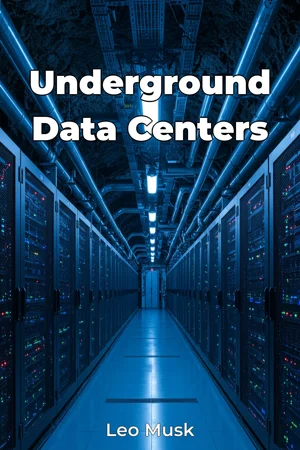
Why bury our data? "Underground Data Centers" explores the burgeoning trend of locating server farms beneath the earth's surface, leveraging natural geothermal properties for cooling and enhanced security. This book delves into the technical, economic, and environmental implications of this innovative approach to data storage and processing. The book addresses three core topics: the engineering and design of underground data centers, the economic viability and return on investment associated with these facilities, and the environmental benefits, specifically reduced energy consumption and carbon footprint. These topics are vital as data centers globally strain energy grids and contribute significantly to greenhouse gas emissions. The escalating demand for data storage necessitates sustainable solutions, positioning underground facilities as a potentially crucial element in a greener technological future. Within the relevant history of data center development, this book provides a critical analysis of the transition from traditional, energy-intensive facilities to more efficient models. It examines the scientific principles of geothermal cooling and underground insulation, explaining how these natural properties can drastically reduce the reliance on conventional air conditioning systems. The reader should have a basic understanding of computer networks, data storage principles, and energy consumption metrics. The central argument is that underground data centers offer a viable and increasingly attractive alternative to traditional facilities, balancing economic efficiency with environmental responsibility. This perspective challenges the conventional wisdom that data centers must occupy large, above-ground buildings in readily accessible locations. The book demonstrates that the benefits of reduced energy costs, enhanced security, and a smaller environmental footprint outweigh the challenges of initial construction and specialized engineering. The book is structured into three main sections. The first section introduces the fundamental concepts of underground data center design, including site selection criteria, geological considerations, and construction techniques. The second section conducts a thorough economic analysis, comparing the costs and benefits of underground facilities to those of traditional data centers. This includes examining operational expenses, energy consumption, and long-term sustainability. The third section assesses the environmental impact, quantifying the reductions in carbon emissions and energy usage achieved through geothermal cooling and improved insulation. The book culminates with a discussion of the practical applications and implications of underground data centers, exploring their potential for future growth and their role in a sustainable digital economy. The analysis will be supported by case studies of existing underground data centers, incorporating performance data, energy consumption metrics, and cost analyses. The book will draw upon data from geological surveys, engineering reports, and environmental impact assessments, providing a comprehensive and fact-based evaluation of the technology. "Underground Data Centers" connects to several other fields, including: environmental science, exploring the impact of technology on the environment and sustainable solutions; civil engineering, addressing the challenges and innovations in underground construction; and economics, analyzing the financial viability and economic implications of this new approach to data storage. The book stands apart by focusing on a relatively unexplored area within data center design and operation. It provides a comprehensive assessment of the technical, economic, and environmental aspects of underground facilities, offering a balanced and data-driven perspective. The tone is professional and academic, presenting information in a clear, concise, and objective manner. The writing style is accessible to a broad audience while maintaining scientific rigor. The target audience includes data center operators, IT professionals, engineers, environmental scientists, policymakers, and investors interested in sustainable technology solutions. The book offers valuable insights into the potential of underground data centers to transform the industry and contribute to a greener digital future. As a work of non-fiction within the genres of environment and technology, the book adheres to the conventions of factual accuracy, objective analysis, and evidence-based reasoning. It presents a clear argument supported by data and research, avoiding speculation or unsubstantiated claims. The scope is limited to the design, construction, operation, and impact of underground data centers, focusing on facilities that directly leverage natural geothermal cooling. It does not delve into broader issues of data security or cloud computing, except as they relate to the specific context of underground facilities. The information presented can be applied practically by readers involved in data center planning, design, or operation. Engineers can use the book to inform their design decisions, while policymakers can use it to develop regulations and incentives that promote sustainable data storage solutions. The book addresses the ongoing debate surrounding the environmental impact of data centers and examines claims related to the sustainability and efficiency of various cooling technologies. It offers a balanced perspective, acknowledging both the potential benefits and the challenges associated with this emerging technology.
Why bury our data? "Underground Data Centers" explores the burgeoning trend of locating server farms beneath the earth's surface, leveraging natural geothermal properties for cooling and enhanced security. This book delves into the technical, economic, and environmental implications of this innovative approach to data storage and processing. The book addresses three core topics: the engineering and design of underground data centers, the economic viability and return on investment associated with these facilities, and the environmental benefits, specifically reduced energy consumption and carbon footprint. These topics are vital as data centers globally strain energy grids and contribute significantly to greenhouse gas emissions. The escalating demand for data storage necessitates sustainable solutions, positioning underground facilities as a potentially crucial element in a greener technological future. Within the relevant history of data center development, this book provides a critical analysis of the transition from traditional, energy-intensive facilities to more efficient models. It examines the scientific principles of geothermal cooling and underground insulation, explaining how these natural properties can drastically reduce the reliance on conventional air conditioning systems. The reader should have a basic understanding of computer networks, data storage principles, and energy consumption metrics. The central argument is that underground data centers offer a viable and increasingly attractive alternative to traditional facilities, balancing economic efficiency with environmental responsibility. This perspective challenges the conventional wisdom that data centers must occupy large, above-ground buildings in readily accessible locations. The book demonstrates that the benefits of reduced energy costs, enhanced security, and a smaller environmental footprint outweigh the challenges of initial construction and specialized engineering. The book is structured into three main sections. The first section introduces the fundamental concepts of underground data center design, including site selection criteria, geological considerations, and construction techniques. The second section conducts a thorough economic analysis, comparing the costs and benefits of underground facilities to those of traditional data centers. This includes examining operational expenses, energy consumption, and long-term sustainability. The third section assesses the environmental impact, quantifying the reductions in carbon emissions and energy usage achieved through geothermal cooling and improved insulation. The book culminates with a discussion of the practical applications and implications of underground data centers, exploring their potential for future growth and their role in a sustainable digital economy. The analysis will be supported by case studies of existing underground data centers, incorporating performance data, energy consumption metrics, and cost analyses. The book will draw upon data from geological surveys, engineering reports, and environmental impact assessments, providing a comprehensive and fact-based evaluation of the technology. "Underground Data Centers" connects to several other fields, including: environmental science, exploring the impact of technology on the environment and sustainable solutions; civil engineering, addressing the challenges and innovations in underground construction; and economics, analyzing the financial viability and economic implications of this new approach to data storage. The book stands apart by focusing on a relatively unexplored area within data center design and operation. It provides a comprehensive assessment of the technical, economic, and environmental aspects of underground facilities, offering a balanced and data-driven perspective. The tone is professional and academic, presenting information in a clear, concise, and objective manner. The writing style is accessible to a broad audience while maintaining scientific rigor. The target audience includes data center operators, IT professionals, engineers, environmental scientists, policymakers, and investors interested in sustainable technology solutions. The book offers valuable insights into the potential of underground data centers to transform the industry and contribute to a greener digital future. As a work of non-fiction within the genres of environment and technology, the book adheres to the conventions of factual accuracy, objective analysis, and evidence-based reasoning. It presents a clear argument supported by data and research, avoiding speculation or unsubstantiated claims. The scope is limited to the design, construction, operation, and impact of underground data centers, focusing on facilities that directly leverage natural geothermal cooling. It does not delve into broader issues of data security or cloud computing, except as they relate to the specific context of underground facilities. The information presented can be applied practically by readers involved in data center planning, design, or operation. Engineers can use the book to inform their design decisions, while policymakers can use it to develop regulations and incentives that promote sustainable data storage solutions. The book addresses the ongoing debate surrounding the environmental impact of data centers and examines claims related to the sustainability and efficiency of various cooling technologies. It offers a balanced perspective, acknowledging both the potential benefits and the challenges associated with this emerging technology.
"Underground Data Centers" explores the innovative concept of locating data storage facilities beneath the earth, tapping into geothermal cooling for sustainable technology solutions. As data centers face increasing scrutiny for their energy consumption and environmental impact, this book examines the potential of underground facilities to significantly reduce the carbon footprint. One intriguing fact is that underground data centers leverage natural insulation, drastically minimizing the need for conventional air conditioning. Another is that construction requires specialized engineering and geological considerations, presenting unique challenges and opportunities. The book provides a comprehensive assessment of the technical, economic, and environmental aspects of underground data centers. It challenges the conventional wisdom of above-ground facilities by demonstrating the potential for reduced energy costs and enhanced security. It begins with an introduction to design principles, progresses to an economic analysis comparing underground and traditional facilities, and concludes with an environmental impact assessment. By utilizing case studies and data-driven analysis, the book offers a balanced perspective on this emerging approach to data storage.
Book Details
ISBN
9788235207777
Publisher
Publifye AS
Your Licenses
You don't own any licenses for this book
Purchase a license below to unlock this book and download the EPUB.
Purchase License
Select a tier to unlock this book
Need bulk licensing?
Contact us for enterprise agreements.