
About This Book
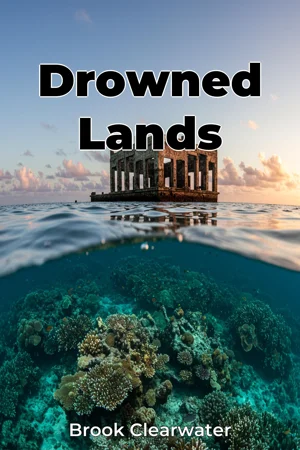
What if the maps we trust are incomplete, concealing vast histories submerged beneath the waves? "Drowned Lands" delves into the captivating realm of submerged kingdoms, lost continents, and civilizations claimed by the sea, exploring not just the geographical mysteries, but also the cultural and geological forces that led to their watery demise. This book critically examines two central questions: How do geological processes contribute to the submergence of landmasses and human settlements, and what impact do these events have on human history, mythology, and collective memory? These questions hold immense importance as coastal populations face increasing threats from rising sea levels and climate change, forcing us to confront the reality of potential future "drowned lands." We will explore significant historical, social, and scientific context to understand these phenomena. A foundational knowledge of plate tectonics, sea-level fluctuations, and basic archaeological principles will enhance the reading experience, though these concepts will be explained as needed. The central argument of "Drowned Lands" posits that the stories of submerged lands are not merely legends but reflect a complex interplay of geological events, human adaptation, and the enduring power of myth to preserve cultural memory. Understanding these submerged histories provides critical insights into the dynamic relationship between humanity and the environment, offering valuable lessons for navigating our changing world. The book's structure unfolds as follows: First, we introduce the concept of drowned lands, differentiating between geological submergence, catastrophic inundation, and the creation of myths surrounding these events. Second, the development of key ideas will comprise three major sections. One section will investigate geological forces, presenting evidence from seismic activity, glacial melt, and coastal erosion, and case studies such as Doggerland, once a vast area connecting Britain to continental Europe, now beneath the North Sea. Another examines specific examples of settlements and regions lost to the sea, analyzing archaeological evidence, historical accounts, and the impact these events had on surrounding cultures, featuring the story of Port Royal, Jamaica, swallowed by an earthquake and tsunami. Finally, it analyses myths and legends, exploring the psychological and cultural significance of stories like Atlantis, and examining their function as cautionary tales or expressions of cultural trauma. The book culminates by synthesizing these geological, historical, and mythological perspectives to reveal the profound and lasting influence of drowned lands on human civilization. We will explore practical implications, considering how understanding past submergences can inform contemporary coastal management strategies and climate change adaptation policies. The evidence presented will be drawn from a wide range of sources, including geological surveys, archaeological excavations, historical texts, and comparative mythological studies. Unique data sets, such as seabed mapping projects and analyses of ancient pollen records, will offer fresh perspectives on these submerged landscapes. "Drowned Lands" bridges the gap between several disciplines: earth sciences, shedding light on the geological processes shaping our planet; history, illuminating how societies have responded to environmental challenges; and anthropology/mythology, revealing the enduring power of stories to shape our understanding of the world. These interdisciplinary connections enrich the book's argument, providing a holistic perspective on the phenomenon of drowned lands. This book provides a unique approach by combining rigorous scientific analysis with a deep appreciation for the cultural and psychological dimensions of submerged landscapes. It stands out by exploring not only the "what" and "how" of these events but also the "why" – why these stories continue to resonate across cultures and time. The tone is authoritative yet accessible, aiming to inform and engage a broad readership. The writing style blends scientific accuracy with compelling narrative, making complex information understandable and relatable. The target audience includes anyone interested in history, geology, mythology, or the environment, as well as those concerned about the impacts of climate change and rising sea levels. The book's value lies in its ability to provide a comprehensive and thought-provoking exploration of a topic with increasing relevance to our present and future. As a work of non-fiction, "Drowned Lands" adheres to the genre's emphasis on factual accuracy, evidence-based arguments, and clear presentation. It employs a descriptive and analytical style, avoiding speculation or conjecture. The scope is broad, encompassing examples from different regions and time periods, but it focuses specifically on cases where there is credible evidence of submergence, either through geological data, archaeological findings, or consistent historical or mythological accounts. It does not delve into purely speculative accounts with no supporting evidence. The information within "Drowned Lands" can inform coastal communities' strategies for mitigating the impacts of rising sea levels, guide urban planning decisions in vulnerable areas and foster greater public awareness of the relationship between human settlements and the dynamic forces of nature. While this book presents a consensus view supported by scientific and historical research, it also recognizes the ongoing debates surrounding the interpretation of certain archaeological sites and the origins of specific myths. These discussions are acknowledged and explored within the framework of available evidence.
What if the maps we trust are incomplete, concealing vast histories submerged beneath the waves? "Drowned Lands" delves into the captivating realm of submerged kingdoms, lost continents, and civilizations claimed by the sea, exploring not just the geographical mysteries, but also the cultural and geological forces that led to their watery demise. This book critically examines two central questions: How do geological processes contribute to the submergence of landmasses and human settlements, and what impact do these events have on human history, mythology, and collective memory? These questions hold immense importance as coastal populations face increasing threats from rising sea levels and climate change, forcing us to confront the reality of potential future "drowned lands." We will explore significant historical, social, and scientific context to understand these phenomena. A foundational knowledge of plate tectonics, sea-level fluctuations, and basic archaeological principles will enhance the reading experience, though these concepts will be explained as needed. The central argument of "Drowned Lands" posits that the stories of submerged lands are not merely legends but reflect a complex interplay of geological events, human adaptation, and the enduring power of myth to preserve cultural memory. Understanding these submerged histories provides critical insights into the dynamic relationship between humanity and the environment, offering valuable lessons for navigating our changing world. The book's structure unfolds as follows: First, we introduce the concept of drowned lands, differentiating between geological submergence, catastrophic inundation, and the creation of myths surrounding these events. Second, the development of key ideas will comprise three major sections. One section will investigate geological forces, presenting evidence from seismic activity, glacial melt, and coastal erosion, and case studies such as Doggerland, once a vast area connecting Britain to continental Europe, now beneath the North Sea. Another examines specific examples of settlements and regions lost to the sea, analyzing archaeological evidence, historical accounts, and the impact these events had on surrounding cultures, featuring the story of Port Royal, Jamaica, swallowed by an earthquake and tsunami. Finally, it analyses myths and legends, exploring the psychological and cultural significance of stories like Atlantis, and examining their function as cautionary tales or expressions of cultural trauma. The book culminates by synthesizing these geological, historical, and mythological perspectives to reveal the profound and lasting influence of drowned lands on human civilization. We will explore practical implications, considering how understanding past submergences can inform contemporary coastal management strategies and climate change adaptation policies. The evidence presented will be drawn from a wide range of sources, including geological surveys, archaeological excavations, historical texts, and comparative mythological studies. Unique data sets, such as seabed mapping projects and analyses of ancient pollen records, will offer fresh perspectives on these submerged landscapes. "Drowned Lands" bridges the gap between several disciplines: earth sciences, shedding light on the geological processes shaping our planet; history, illuminating how societies have responded to environmental challenges; and anthropology/mythology, revealing the enduring power of stories to shape our understanding of the world. These interdisciplinary connections enrich the book's argument, providing a holistic perspective on the phenomenon of drowned lands. This book provides a unique approach by combining rigorous scientific analysis with a deep appreciation for the cultural and psychological dimensions of submerged landscapes. It stands out by exploring not only the "what" and "how" of these events but also the "why" – why these stories continue to resonate across cultures and time. The tone is authoritative yet accessible, aiming to inform and engage a broad readership. The writing style blends scientific accuracy with compelling narrative, making complex information understandable and relatable. The target audience includes anyone interested in history, geology, mythology, or the environment, as well as those concerned about the impacts of climate change and rising sea levels. The book's value lies in its ability to provide a comprehensive and thought-provoking exploration of a topic with increasing relevance to our present and future. As a work of non-fiction, "Drowned Lands" adheres to the genre's emphasis on factual accuracy, evidence-based arguments, and clear presentation. It employs a descriptive and analytical style, avoiding speculation or conjecture. The scope is broad, encompassing examples from different regions and time periods, but it focuses specifically on cases where there is credible evidence of submergence, either through geological data, archaeological findings, or consistent historical or mythological accounts. It does not delve into purely speculative accounts with no supporting evidence. The information within "Drowned Lands" can inform coastal communities' strategies for mitigating the impacts of rising sea levels, guide urban planning decisions in vulnerable areas and foster greater public awareness of the relationship between human settlements and the dynamic forces of nature. While this book presents a consensus view supported by scientific and historical research, it also recognizes the ongoing debates surrounding the interpretation of certain archaeological sites and the origins of specific myths. These discussions are acknowledged and explored within the framework of available evidence.
"Drowned Lands" explores the fascinating history of submerged lands and lost civilizations, examining the geological and cultural forces behind their disappearance beneath the sea. This book delves into how geological processes, like plate tectonics and sea-level fluctuations, contribute to the submergence of landmasses and human settlements. Intriguingly, Doggerland, once a vast area connecting Britain to continental Europe, now lies beneath the North Sea, demonstrating these powerful forces at work. The book uniquely blends earth sciences, history, and mythology to understand these drowned lands. It progresses from introducing the concept of submerged landscapes to investigating geological forces, examining specific lost settlements like Port Royal, Jamaica, and analyzing related myths such as Atlantis. By understanding past submergences, we can gain critical insights into the dynamic relationship between humanity and the environment, offering valuable lessons for navigating our changing world and informing coastal management strategies in the face of climate change and coastal erosion.
Book Details
ISBN
9788235207456
Publisher
Publifye AS
Your Licenses
You don't own any licenses for this book
Purchase a license below to unlock this book and download the EPUB.
Purchase License
Select a tier to unlock this book
Need bulk licensing?
Contact us for enterprise agreements.